


Don’t miss our weekly Sum Ups on Health Care Policy and Voting Rights/Democracy.
I was away for a week when apparently thirty insane things happened. In this week’s episode of The Josh Marshall Podcast, David Taintor walks me through all the crazy stuff that happened and we hash it all out. Listen on iTunes, Google Play or right here at TPM.
A big, really important favor. These early episodes are critical for building an audience for this new effort. If you haven’t yet it would mean a great deal to me if you could subscribe to my new podcast on iTunes. No cost. No need even to listen (though you totally should). It’s just clicking a button and it helps us a lot. Just subscribing and if possible rating us is a huge, huge help. Thanks.
Does the President not have a personal attorney because those attorneys are afraid of being disbarred or possibly going to jail? Very interesting follow up from TPM Reader EF …
Read More
This is important to note. By all evidence President Trump had to be pushed to sign off on this expulsion of Russian diplomats/spies. Reports also say that Trump refused to commit to the expulsion until he saw that other European allies committing first. Both domestically and internationally, Trump seems to have been faced by a fait accompli. All that said, he did sign off on a major expulsion. Yet note that Russia appears to be placing the blame on the United States and President Trump. Read More
I can think of lots of reasons no respected or prestigious lawyers are willing to represent the President. But I suspect this may be one of them that gets less attention than it should. From TPM Reader JB …
No big law firm can rep Trump because of powerful partners (especially female) redlining it and the associate recruiting pr disaster it would trigger (especially with young women). Repping Trump is a political statement no large law firm can afford to make. Big city lawyers are disproportionately Dems.
Thanks to everyone who held down the TPM fort while I was away. I published a few posts over the last couple days. But I only got back to New York this evening. I was away for a few days longer than expected for unforeseen reasons. Read More
A few thoughts on the Stormy Daniels interview. Read More
A number of times over recent weeks I’ve had people write in and ask me who they should contribute money to for the 2018 midterm. In most cases, it’s not really a matter of particular candidates but both a bigger and smaller picture: Should I be contributing to particular candidates? The party committees (DCCC, DSCC, DNC, etc.)? The state parties? Various activist groups who in turn support candidates either directly or indirectly. All of these channels of funding play a critical role in a complex ecosystem of funding. But just where can you have the most effect?
This refocused my attention on a project that I put a lot of time into planning and then discarded late last year. The idea was a new publication that would be entirely dedicated to answering this question: where to put your money if you want to elect Democrats. Period. In this case, I mean this in the broadest sense. You may be focused solely on electing as many Democrats as possible. Or maybe you want to shift the Democratic party to the left or a more social democratic direction. Or perhaps your focus is global warming or unions or making the Democratic party look more like it’s voting base or a slew of other issues, which is disproportionately made up of ethnic minorities and women. Whatever your goal – and most people probably have some mix of these goals – if you want to help fund campaigns you still have the same basic need for information about where – quite apart from individual candidates or ideology – your money can have the greatest impact. Read More
I mentioned yesterday the practice of Cambridge Analytica to field test tools and strategies in the developing world which they could not in North America and Europe because of more robust privacy protections, legal and otherwise, as well as a more robust free press. I’ve done some more digging on this front which has confirmed my assumption, particularly with regards to Facebook, which appears to uniquely exploit this path for experimentation. Read More
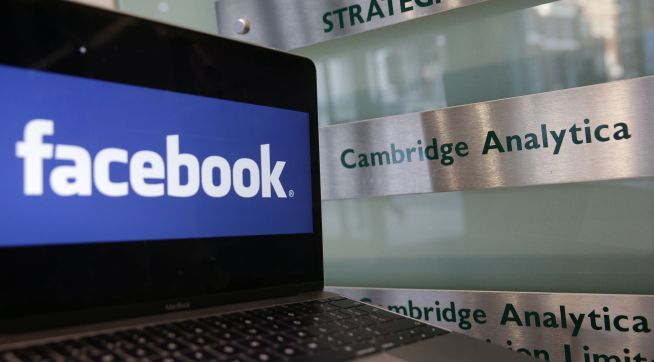
One of the most telling and interesting threads of the Cambridge Analytica story is something that gets mentioned in most of the big pieces but is seldom a focus of attention. Most of the algorthms, techniques and strategies the company eventually deployed against the UK and the US were first used for elections operations in developing countries, what we once called the Third World. The reason is key: these countries had far less legal and technical infrastructure to defend themselves against these kinds of attacks. It was basically anything goes. And if someone got upset it didn’t matter all that much since these countries are off the main arteries of global news flows and have little capacity to uncover or hold to account a shadowy British company which is actually a subsidiary of a company wedded to the British defense establishment. Read More