


The executive director of the National Association of Medicaid Directors talked to Alice Ollstein this morning about what a tough spot Graham-Cassidy puts red state Medicaid directors in:
We have members whose governors are strongly in favor of the bill who would be in a tough position if they spoke out. But I’ve talked to lots of people who said, ‘Politically, my state is going in one direction, but I’m extraordinarily concerned about what it would do to my state and its people in the long term.’
In the first signs of a new strategy from DC Republicans, Sen. Chuck Grassley is pressing the FBI to explain why they never warned Donald Trump about his top advisors’ ties to Russia.
Cam Joseph reports on tonight’s one and only debate in the Alabama Senate run-off.
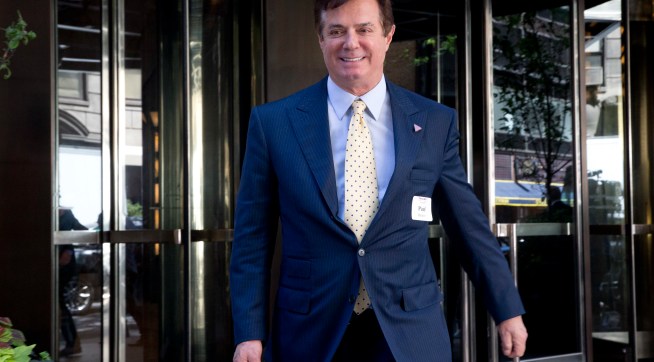
The Washington Post reported yesterday that amongst the tens of thousands of documents Paul Manafort has turned over to congressional investigators and the Special Counsel’s offers were emails between Manafort and his Ukrainian deputy Konstantin Kilimnik. In one of those emails he tells Kilimnik to pass on word to a top Russian oligarch named Oleg Deripaska that he could provide briefings on the state of the presidential campaign.
“If he needs private briefings we can accommodate,” wrote Manafort. Read More
If you’ve been mulling joining Prime, remember this. It’s just 14 cents a day. That’s barely more than a pricey cup of coffee per month. For most of our readers, it’s not a lot of money. But together, thousands of readers joining Prime is transformative for what we do. If you’re convinced, please click here and join Prime.
I’ve mentioned before that Facebook seems to have a hard time grasping that it is a commercial entity rather than a government or a civic space. In his statement today, Mark Zuckerberg compared placing some controls or vetting on the ads it runs to prior restraint. “We don’t check what people say before they say it and I don’t think society should want us to. Freedom means you don’t have to ask for permission first.”
Earlier this week, we came up with an idea. Go back to the Steele Dossier and read it again fresh basically on all we’ve learned over the last 5 months. How does it read now? Here’s what we came up with. Give it a read.
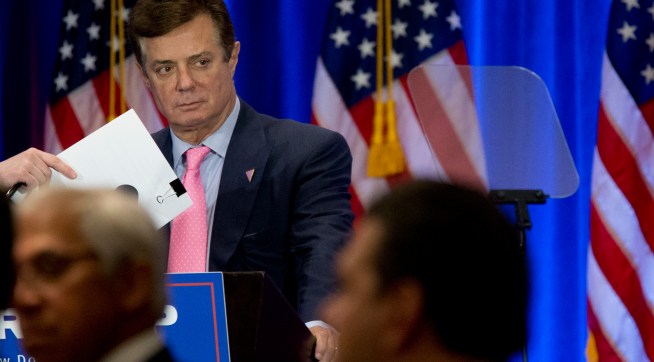
I’ve long been intrigued by just how Paul Manafort managed to get involved in Donald Trump’s campaign. I’ve written about this before. One of the key facts of the relationship is that Manafort agreed to work for free – something that always struck me as quite out of character. The key public information comes from an April New York Times article by Glenn Thrush, which I’d like to return to now.
Thrush got access to a package of emails and documents that detailed how Manafort came into the Trump orbit through one of Trump’s most trusted outside advisors, Thomas Barrack, a real estate and private equity investor. Read More
One thing we’ve learned from the on-going Manafort investigation is that President Trump remained in at least semi-regular phone contact with Manafort for some time after he became President. There’s nothing necessarily wrong or illegal about that. But it’s certainly not politically wise. It’s also hard for me to believe any lawyer would have thought it was a good idea, given the scope of the various Russia investigations.
But here’s a point I wanted to return to. Read More
This exchange on Russia from President Trump’s February 17th press conference doesn’t hold up terribly well, not particularly the portion on Paul Manafort and Trump’s business dealings in Russia or lack thereof.
Q President Trump, since you brought up Russia, I’m looking for some clarification here. During the campaign, did anyone from your team communicate with members of the Russian government or Russian intelligence? And if so, what was the nature of those conversations? Read More