


Many of you will have seen this by now, but I didn’t get a chance to watch it in full until last night as we were waiting for Alabama returns to come in. If you missed it, it’s a segment Elle Reeve did for Vice on the horrible weekend in Charlottesville. It’s highly compelling TV and masterfully put together. Give a look:
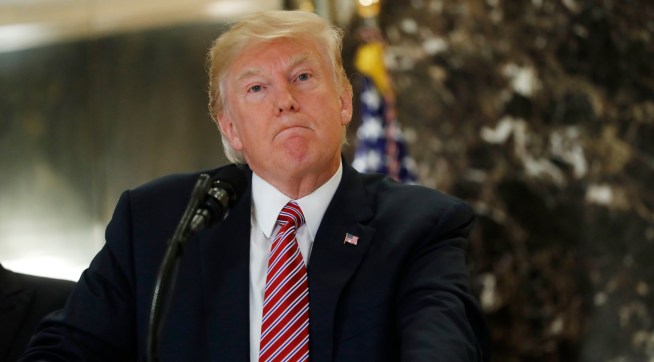
For those who’ve recognized what should really be obvious, this is quite a paragraph in the Times’ account of today’s Trump press conference …
No word in the Trump lexicon is as tread-worn as “unprecedented.” But members of the president’s staff, stunned and disheartened, said they never expected to hear such a voluble articulation of opinions that the president had long expressed in private. National Economic Council Chairman Gary Cohn and Treasury Secretary Steven T. Mnuchin, who are Jewish, stood by uncomfortably as the president exacerbated a controversy that has once again engulfed a White House in disarray.
It may depend on your definition of fun, but the GOP establishment, led by Donald Trump, trying to keep ex-Supreme Court Justice Roy Moore from winning the GOP primary runoff is going to make for an interesting next six weeks in Alabama. Cameron Joseph has the latest on tonight’s results.
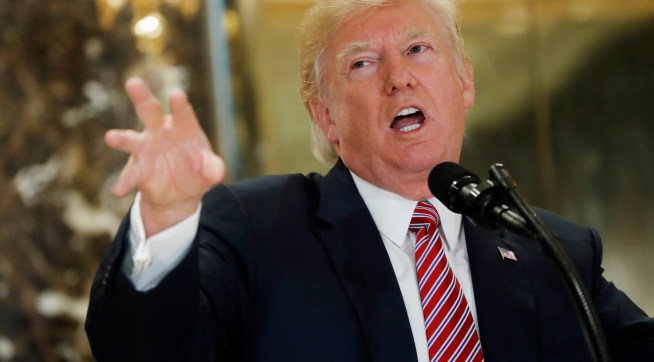
White House releases official transcript of today’s off-the-rails Charlottesville presser. Full transcript after the jump. Read More
After that Trump racist meltdown, it’s hard to believe that Monday was devoted to whether he would say the right thing about Charlottesville.
Bob Mueller is reportedly most interested in two Trump mega-developments: Trump Soho in New York City and Trump Tower Toronto. The first has already gotten a fair amount of attention, the latter much less. Here’s our look at Trump Tower Toronto and its links to state-owned Russian bank Vnesheconombank. If Mueller’s interested, shouldn’t you be too? Here’s our report.
I wanted to follow up on yesterday’s post about public memory, the Civil War and Robert E. Lee with some more discussion and documents from the year’s just after the Civil War.
One of the things that all historians do is look for the earliest sources and those closest to events and facts we are seeking to understand. In some ways, this core imperative is more clear in ancient history or any period more than a few hundred years ago because historians of the distant past must cope with what is often the extreme scarcity of sources whereas modern historians often have the opposite problem: the sheer volume of source material that is impossible ever to fully digest and process. But the fundamental task is the same: recapturing the past on its own terms before subsequent events, needs, agendas and memory packaged them for use or simply distorted them for subsequent ages. This isn’t a matter of uncovering lies in most cases. We are constantly in the process of reshaping our history to serve our present needs. Indeed, we are constantly in the process of doing this in our own lives, reshaping our own personal story into a coherent backdrop to the person we are in this moment. Read More
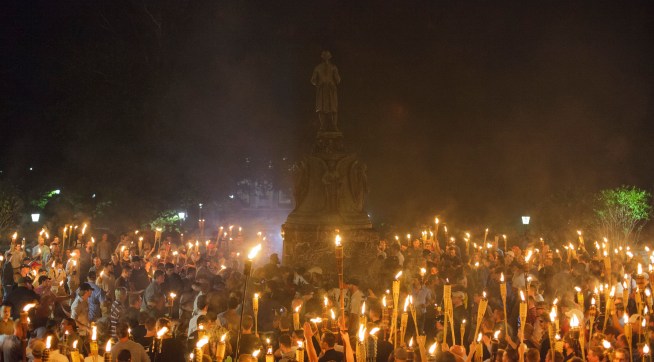
Debates over public memory and the valorization of history are frequently complicated and politically vexed. But on the margins, in extreme cases, they are often pretty straightforward. For any subject of controversy, the first question we should ask is: What is the person known for? How did they earn a place in our collective public remembrance? Read More
James Fields, the man accused of killing one woman and injuring 19 others when he rammed counter-protesters with his car in Charlottesville, reportedly had a long history of physical assaults and threats against his disabled mother.
Over the last twenty four hours or so we’ve seen reports of numerous white supremacist marchers in Charlottesville who also show up in meet-and-greet type photos with members of Congress and candidates for office. Needless to say, they’re all Republicans. We’re looking into this. But I want to add some context and suggestions about what this means and what it doesn’t. Read More