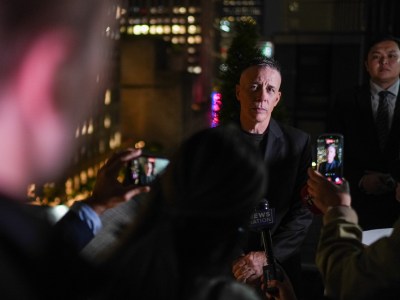
On “Meet the Press” this morning, Tim Russert asked Director of National Intelligence Mike McConnell about why the latest National Intelligence Estimate is so discouraging. A year ago, the NIE said al Qaeda’s leadership had been “seriously damaged”; the global jihadist movement “lacks a coherent global strategy”; and the terrorist threat is “becoming more diffuse.”
In contrast, this week, the NIE reported that al Qaeda has “regenerated”; its “top leadership” and “operational lieutenants” are intact; and the terrorist network’s recruiting and fundraising are stronger, not weaker. Russert asked McConnell, “What changed?”
McCONNELL: What’s different? What changed? In Pakistan, where they’re enjoying a safe haven, the government of Pakistan chose to try a political solution. The political solution meant a peace treaty with a region that’s never been governed — not governed from the outside, not governed by Pakistan. The opposite occurred. Instead of pushing al-Qaeda out, the people who live in the — these federally- administered tribal areas, rather than pushing al-Qaeda out, they made a safe haven for training and recruiting.
Perhaps, but would it have killed McConnell to concede that the ongoing U.S. efforts in Iraq have had something to do with al Qaeda’s recovery? Given what we learned this week, to pretend otherwise is fairly obvious sin of omission.
On a related note, Russert also mentioned that McConnell has acknowledged having been “unimpressed with many aspects of the Bush administration and its conduct of the war on terror, particularly what he felt was a politicized use of intelligence in the lead-up to the Iraq war.” McConnell told the Weekly Standard’s Stephen Hayes that top administration officials — he didn’t mention specific names — allowed “their political faith” to influence how they interpreted intelligence, setting up separate intelligence-gathering operations “because they didn’t like the answers.”
Asked on “Meet the Press” if “policy makers hyped the intelligence,” McConnell would only say, “That’s a judgment that I think the American people will have to make.”
That’s a far cry from “no.”