Congressional leaders remain at loggerheads over how to avert a spike in student loan interest rates as the clock ticks to July 1, when rates will double from 3.4 percent to 6.8 percent for millions of students if no action is taken.
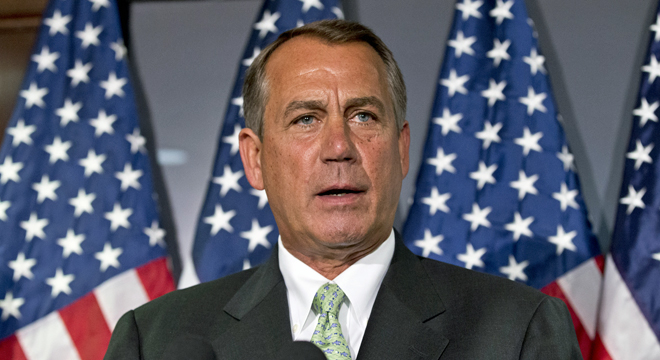
On Thursday, Democrats tried to force a House vote on their proposal, meeting resistance from Speaker John Boehner (R-OH), who accused President Obama and his party of “picking a fake fight” on the issue. Later in the afternoon senators sparred on which student loan proposal to hold a vote on without a resolution.
The issue is a flashpoint in the fight for young voters — one where Democrats have an inherent advantage, with Millennials preferring them by large margins in recent elections. Republicans are eager to put the issue to rest but not at the cost of raising any new revenue to pay for averting a rate spike from 3.4 to 6.8 percent. They’re playing up divisions between Obama’s proposal in his 2014 budget and the plan congressional Democrats have offered.
Boehner told reporters Thursday that Obama and his party have “decided to deliberately allow rates to rise on students and families.”He highlighted the fact that the GOP proposal mirrors a key element of Obama’s plan in that both tie the loan rate to the 10-year Treasury yield. But Obama has threatened to veto that bill because his plan includes more safeguards to protect students, such as fixing the rate for the life of a loan and limiting repayment rates to 10 percent of a borrower’s discretionary income.
Obama has instead thrown his support behind Senate Democrats’ temporary plan to freeze the existing 3.4 percent rate for two years and fund it by closing unpopular tax loopholes for oil and gas companies and offshore tax havens. Senate Republicans filibustered that bill last week and blocked it from moving forward even though it won a majority of votes.
Earlier Thursday morning, House Democrats sought to force a vote on the measure by filing a discharge petition to send it to the floor. But the motion is a long shot because it needs a majority of members in the Republican-led chamber.
Over in the Senate, Majority Leader Harry Reid (D-NV) is focused on shepherding immigration reform through the chamber. He said last week he isn’t interested in compromising on the issue and wants to pass the Democratic bill. Sen. Chuck Schumer (D-NY) said a debate would illustrate the differences between the two parties.
That leaves an unclear path forward. Congress has just 11 more working days until loan rates double and party leaders are publicly sparring rather than negotiating a resolution.
A House GOP leadership aide similarly signaled that Republicans won’t back off the conceptual framework of their proposal but privately recognize — even if they won’t say so publicly — that some of the details in their legislation may have to change in order for the bill to pass both chambers and be signed into law.
Thursday afternoon, Sen. Elizabeth Warren (D-MA) sought unanimous consent to vote on the Democrats’ student loan plan, but Sen. Richard Burr (R-NC) objected on behalf of Republicans, blocking the vote. Burr instead asked that the Senate vote on Obama’s plan and Warren objected, underscoring Democratic opposition to the President’s proposal. A leadership aide said Democrats haven’t verified the bill that Burr offered.
Senate Democrats dislike the concept of tying the rate to the 10-year Treasury yield. Sen. Tom Harkin (D-IA), who chairs the committee with jurisdiction on education, has publicly criticized President Obama’s proposal. One possible end game is for Congress to pass a one-year freeze and fund it with an mutually agreeable means of paying for it.