

This article is part of Cafe, TPM’s home for opinion and news analysis.
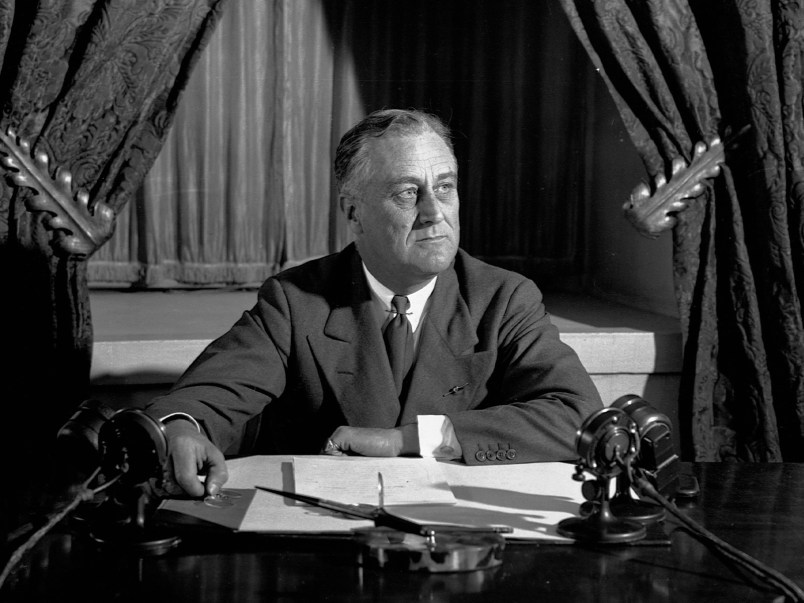
The Overton window on expanding — or packing or unpacking — the Supreme Court is now wide enough that it’s worth revisiting one inevitable part of the conversation: FDR’s Court-packing proposal in 1937. Misconceptions about the events abound in popular discussions.
Here’s the short version of the story you’ve probably heard: In 1935 and early 1936, the conservative-dominated Supreme Court handed down several decisions whose doctrines threatened important parts of FDR’s New Deal economic policies. After his overwhelming reelection in November 1936, he decided to pack the Supreme Court with six new justices, using the excuse that the sitting justices over the age of 75 weren’t able to handle the Court’s work effectively. Announced in January 1937, the Court-packing plan came as a surprise to political Washington, and immediately met strong resistance. FDR slogged on but the plan suffered several severe blows, including a letter from Chief Justice Charles Evans Hughes endorsed by liberal justice Louis Brandeis saying that the Court was completely up to date with its work. Other developments undercut the urgency for the president and his allies, including a decision favoring New Deal economic policies in March 1937 in which swing justice Owen Roberts cast the deciding vote and the retirement in May of conservative justice Willis Van Devanter. When the plan was formally interred in a mid-summer Senate vote, a New York journalist called Roberts’s vote the “switch in time that saved the nine,” and the phrase — and Roberts’s vote — have come to dominate today’s understanding of the episode.
That version isn’t completely inaccurate and it isn’t a caricature, but it does contain some misconceptions, the most important of which is probably the focus on the captivating “switch in time” phrase. If we think that the story of the Court packing plan has some lessons for us today, it’s important to clear up these misconceptions. Historians have written books about the events surrounding the Court-packing plan and this essay won’t be able to explore all the ins-and-outs of a complicated set of events. Even more, the story has many moving parts, most of which are connected to others, so you can pick pretty much any place to start.
Was the Court-packing plan a surprise?
Yes and no. After one important decision in May 1935 going against the New Deal, FDR held a press conference and said that the Court wanted to take the country back to the horse-and-buggy days. Almost from the start of his first term FDR groused about the possibility that the Supreme Court would stand in the way of what he thought were programs needed to recover from the economic crisis the nation faced. Ideas about “doing something” about the Court floated around Washington starting in 1933, leaked from the administration to favored reporters and discussed at Georgetown dinner parties.
Still, FDR hadn’t directly targeted the Supreme Court during his 1936 reelection campaign. Instead, he regularly attacked the American Liberty League, an advocacy organization founded and funded by wealthy opponents of the New Deal. The League produced a series of pamphlets designed as templates for legal briefs laying out the constitutional arguments against a host of New Deal programs. When FDR went after the League, he was really taking on reactionary legal arguments he feared the Supreme Court would adopt. So, in the guise of the American Liberty League, the Supreme Court was part of the 1936 presidential campaign.
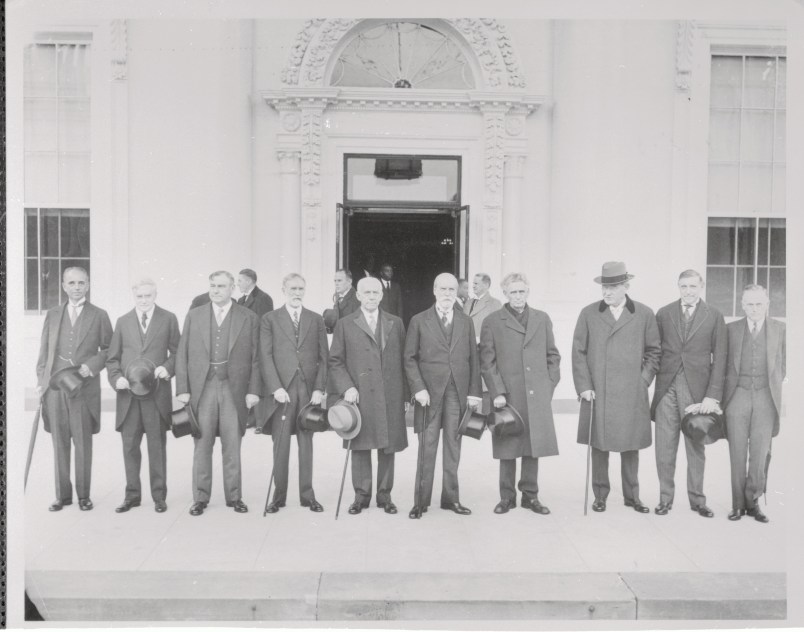
Supreme Court reform of some sort was in the air after FDR’s massive victory in November 1936. The development of the Court-packing plan was a closely held secret within the administration. The content of the announcement on February 5, 1937, was something of a surprise. But no one was surprised that FDR wanted to move some sort of Court reform through Congress.
Was there a switch in time?
No, but maybe yes. On June 1, 1936, the Supreme Court held a New York statute setting a minimum wage for women workers unconstitutional by a vote of 5-4, with Justice Roberts in the majority. Then, on March 29, 1937, the Court held an essentially identical Washington state statute constitutionally permissible by a vote of 5-4, with Roberts in the majority. Coming less than two months after the Court-packing plan’s announcement, Roberts’s “new position” is the switch in time.
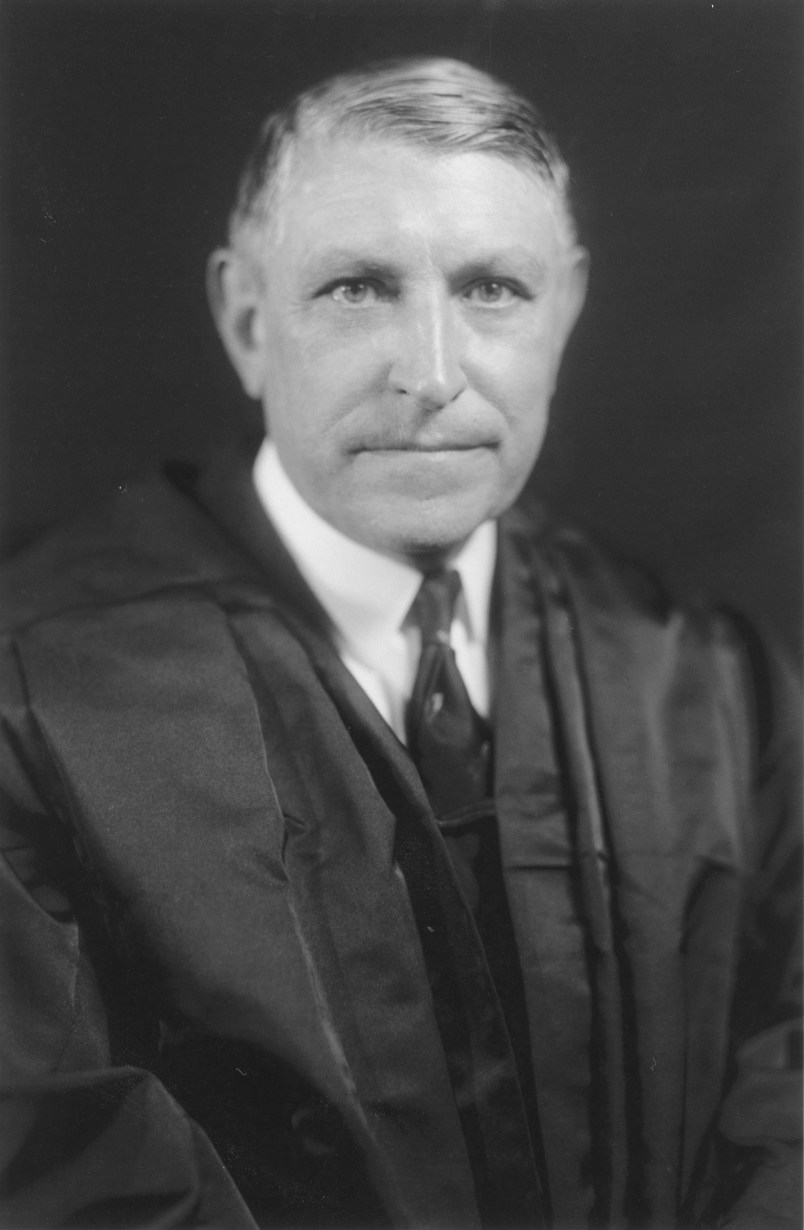
It’s been known for decades, though, that Roberts actually cast his deciding vote in mid-December 1936, before the Court-packing plan was announced. Justice Harlan Fiske Stone was absent because he was recovering from a near-fatal illness. The justices divided four-to-four, with Roberts voting to uphold the Washington statute. Stone’s vote was necessary for the new majority but everyone knew that he’d vote to uphold the Washington statute (he’d joined the dissent in the New York case). The case was essentially over when the Court took its initial vote. The formal vote was delayed until February 6, 1937, the day after the Court-packing plan was announced. Justice Felix Frankfurter later reported that Roberts came up with a lame explanation for his switch, saying that New York’s lawyers hadn’t explicitly asked the Supreme Court to overrule a controlling precedent but Washington’s lawyers did. (The excuse was lame because New York’s lawyers had indeed asked the Court to overrule the precedent, though in a short and somewhat cryptic paragraph.) Whatever the reason, it didn’t come “in time” — that is, it didn’t come as a response to the February 5, 1937, unveiling of the Court-packing plan.
Remember, though, that Court reform was in the air. Maybe Roberts was picking up what we’d now call “vibes” about a threat to the Court, and maybe the lameness of his explanation was just a cover story for a change induced by the general atmosphere of threats to the Court as an institution.
Was the plan doomed from the start?
No. Vote counters knew that the House of Representatives would accept the plan. All the action was in the Senate, where there was fierce opposition from conservative Republicans and some Democrats, and unease among other Democrats.
An adept politician, FDR held an ace in his hand, and everyone knew it. He promised one of the seats on an expanded Supreme Court to Senate majority leader Joseph Robinson of Arkansas. Robinson found the offer irresistible. He called in all the chits he had with his colleagues, putting together a potential majority for the plan one vote at a time. Political observers at the time weren’t sure what the outcome would be but they were inclined to think that Robinson could pull off a victory for FDR.
The final vote was scheduled for mid-July in an exceptionally hot (and un-airconditioned) Washington. Robinson held a meeting–social gathering where he continued to lobby wavering colleagues. The combination of heat and stress gave Robinson a fatal heart attack. The possibility of a majority for the Court-packing plan in the Senate always depended on personal ties between Robinson and other senators, and, with his passing on, the plan failed.
Did FDR lose the battle but win the war? How?
Yes, yes, and maybe no. FDR lost the battle over expanding the Court but reached his main war goal — having a Court that wouldn’t completely obstruct his favored programs. As with almost all successful military campaigns, the path to the goal wasn’t straight. The war wasn’t over on March 29 when the nation learned that Roberts had voted to uphold Washington’s minimum wage law. FDR’s legal team worried that Roberts wasn’t going to be a reliable ally going forward — and indeed he wasn’t: a careful modern statistical study shows that Roberts reverted to his conservatism within a year.
The war wasn’t over on May 18, either, the day Justice Willis Van Devanter announced his intention to retire even though the retirement seemingly gave FDR the opportunity to replace a conservative with a reliable supporter of the New Deal.
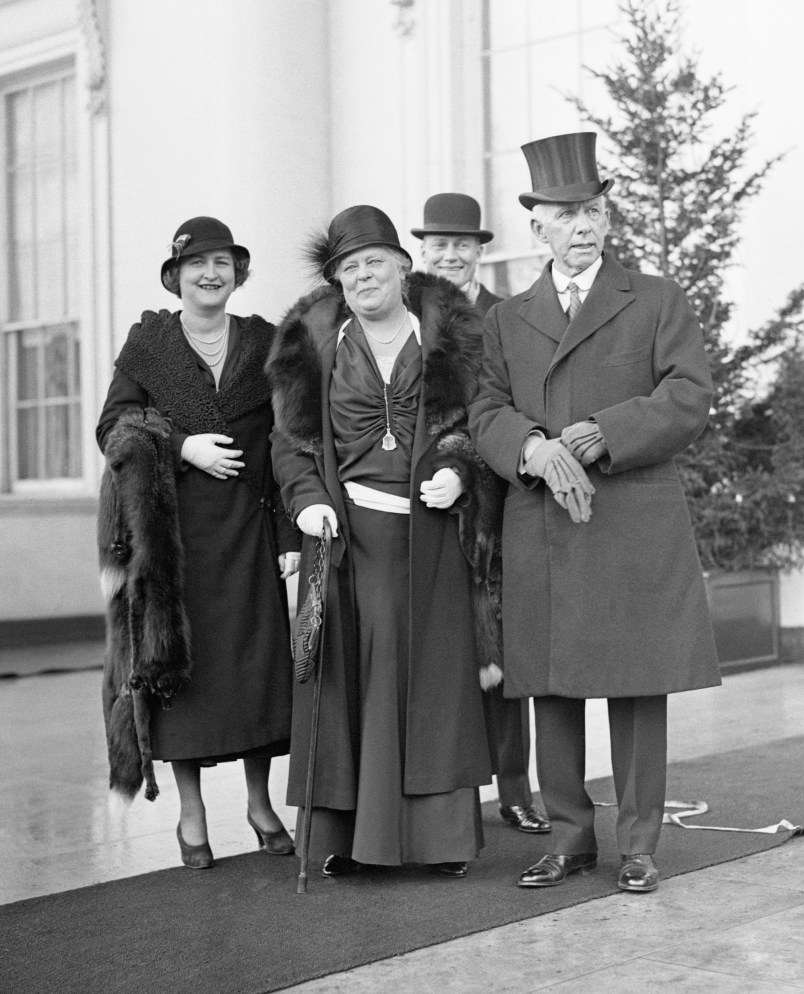
Van Devanter had wanted to leave the Court for years, mostly so that he could take care of his medically compromised wife. The obstacle was financial. Van Devanter was something of a penny-pincher, once complaining that he had been overcharged five cents for a package of seeds. With some reason, he worried that his financial condition would deteriorate if he left the Court. As the statutes stood at the beginning of 1937, lower court judges could either retire from the bench and continue to receive their judicial salaries or they could resign and take their pensions. The rules for Supreme Court justices were different. They had to resign, not retire — they could take their pensions, but not their salaries. And that mattered because judicial salaries for retired lower court judges couldn’t be reduced, but judicial pensions for them and for Supreme Court justices could be — and they were, as part of the austerity programs Herbert Hoover and FDR pursued at the Great Depression’s outset. That was what worried Van Devanter, because the statutes didn’t give him the retirement option. He would have to resign and be at the mercy of congressional decisions about judicial pensions.
Hatton Sumners, the chair of the House Judiciary Committee, had long thought that treating Supreme Court justices worse than lower court judges was silly. Some lawyers worried that “retirement” required that the judge be available to serve as needed — something now known as “senior status” — and that the Constitution didn’t allow that for Supreme Court justices. Sumners disagreed. In 1936 he introduced a bill to eliminate the difference. It failed. The next year, with Supreme Court reform on the table, he tried again. With some misgivings, and aware of the important role Sumners would play in shepherding the Court-packing plan through the House, FDR’s lawyers decided that Sumners’s bill wouldn’t undermine support for Court-packing. The House passed the bill on February 10, the Senate on February 26, and FDR signed it on March 1, whereupon Van Devanter decided to leave the Court.
Why wasn’t the ability to appoint a justice enough to get FDR to abandon the politically costly Court-packing campaign? The answer: Senator Joe Robinson, to whom FDR has promised a court seat. Despite that promise, Robinson wasn’t a full-throated New Dealer and FDR’s lawyers worried that he might end up as unreliable as they feared Roberts would be. FDR took his time filling the vacancy Van Devanter created, with the excuse that Robinson was still needed to push the Court-packing plan through the Senate. A month after Robinson died, FDR nominated Senator Hugo Black to the Court, giving him a reasonably solid five-to-four majority. The next year conservative Justice George Sutherland, who like Van Devanter had wanted to leave the Court for several years, retired, and FDR nominated Solicitor General Stanley Reed to succeed him.
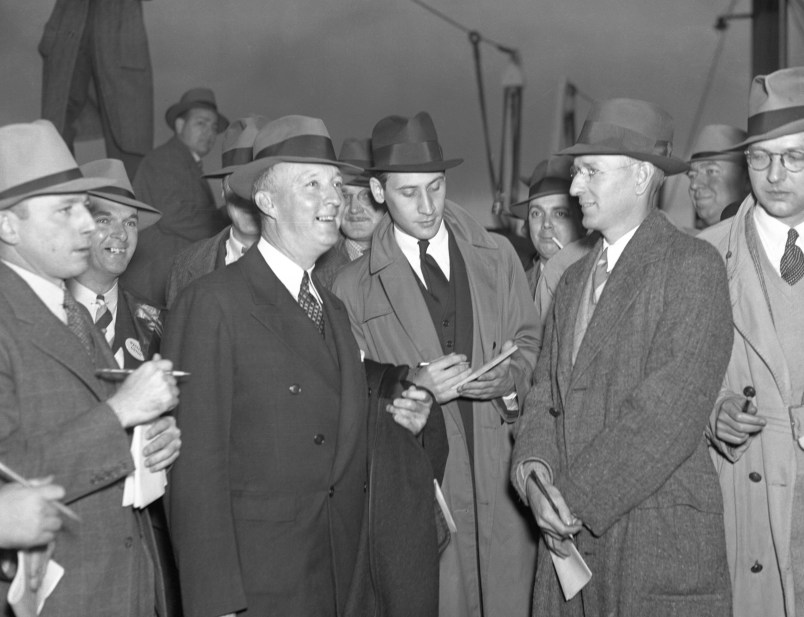
By then the war really was over. The Supreme Court didn’t invalidate any major New Deal programs after 1937, although it did sometimes interpret major statutes — especially the National Labor Relations Act — in ways less friendly to labor than FDR’s labor allies would have liked. Democrats suffered severe losses in the 1938 midterm elections, mostly because the nation was in a severe economic recession induced by FDR’s too-rapid return to the orthodoxy of balanced budgets — but maybe the Court-packing episode made it easier for some voters to abandon the Democratic Party.
In the even longer sweep, the conservative war against legal liberalism continued. Liberals liked to describe a “New Deal settlement” that coupled judicial deference to legislatures on matters of economic policy with judicial activism on civil rights and civil liberties. Recent scholarship has made the case that conservatives never really accepted the so-called settlement, making some tactical concessions while biding their time — which came toward the end of the 20th century.
Did 1937 set a “precedent” for Court expansion?
Maybe yes, but a lot depends on how you describe the precedent. Focus on the politics of Court size and the answer is that the 1937 episode might have created what the British call a constitutional “convention” against changing the size of the Supreme Court simply to affect predicted outcomes — but that kind of convention can itself be changed when politicians think that it stands in the way of getting something important done. And focus on the politics of the federal courts more generally and the answer is that changing their powers to advance partisan goals is standard practice.
The Court’s size has been fixed at nine since 1869. Before that the Court grew to accommodate national growth — a “good government” reason for changing its size. Sometimes the timing of expansion was affected by partisan concerns. And in the decade of the Civil War, Congress expanded the Court, shrank it, and expanded it again mostly for partisan reasons but with some real “good government” explanation as well.
FDR’s Court-packing plan was packaged in “good government” terms — too many of the Court’s justices were old and unable to keep up a work pace adequate to needs. That was a fig-leaf covering the partisan motivation and FDR and his allies quickly abandoned it. The fig-leaf that’s offered in today’s discussions is “thirteen circuits, thirteen justices,” but no one really thinks that there’s a strong good-government reason for having one justice for each circuit. The Court-packing plan’s failure might be understood as establishing a convention against changing the Court’s size unless there’s a real “good government” reason for doing so.
Unwritten constitutional conventions like that are always up for grabs. One problem is distinguishing between practices that persist because no one cares enough to challenge them and practices that persist because people think they ought to follow them. The complicated politics that account for the failure of FDR’s Court-packing plan — Robinson’s death, Roberts’s change in vote, Sumners’s bill and Van Devanter’s retirement — weaken the case for saying that 1937 shows that there’s a convention against changing the Court’s size to affect predicted outcomes. Since then, the issue of the Court’s size didn’t matter enough for anyone to try to do something about it — until now. So maybe having a Court with nine members results from a practice rather than a convention.
Even more, conventions can be fragile — certainly they’re not as robust as provisions written into the constitutional text. A scholar writing in 1925 offered an example. From Washington’s presidency to the early 20th century American presidents stayed on American soil (broadly defined, it turns out). U.S. presidents stayed on the U.S. side of the Mexican border when they met their Mexican counterparts on the bridge connecting El Paso and Juarez. In 1914 Woodrow Wilson reluctantly declined an invitation to England to celebrate the anniversary of the treaty ending the war of 1812. Within five years he went to Versailles, and the convention disappeared.
The picture is much more clear when we look at the politics of the federal courts generally. Congress has adjusted their powers for good government reasons, of course, but it also has routinely tinkered with the federal courts to change predicted outcomes. When Congress feared that the national courts would rule against workers seeking compensation for injuries, it shunted those cases to state courts. When Congress feared that state courts would treat Blacks badly, they allowed the cases to be shifted into the federal courts. The list goes on and on. Seen in that light, changing the Court’s size is just another example of treating the federal courts as one of the many tools politicians can use to achieve their goals.
Lessons from the past?
One of the first things graduate students in history are told is that they should be wary about drawing lessons from the foreign country that is the past. If lessons are to be drawn, though, they should be drawn on the basis of as full an understanding as possible of what really happened — an understanding informed by the story I’ve told, and of course by the even more complete story that can be found in the historical record.






No cats. Got a dog tho
Whatever concerns FDR had about the Court back then has come to full throated insane reality now. Pack the Court? Not so much pack it but address a gaping weakness exposed by the criminality of the current Republican iteration of self dealing and greed and oathbreaking.
That is a helpful article in understanding the fog that we are in now and ways to get out of it. Or stay in it.
I just got a government paid political ad for Trump and his MAGA party. It was an e mail from the Social Security administration bragging about Trump accounts. It endlessly praises Trump by name and, of course, comes right before the election.
No “president” in history has more comprehensively politicized the entire federal government more than Trump. Absolutely disgusting.
But did it contain your $5,000 check from DOGE or even the $1,000 that Trump promised? s/
One of the first things graduate students in history are told is that they should be wary about drawing lessons from the foreign country that is the past. If lessons are to be drawn, though, they should be drawn on the basis of as full an understanding as possible of what really happened — an understanding informed by the story I’ve told, and of course by the even more complete story that can be found in the historical record.”