This post was updated at 2:41 p.m.
The unusual nature of the Supreme Court’s decision to invalidate Section 4 of the Voting Rights Act has created a kind of limbo for conservatives in southern states who want to flood their legislatures with voter ID laws and other disenfranchising policies, and thrown into Congress’ lap an unexpected issue that will have enormous ramifications for the 2014 elections and beyond.
Where this all ends, nobody knows, but we’re beginning to see how it starts.
Congressional Democrats are already setting wheels in motion to fix the damage the Court did to the Voting Rights Act, but they’re prepared for a long and complex haul.
Because Democrats only control one chamber of Congress, they’re effectively confined to beginning the process in the Senate, which is why early statements from Senate Dems refer to action they plan to take, while House Dems are stuck pressing Republicans to take the issue seriously.
But that’s enough to sketch out a roadmap by which they might successfully re-establish pre-clearance standards under Voting Rights Act.
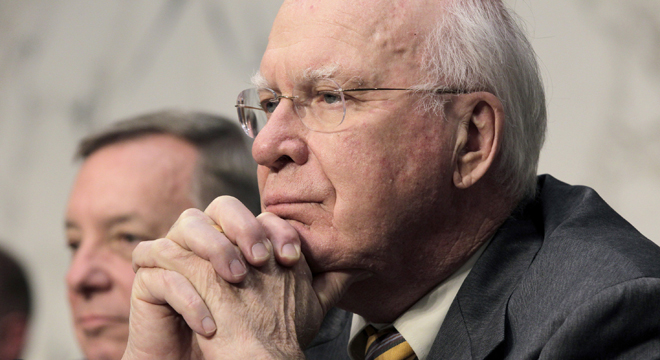
“As Chairman of the Judiciary Committee, I intend to take immediate action to ensure that we will have a strong and reconstituted Voting Rights Act that protects against racial discrimination in voting,” Sen. Patrick Leahy (D-VT) said in a statement after the decision.
The initial hearings will begin after Congress returns from Fourth of July recess. But because of the complicated legal nature of the issue, a legislative fix will require a great deal of groundwork and careful drafting to assure it doesn’t run exceed Constitutional limits.
It’s not, in other words, the kind of problem that has a solution sitting on a shelf in the Dirksen Senate Office Building.
On the assumption that the Voting Rights Act process will follow the same path other legislation has traveled this Congress, the Senate will act first, and the House will have to decide whether or not to follow suit. Democrats can exert pressure, but they’re effectively cut out of the decision.
“I would like to see something called — well, I haven’t even discussed this with my caucus, but — the John Lewis Voting Rights Act, which would address the concerns that the Court put in its decision about Section 4,” House Minority Leader Nancy Pelosi told reporters Wednesday. “It’s really a step backward and it’s not a reflection of what is happening in our country in some of these places. And when we put that bill together, when it was passed last time, it passed overwhelming, overwhelming 98 to nothing in the Senate and 390-something to almost nothing in the House. And it was bipartisan and we came to terms on it, in a way that we were all jubilant about the passage of it, Democrats and Republicans alike.”
House Speaker John Boehner’s office has referred questions about Voting Rights Act to the House Judiciary Committee, and its chairman, Bob Goodlatte (R-VA) intends to hold a hearing on the issue in July, to examine the implications of the Court’s decision, according to a committee aide.
But what legislative steps the committee will take remains a mystery.
“The 2006 reauthorization of the Voting Rights Act did not change the criteria that determines which jurisdictions are subject to the special rules that require them to get advance pre-clearance from the Department of Justice or a federal court before they can change their voting rules,” Goodlatte said in response to this week’s decision. “The Supreme Court has now decided that original coverage formula does not meet constitutional requirements. This decision in no way affects the permanent, nationwide ban on racial discrimination in voting found in Section 2 of the Voting Rights Act, which remains in place.”