I was in federal court this morning in Alexandria, Virginia, for a hearing on the motions to disqualify interim U.S. Attorney Lindsey Halligan filed by former FBI Director James Comey and New York Attorney General Letitia James.
Let me first give you the top line from the hour-long joint hearing in front of U.S. District Judge Cameron McGowan Currie, the South Carolina judge who was brought in for these challenges because the local district judges have a conflict of interest. Second, I’ll hit some new facts that Judge Currie herself revealed in the hearing. Then I’ll try to parse where Currie is and give you my impression of where this is headed.
The top line was pretty straightforward: Currie gave no indication that she thinks Halligan was lawfully appointed as interim U.S. attorney. None, zero, zilch. But it wasn’t at all clear what Currie will do about it now. Almost all of her questions were either skeptical or challenging of the Trump administration’s position. None of her questions seriously challenged either defendant.
If I’m either Comey or James, I would have walked out of the hearing pretty confident that I was going to prevail on the statutory construction and constitutional arguments that Halligan was unlawfully appointed (but I would have gone into the hearing pretty confident that I was right on the law). What I’d be much less certain of is whether Currie is prepared to give me the maximum relief I’m seeking: dismissal of the indictments with prejudice, meaning the government cannot turn around and re-indict me on these same charges.
I’ll come back to this in more detail in a bit, but that’s the takeaway. Now for the new revelations.
In the course of the hearing, Judge Currie dropped a few pretty important new details into the mix, based on her having reviewed the transcript and recording of the grand jury proceedings in both the Comey and James cases:
(1) Currie confirmed that Halligan was the only government lawyer in the grand jury room in both cases. The importance of this revelation — a fact which was already suspected — is that there was no other bona fide government lawyer in the room who arguably secured the indictments on the government’s behalf, which might arguably have rendered Halligan’s unlawful appointment moot. That means it all comes down to whether Halligan was properly appointed; there’s no workaround available to the government using the presence of other prosecutors
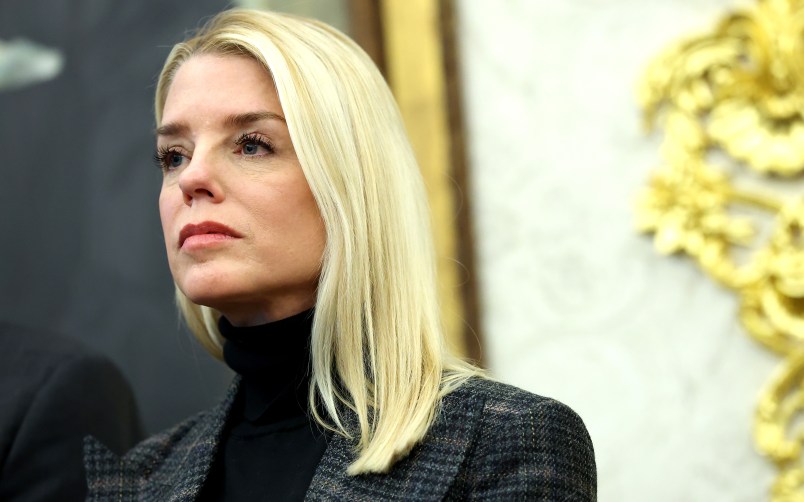
(2) Currie said there was no way that Attorney General Pam Bondi could have reviewed the grand jury proceedings in the Comey case as she claimed to have done before she took the unusual step of purporting to ratify Halligan’s appointment after the fact in a document she signed on Oct. 31 but made retroactive to Sept. 22. That’s because the grand jury transcripts and recordings were incomplete.
(3) Currie said that the beginning and ending of Halligan’s presentation of the Comey indictment were not recorded and that for a stretch the court reporter was either absent from the room or not recording at all. It’s embarrassing and undermines the subtext of the Trump administration’s argument that the cases were handled perfectly routinely … even though Halligan is an insurance lawyer with no experience as a prosecutor who was hastily appointed by her former client Trump to beat the statute of limitations clock, which was about to strike midnight in the Comey case. In short, the new revelations further highlighted how nothing about either case is normal.
This is a good time to interject that both prosecutions are politically motivated acts of retribution by a vindictive president. That is the core story here and the underlying corrupt act. Even if Comey and James succeed in getting the indictments against them dismissed by disqualifying Halligan, it’s feels odd to treat it as vindication of a judicial system under pressure from Trump or as a reassurance that the courts will hold firm in the face of Trump’s onslaughts. The fact that Trump and Bondi botched the appointment of Halligan is a helpful additional point of attack for Comey and James, but it should never have come to this. It’s almost a lucky break, where the incompetence overwhelmed the corruption.
Now let’s turn to the bulk of the hearing and where Judge Currie focused her questions.
Ephraim McDowell, a lawyer for Comey, had barely begun his argument, when Currie interrupted to ask if there had been a declination memo in his case. So far as we know, career prosecutors in the Comey case thought the case was weak and the previous U.S. attorney declined to seek an indictment, which led to his ouster, but it never got to the point of a declination memo like it did in the James case, where career prosecutors recommended against charges explicitly in writing. Currie’s question signaled that she knew the playing field here.
Currie soon interrupted McDowell again to bolster his argument that the Trump administration’s position in the case turns the statutory scheme and the Appointments Clause of the Constitution on their heads. “Doesn’t it bypass the Senate?” she asked pointedly, highlighting the separation of powers problem with the Trump administration’s argument.
Over the course of the hearing, Currie seemed to be seeking clarity from both sides over two pretty technical legal questions: (i) Was Halligan’s unlawful appointment a harmless error that the indictments should survive? and (ii) How the heck should she handle Bondi’s purported after-the-fact retroactive ratification of Halligan’s work in front of the grand jury and appointment as a special attorney as a backstop in the event Halligan’s appointment as U.S. attorney was invalidated?
For its part, the Trump administration dismissed the entire hullabaloo as “at best a paperwork error,” in the words of Henry Whitaker, the former Florida solicitor general who is now counselor to the attorney general and took the lead in today’s argument.
The administration’s position is that the attorney general has the power to appoint interim U.S. attorneys to multiple 120-day terms. That flies in the face of historical precedent, past practice, and a 1980s memo from the DOJ’s Office of Legal Counsel, ironically written by Samuel Alito before his elevation to the Supreme Court.
The practice has been for the attorney general to be able to appoint an interim U.S. attorney for up to 120 days, at which point the federal judges in the district can appoint an interim indefinitely until the Senate confirms someone for the permanent position. (The judges in Virginia’s Eastern District has reappointed Halligan’s predecessor when his 120-day term ended, which is common; it’s also why they had a conflict of interest and Currie was brought in to handle this aspect of the case.)
There was a period when the practice had changed, but Congress reinforced the limitations on successive 120-day interim appoints when it changed the law after the U.S. attorneys scandal in the mid-aughts, prompting Currie to ask Whitaker if his position didn’t render the congressional amendment meaningless: “If you’re correct, then what effect does the 2007 amendment do?”
Currie pressed Whitaker on Bondi’s purported ratification, suggesting that the ratification seemed to be a concession that Halligan’s appointment was fundamentally flawed: “Mr. Whitaker, let’s cut to the chase. What about your ratification? Why do you need that?” After Whitaker bobbed and weaved a bit, she pinned him down again: “Mr. Whitaker, if you’re wrong and [the statute] and the Appointments Clause are violated, why wouldn’t you need a ratification?”
Even then, Currie expressed skepticism about the ratification because by its own terms it says Bondi had reviewed the grand jury proceedings, but after reviewing the tapes and transcripts Currie said it had become obvious that the beginning and ending of Halligan’s presentation of the Comey indictment were not captured. “She couldn’t have,” Currie said of Bondi, in her most forceful remarks of the hearing.
For the rest of his argument, Whitaker was on his heels. At one point, Currie forced Whitaker to affirm U.S. District Judge Aileen Cannon’s ruling disqualifying Special Counsel Jack Smith in the Mar-a-Lago documents case: “Mr. Whitaker, let me ask you this question: Do you believe that U.S. v. Trump decided by Judge Cannon … was wrongly decided?” Whitaker, on the defensive, struggled to distinguish the cases.
Perhaps the most compelling argument of the day came towards the end of the hearing as Abbe Lowell, the lead lawyer for James, was winding down. Lowell noted that for all the arguments about historic practice and statutory construction perhaps the best evidence was that Trump appointed interim U.S. attorneys the right way throughout his first term. It’s only changed in Trump’s second term quest to target his perceived foes for retribution, requiring that he install loyalists instead of letting judges select the interim U.S. attorney.
Currie said she’ll have a ruling before Thanksgiving.