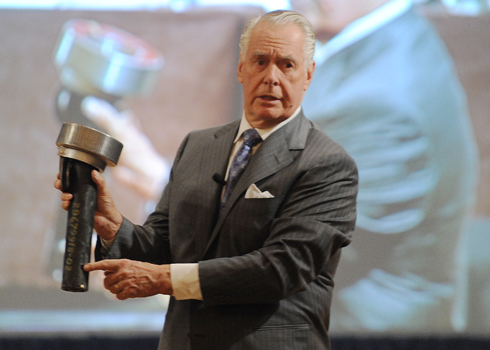
Fred Bartlit, the lead investigator for the Oil Spill Commission, today said he’s seen no evidence that the BP oil disaster was caused by sacrificing safety for cost.
“To date we have not seen a single instance where a human being made a conscious decision to favor dollars over safety,” Bartlit said at a hearing today. “A lot has been said about this, but we have not found a situation where we can say a man had a choice between safety and dollars and put his money on dollars. If anybody has anything else to say about that, we’re happy to hear it.”
The idea that the companies involved in the Deepwater Horizon, including BP and Transocean, cut corners in order to save money and profit margins has been an enduring one ever since investigations began.
Rep. Ed Markey (D-MA), chairman of the energy independence and global warming committee who has been extremely critical of BP, refuted Bartlit’s findings.
“When the culture of a company favors risk-taking and cutting corners above other concerns, systemic failures like this oil spill disaster result without direct decisions being made or tradeoffs being considered,” he said in a statement. “BP has a long and sordid history of cutting costs and pushing the limits in search of higher profits.”
The commission has made other surprising moves, including claiming the White House ordered the National Oceanic and Atmospheric Administration to hide its worst-case scenario numbers in the days after the spill — a claim both the administration and NOAA deny.
Bartlit also sent a letter to the commission last week saying that three of four of Halliburton’s tests of the cement job in the Macondo well showed that the cement was unstable.
Also announced today: The cement plug used to finally seal up the well after months of spewing oil into the Gulf has undergone all necessary testing and is officially complete, according to the Bureau of Ocean Energy Management.