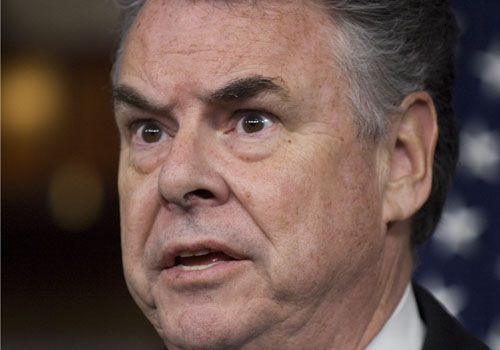
There are basically two schools of thought on the hearings on Muslim radicalization that Rep. Peter King (R-NY) is holding tomorrow. One side sees the hearing as a witchhunt akin to Sen. Joseph McCarthy’s anti-Communist campaign of the 1950s that will result in the “demonization and scapegoating” of Muslim-Americans because of their religion. The other side sees King as an American hero who refuses to let political correctness get in the way of protecting national security.
But federal law enforcement officials — the people King says haven’t seen cooperation from the Muslim community — have been notably absent from the debate. Not a single official from any of the federal law enforcement agencies that deal with terrorism (and there’s no shortage of them) are scheduled to testify before King’s Homeland Security Committee on Thursday.
So what do law enforcement officers really think about the level of cooperation coming from the Muslim community? We asked Jon Adler, the national president of the Federal Law Enforcement Officers Association (FLEOA), who said he’s hopeful the hearings will result in a positive dialogue because there’s not currently a high level of trust between the feds and Muslim communities.
“I think what Peter King is representing is a majority perspective of what a lot of people in law enforcement feel,” Adler said. “We’re peace officers, that’s how they refer to us ultimately, which means we like to keep the peace — we’re not out for war. … You want to see cooler heads prevail, but you can’t take a blind eye to things either. I think it’s important that there’s dialogue, tough questions need to be asked.”
“Keep in mind, obviously, we have federal law enforcement officers … from every religious denomination,” Adler said. “What we have to avoid is any sort of black-and-white perspective. There are no good-and-bad absolutes here.”
Adler, who credits King with being one of the strongest advocates for federal law enforcement officers, said there are still raw emotions in the law enforcement community as a result of the Sept. 11 attacks. He said one of the challenges federal law enforcement officials face are lingering issues of cultural opposition within the Muslim community to cooperating with authorities.
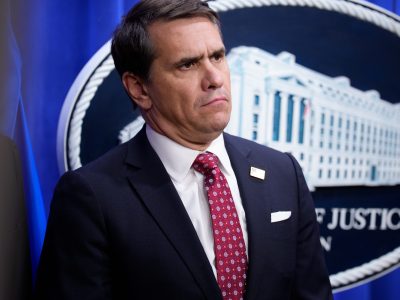
Attorney General Eric Holder testified before a House subcommittee last week that the Justice Department had made “substantial outreach efforts” to prevent Muslim communities from feeling disconnected from federal officials.
“I have certainly tried to use the soapbox I have to talk about these issues and to go to Muslim groups,” Holder said. “It seems to me that one of the things we need to do is not let these communities feel isolated.”
But, as an example of the tensions, Holder also said that the feds had a “troubled history” with the Council on American-Islamic Relations (CAIR), a group the FBI doesn’t deal with because they were listed as an un-indicted co-conspirator in the Holy Land terrorism funding case. (Law enforcement officials have shown a preference for the Muslim Public Affairs Council, which does not accept foreign funding.) CAIR is holding a press conference in D.C. today to denounce King’s hearings.
Polls show the American public is somewhat split on the hearings, with 56 percent calling the hearings a good idea, according to a poll by the Public Religion Research Institute in partnership with Religion News. But 72 percent of those surveyed for the poll said that Congress should investigate religious extremism anywhere it exists and not just focus on the Muslim community.