The Supreme Court on Monday ruled unanimously that police violated the Constitution by attaching a GPS tracking device to a suspect’s car during a 2005 drug investigation in the Washington, D.C. area, without a valid warrant.
“The Government’s attachment of the GPS device to the vehicle,
and its use of that device to monitor the vehicle’s movements, constitutes a search under the Fourth Amendment,” the court’s verdict in the case United States vs. Jones read.
“I’m pleased with the court’s resounding affirmance of our argument,” said the successful defense attorney involved in the case, Stephen C. Leckar of Washington D.C. law firm Shainis & Peltzman, in an exclusive telephone interview with TPM. “The Fourth Amendment emerged victorious.”
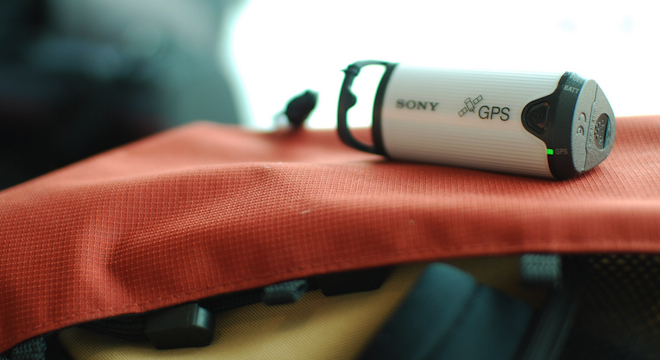
In the original case, the Washington D.C. Metropolitan Police Department had sought and obtained a warrant to attach the GPS to the bottom of the Jeep of then-suspect Antoine Jones, a D.C. nightclub owner.
However, as the Supreme Court noted it in its ruling, “The warrant authorized installation in the District of Columbia and within 10 days, but agents installed the device on the 11th day and in Maryland” — that is, after the warrant had expired and outside of the geographic area where it had been authorized.
Still, police went ahead with the investigation and tracked Jones remotely for 28 days, “and once had to replace the device’s battery when the vehicle was parked in a different public lot in Maryland.”
The Supreme Court found that it was was this repeated physical intrusion onto Jones’ private property — his car — that constituted a breach of the Fourth Amendment right to be protected against unreasonable searches and seizures, not the use of the GPS technology itself.
“My position is: Before they invade someone’s property, they need a warrant for that,” Leckar told TPM.
As the Supreme Court’s ruling explains:
The Government physically occupied private property for the purpose of obtaining information. We have no doubt that such a physical intrusion would have been considered a “search” within the meaning of the Fourth Amendment when it was adopted.
Using the GPS data, D.C. Metro police linked Jones to a “stash house that contained $850,000 in cash, 97 kilograms of cocaine, and 1 kilogram of cocaine base,” and charged him with conspiracy to distribute cocaine. The conviction was overturned by the U.S. Appeals Court in Washington, D.C. in August 2010.
The Justice Department under President Obama in June 2011 asked the Supreme Court to hear the case, arguing that “a person has no reasonable expectation of privacy in his movements from one place to another.”
Leckar said that as a result of the Supreme Court’s ruling, Jones would receive a re-trial where the evidence obtained from the unconstitutional GPS tracking would be inadmissible.
Still, the grander implications of the case remain to be seen. There’s already a robust discussion on legal and tech blogs about what the court’s narrow ruling in favor of property rights in this case means for the use of GPS going forward.
Take the so-called “third party disclosure” doctrine (established by the Supreme Court in the 1976 case United States vs. Miller), which states that ” The Fourth Amendment does not prohibit the obtaining of information revealed to a third party and conveyed by him to Government authorities.”
In plain English: People who give their information to a third party — such as a website, app or other program — can have that information searched and/or seized by the government without a warrant.
So the question is what does the Supreme Court’s GPS ruling mean for third-party disclosure? As Kashmir Hill at Forbes put it:
The Court just ruled that law enforcement needs a warrant to put a GPS tracker on someone’s car. But what if a person had a navigation device in their car that kept track of where they’ve been? That data is now in the hands of the third party navigation device company, which law enforcement could then turn to for the same information, without first getting a warrant. Is that problematic?
Leckar put it bluntly do TPM: “We did not ask them [the Supreme Court] to revisit that.”
Another doctrine that wasn’t actually touched by the ruling but could nonetheless be impacted by it is something called the “mosaic theory,” which is a more general term relating to combining disparate pieces of benign information into something more potent and revealing. In the case of the police GPS tracking of Jones’ car, for example, the Appeals Court ruled that the continuous tracking over a long period of time amounted to a search, and thus, required a lawful warrant.
“What happened there was that the Court of Appeals said that people have reasonable expectation that they are not going to be bugged on a prolonged time period by a device of this nature,” said Leckar. “Alito said in his opinion, ‘I agree with that,’ but that’s not what won this case. We asked the court to take on the pure search question.”
Indeed, Justice Samuel Alito’s concurring opinion, although upholding the Appeals Court ruling, disagrees with the rationale that the physical attachment of the GPS on Jones’ car constituted a search and places more emphasis on the length of the tracking period. As Alito wrote:
[I]f longterm monitoring can be accomplished without committing
a technical trespass — suppose, for example, that the Federal Government required or persuaded auto manufacturers to include a GPS tracking device in every car — the
Court’s theory would provide no protection.
The fact that Alito’s opinion diverged from the actual overall ruling articulated by Justice Antonin Scalia indicates that “we are seeing the emergence of two blocs on the Court,” said Leckar, “a conservative bloc represented by Scalia and “another bloc represented by Alito, with Sotomayor as the bridge.”
Indeed, Sotomayor also released her own opinion that seemed to lean heavily on both the “third party” and “mosaic theory” of reasoning. “I for one doubt that people would accept without complaint the warrantless disclosure to the Government of a list of every Web site they had visited in the last week, or month, or year,” Sotomayor wrote.
Still, if the Supreme Court “punted” on the larger issues, as some writers have put it, at least we know that “such an invasion of privacy of a grievous nature,” requires a valid warrant from now on, as Leckar put it.