Young Republican voters aren’t hard to find on college campuses: just look for the “Ron Paul Revolution” stickers. But for the few college Republicans who aren’t on board with the libertarian idol, it can be a frustrating experience.
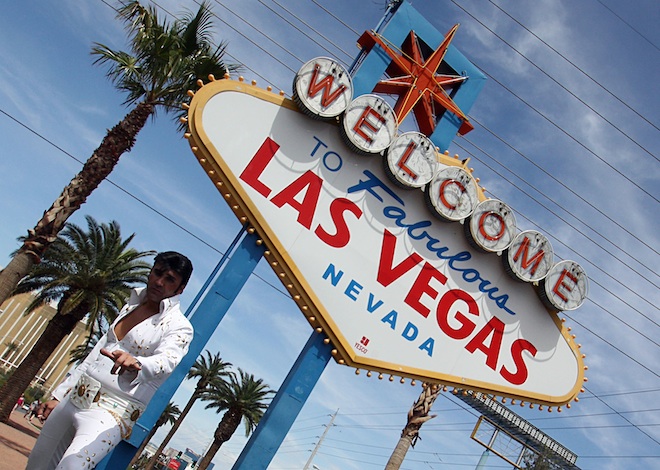
About a dozen such GOPers from the UNLV College Republicans gathered at a Vegas bar on Tuesday to watch the primary results trickle in from Florida. The group is a refuge for mainstream Republicans, who say they’re an outgunned minority at a school whose right wing is dominated by Paul supporters that gather via their own organizations.
It’s not that the College Republicans don’t like Paul — virtually everyone I talked to had enthusiastic praise for his ideas and energy.
“I think Ann Coulter put it best,” Ken Minster, senior vice president of the group and dedicated Romney supporter, told me. “We need Paul up there to keep the other three talking about the Constitution.”
But just like you can’t be a little bit pregnant, it’s tough to be a little bit into Paul. Minster, clad in a perfectly pressed suit matched with a shiny off-pink tie (much mocked by his fellow members), described his difficulties coordinating their efforts.
“That group is very hard to work with, but we’re always open,” he said. “They don’t like us — they see the party as racist, warmongering. But we try.”

Sitting to our left, Mitch Cain, a slick-haired Marine vet sporting a name-tag with his Twitter handle “Hipstervative,” was too caught up arguing with a local Gingrich aide, Ronald Solomon, who had come to court the youth vote, to watch his favored candidate, Romney, deliver his victory speech.
“He raised taxes all over Massachusetts!” Solomon said. “Who knows if he’ll cut taxes as president!”
“That’s not what he’ll do,” an exasperated Cain shot back. “We know what Newt will do — sleep with all of his staffers!”
Heated as things got, they soon resolved their differences over cold beer and hot wings. No one takes it personally. After all, you better be used to arguing if you’re a College Republican.
Cain told me he had experienced a similar dynamic as Minster when it comes to Paul.
“My problem isn’t with him,” he said. “It’s the way I get attacked for not supporting him. They think you love him or you don’t love liberty.”
“They’re militant,” another member chimed in.

And that’s in addition to the usual fish-out-of-water pressures young Republicans face. After all, they don’t call it the Grand Old Party for nothing: the average Republican primary voter was 66 in Iowa, 63 in New Hampshire, 64 in South Carolina, and 66 in Florida, according to AARP’s surveys. The party still doesn’t have a lot of truck with the Obama Generation.
“Being a young conservative is discouraging,” Todd LaRochelle, an undergrad business major backing Romney, sighed. “You’re always getting into fights — people assume you’re rich, white, racist, narcissistic, you don’t care about the general welfare.”
Alan Amici, a senior and treasurer of the UNLV College Republicans, said the Paul crowd was “awesome, very passionate, and principled” and that his 800-member organization did include some of his supporters. But one challenge for Amici and his fellow campus Republicans is convincing the fiercely independent Paul crowd of their inner partisan.
“We need to recognize the importance of beating Obama, whoever the nominee is,” he said. “Our goal is to bring them in.”