

NEW YORK (AP) — The Associated Press won the Pulitzer Prize for public service Monday for documenting the use of slave labor in Southeast Asia to supply seafood to American tables — an investigation that spurred the release of more than 2,000 captive workers.
The Los Angeles Times was awarded the breaking news prize for its coverage of the shooting rampage by husband-and-wife extremists that left 14 people dead in San Bernardino, California, and The Washington Post received the national reporting award for an examination of killings by police in the U.S.
Besides recognizing some of the biggest national and international stories of the year, the awards spotlighted deep dives into a chilling rape case, the long arc of school segregation, and the mistreatment of psychiatric patients. The New Yorker was honored in the criticism and feature writing categories, which only recently were opened to magazines.
The New York Times won for international reporting for detailing the plight of Afghan women, while the Times and Thomson Reuters both took the breaking news photography prize for images of refugees. The Times’ reporter on the Afghan story, Alissa J. Rubin, said she was “overwhelmed” to see the work recognized.
The Boston Globe also won two awards: the feature photography prize for pictures showing the life of a poor, 6-year-old boy who survived a horrific beating by his mother’s boyfriend, and the commentary award for Farah Stockman’s work on the legacy of school busing in the city.
The Tampa Bay Times and the Sarasota Herald-Tribune received the investigative reporting prize for demonstrating that years of budget and staff cuts and overall neglect had resulted in a dramatic uptick of violence in Florida’s mental hospitals.
The Tampa Bay Times also won in local reporting for detailing the harmful effects of ending school integration in Pinellas County, Florida. After the newspaper reported that the school board failed to provide promised resources to schools with mostly black students, officials increased funding and teacher training.
ProPublica and The Marshall Project won for explanatory reporting for exploring a rape case in which authorities initially didn’t believe the victim, prosecuted her for lying, and years later came to realize she was telling the truth.
Marshall Project reporter Ken Armstrong saluted the woman’s courage in telling her painful story and marveled that the 17-month-old news site had landed the prize.
“It was just really, really cool to think about what we’ve done in so little time,” he said.
The New Yorker was awarded the feature reporting prize for a story on the enormous Cascadia fault line under the Pacific Ocean, while the magazine’s Emily Nussbaum won in the criticism category for her TV reviews. Magazines became eligible for the criticism award this year and the feature writing prize last year.
Nussbaum tweeted her thanks to The New Yorker “for letting me mouth off” and “think out loud.”
In editorial writing, John Hackworth of Sun Newspapers of Charlotte Harbor, Florida, was honored for his pieces about a deadly assault on an inmate by guards. Jack Ohman of The Sacramento Bee took the editorial cartooning prize, with judges praising his “wry, rueful perspectives” and “sophisticated style.”
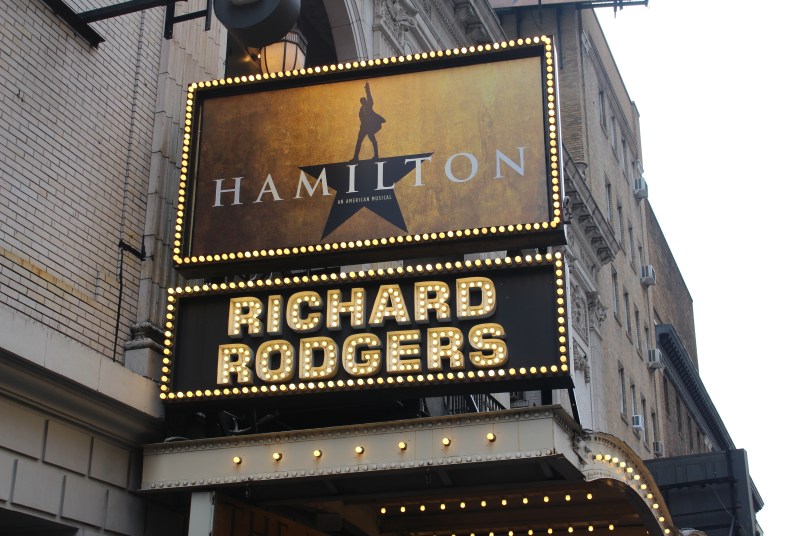
The awards marked the centennial of the Pulitzers, American journalism’s highest honors. The prizes are also given in arts categories, where the drama prize went to “Hamilton,” the hip-hop musical about Alexander Hamilton that has become a Broadway sensation.
AP journalists Margie Mason, Robin McDowell, Martha Mendoza and Esther Htusan chronicled how men from Myanmar and other countries were being imprisoned, sometimes in cages, in an island village in Indonesia and forced to work on fishing vessels. The stories also detailed the use of slave labor in processing shrimp.
The project took well over a year and involved tracking slave-caught seafood to processing plants that supply supermarkets, restaurants and pet stores in the U.S.
“If Americans and Europeans are eating this fish, they should remember us,” Hlaing Min, 30, a runaway slave from the Indonesian island, told The AP. “There must be a mountain of bones under the sea.”
The stories, photos and video led to freedom for thousands of fishermen and other laborers, numerous arrests and seizures of millions of dollars in goods.
AP Executive Editor Kathleen Carroll commended all of AP’s journalists, saying they “stand up for people who don’t have a voice” and “use the tools of our craft to inform the world and, occasionally, right wrongs that need to be righted.”
The award was the news cooperative’s 52nd Pulitzer and its first for public service.
Htusan, a native of Myanmar, said: “The best prize is that all the men from my country who were trafficked came back home.”
The Post, meanwhile, explored an issue that has prompted protests and debate around the U.S. in recent years. The newspaper found that in 2015, on-duty police officers shot and killed 990 people nationwide — and that unarmed black men were seven times more likely to die at the hands of police officers than unarmed whites.
The story also found that FBI statistics on deadly police shootings were unreliable and incomplete. The bureau has since pledged to compile and publish more data.
“It was a very simple idea: How many people were being killed by the police each year, and why don’t we, as taxpayers, know that?” said Wesley Lowery, a 25-year-old reporter on the project.
Established by newspaper publisher Joseph Pulitzer, the prizes were first given out in 1917. Public service award winners receive a gold medal; the other awards carry a prize of $10,000 each.
___
Associated Press writers Adam Geller, Deepti Hajela and Jake Pearson in New York, Tamara Lush in St. Petersburg, Florida, and Ben Nuckols in Washington and contributed to this report.
___
Copyright 2016 The Associated Press. All rights reserved. This material may not be published, broadcast, rewritten or redistributed.







I saw some scenes on TV. I’m showing my age I know, but cannot understand who likes this historical narrative delivered in rap.
I must say that I’m pleased and, unfortunately, a bit surprised that there are so many pro-social pieces which were awarded prizes for exposing severe societal problems.
I’m also disturbed that so many of them (in fact all of them, at least at first scan) are absolute news to me.
Am I that uninformed, or is there something that is getting in between these kinds of pieces and a broad availability to the populace?
I am thrilled that Lin-Manuel Miranda was awarded a Pulitzer for ‘Hamilton’ which I think is brilliant.
When he offered the beginning of it at the White House in 2009 I was hooked, as were both Obamas.
I get as big a grin as they did every time I watch this four minute clip on Youtube of his performing it as part of the White House Poetry Jam: Lin-Manuel Miranda .
I walked out. The audience was fawning, and some said they were learning history. The music was without melody. Glad the ticket was a present.