

WASHINGTON (AP) — Internal documents released late Friday show managers at the U.S. Environmental Protection Agency were aware of the potential for a catastrophic “blowout” at an abandoned mine that could release “large volumes” of wastewater laced with toxic heavy metals.
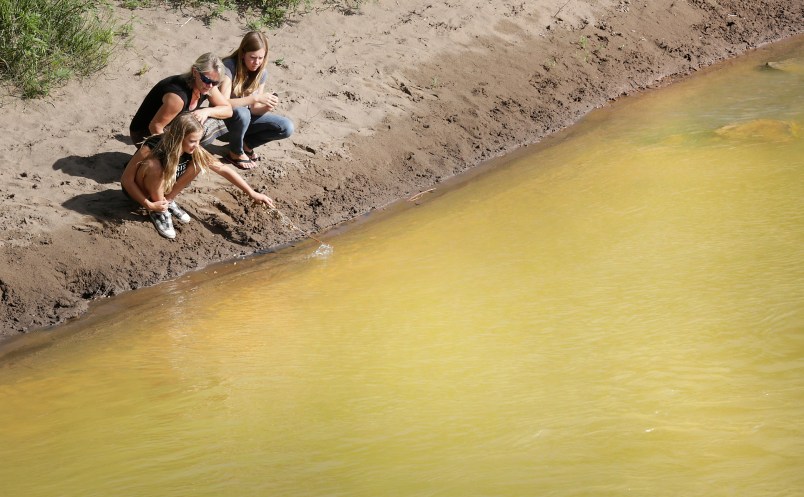
EPA released the documents following weeks of prodding from The Associated Press and other media organizations. EPA and contract workers accidentally unleashed 3 million gallons of contaminated wastewater on Aug. 5 as they inspected the idled Gold King Mine near Silverton, Colorado.
Among the documents is a June 2014 work order for a planned cleanup that noted that the old mine had not been accessible since 1995, when the entrance partially collapsed. The plan appears to have been produced by Environmental Restoration, a private contractor working for EPA.
“This condition has likely caused impounding of water behind the collapse,” the report says. “ln addition, other collapses within the workings may have occurred creating additional water impounding conditions. Conditions may exist that could result in a blowout of the blockages and cause a release of large volumes of contaminated mine waters and sediment from inside the mine, which contain concentrated heavy metals.”
A subsequent May 2015 action plan for the mine also notes the potential for a blowout.
There are at least three ongoing investigations into exactly how EPA triggered the disaster, which tainted rivers in Colorado, New Mexico and Utah with lead, arsenic and other contaminates. EPA says its water testing has shown contamination levels have since fallen back to pre-spill levels, though experts warn the heavy metals have likely sunk and mixed with bottom sediments that could someday be stirred back up.
The documents, which the agency released about 10:30 p.m. eastern time, do not include any account of what happened immediately before or after the spill. The wastewater flowed into a tributary of the Animas and San Juan rivers, turning them a sickly yellow.
Elected officials in affected states and elsewhere have been highly critical of the EPA’s initial response. Among the unanswered questions is why it took the agency nearly a day to inform local officials in downstream communities that rely on the rivers for drinking water.
Much of the text in the documents released Friday was redacted by EPA officials. Among the items blacked out is the line in a 2013 safety plan for the Gold King job that specifies whether workers were required to have phones that could work at the remote site, which is more than 11,000 feet up a mountain.
EPA did not immediately respond Friday night to questions from the AP. In the wake of the spill, it has typically taken days to get any detailed response from the agency, if at all.
On its website, contractor Environmental Restoration posted a brief statement last week confirming its employees were present at the mine when the spill occurred. The company declined to provide more detail, saying that to do so would violate “contractual confidentiality obligations.”
The EPA has not yet provided a copy of its contact with the firm. On the March 2015 cost estimate for the work released Friday, the agency blacked out all the dollar figures.
___
Follow Associated Press writer Michael Biesecker at http://Twitter.com/mbieseck
Copyright 2015 The Associated Press. All rights reserved. This material may not be published, broadcast, rewritten or redistributed.







The reporting on this holding pond blowout just reeks. In an effort to put the blame for the contaminated water solely on the EPA the media including this article completely ignore the fact that this mine was privately owned by the “San Juan Group”. That group of investors as well as the citizens in the local mining community knew that the abandoned mine was leaking toxic water into the river because all the fish had been killed off a decade or more ago. The EPA wanted to declare the entire area a Superfund site because of the wide spread contamination caused by mining but the locals and mine owners were afraid such a designation would prevent reopening the mines that supply local employment as well as lowering their property values. So the mine owners walked away from the contaminated dam holding the millions of gallons of water with more leaching in every day. The EPA attempts to find the source of the contamination and in the process unleashes the impounded water into the already contaminated river. What the EPA did was an accident but what the owners did was intentional criminal neglect. Why in the name of dog is it so hard for reporters to include that history into it’s ongoing disinformation campaign against the EPA?
Thanks. After reading the 4th paragraph I was going to say it sounded like it was probably slow leaking anyway but your information answered any further questions I had.
The rivers keep being described as “pristine” in news reports, but several articles have pointed out that they were far from it. The waters were clear in part because there was little living in them. There wasn’t the heavy metal pollution, but the water was already acidic from leaching of mine tailings.
I keep looking for the conclusion that’s supposed to follow from the foreknowledge that’s the topic of this article and I’m having trouble finding it. They knew it could happen? OMG! Well that change everything! Clearly, if you know a thing can happen and you’re taking steps to keep it happening that fail, that makes it your fault the thing happened!
I swear to god, the squirrels who raid my birdfeeder have more reasoning ability than the average journalist these days.
The height of Republican style “Why haven’t you cleaned up my mess for me?” thinking.
Before I moved to Colorado I was hiking with friends and was playing around in a stream when native resident friends had fun explaining to me that I was just downstream from an abandoned mine and a huge pile of tailings. Before that day I didn’t know what mine tailings were. Now I’ll never forget.