


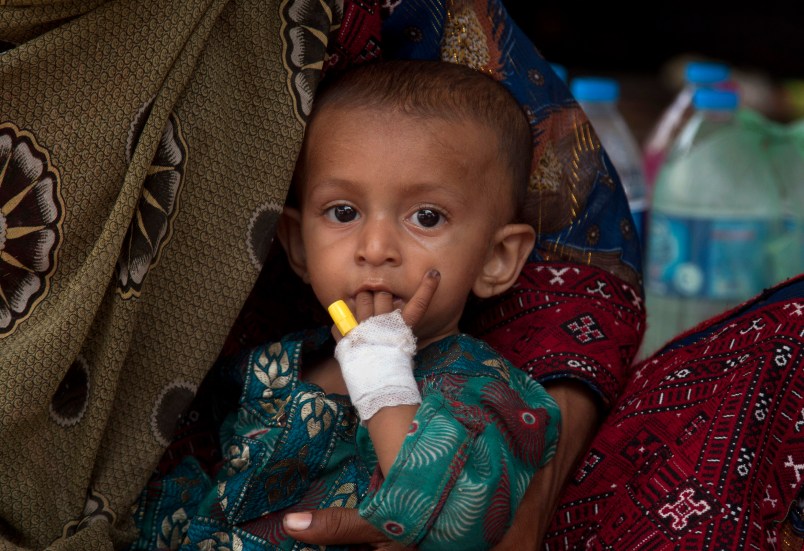
ISLAMABAD (AP) — A devastating weeklong heat wave in Pakistan’s southern port city of Karachi killed 1,233 people, an official said.
Nazar Mohammad Bozdar, operations director at the Provincial Disaster Management Authority, said about 65,000 heatstroke patients were treated by doctors at all of Karachi’s hospitals since June 20 when the heat wave struck Sindh province, where Karachi is the provincial capital.
He told The Associated Press that 1,923 patients with heat-related ailments were still being treated.
“The government quickly responded by making arrangements for the treatment of heatstroke patients and the situation has improved now,” he said.
Pakistan’s deadliest heat wave on record coincided with the holy Muslim month of Ramadan, when Pakistan’s Muslim majority observed a dawn-to-dusk fast.
The temperatures in Karachi came down to 34 degrees Celsius (93 degrees Fahrenheit) after reaching 45 degrees Celsius (113 degrees Fahrenheit) a week ago amid chronic power outages, which forced many residents to spend nights outdoors.
The heat wave shocked many Pakistanis just weeks after soaring temperatures caused nearly 2,200 deaths in neighboring India.
Since then, it has raised fears that South Asia could be seeing some of the devastating effects of human-caused climate change.
On Saturday, TV footage showed a charity burying several unidentified bodies of people who died earlier this week because of the heatstroke. Pakistani television stations reported that several unidentified bodies were buried by the Edhi Foundation charity because local morgues were overflowing.
Copyright 2015 The Associated Press. All rights reserved. This material may not be published, broadcast, rewritten or redistributed.






I’m afraid this phenomenon will occur frequently from now on. As climate change devastates previously livable regions of the planet, the exodus of refugees into the remaining habitable areas with available fresh water will be immense.
I think we are at the point where cutting emissions isn’t about stopping or reversing trends, but stalling to give us enough time to even make more difficult structural changes in our societies.
India and Pakistan are too busy waving their peckers at each other as they simultaneously roast and drown. The same can be said about us and Rusia/China.
[1]

It’s Ramadan too, which means that many of the dead were probably toughing it out without water all day (4-ish to 7:20-ish in Pakistan)
I don’t mean to rank on Islam, but I used to wonder how Muslims made it through the annual fast. The ones I know seem to enjoy the camaraderie and sense of self-control and purification. But they’re fasting in New York, where we have air conditioning all day and as much running water as you can drink all night.
Anyway, the answer seems to be that some don’t, in fact, make it, and this must have been historically true–especially when Ramadan occurred (as it is now) during the longest, hottest days of the year. So the inclusion of water in the fast (which seems dangerous) is unlikely to change, even if the climate does.