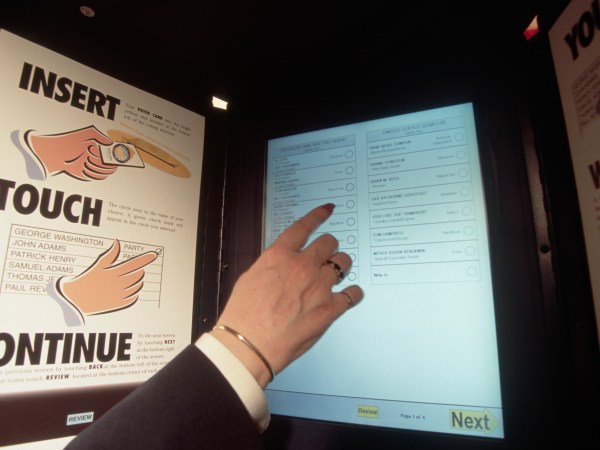




I corresponded with a TPM Reader from the tech world recently who marveled at the political salience of data centers when data centers have been around since the late 90s. Many data centers today are orders of magnitude larger than their pre-AI relatives, gobbling up much more energy, making more noise and physical pollution. But he noted that the bulk of them aren’t nearly that large. These points each have some truth to them, though I think it understates the real-world impact of hyperscaler data centers. And, as I’ve noted, a lot of our collective social angst about data centers and AI is really focused on oligarchy — the way that it appears to be the tech oligarchs’ world and we’re just living in it. The ability for town and county councils to say no to data centers is irresistible precisely because it’s the one case where democratic self-government is in a position to say “NO!” and that’s so contrary to all our other experience these days. But there’s an entirely different vantage point on this question I want to focus on.
The impact of particular data centers in particular places is one issue. But the macro-story is even bigger and more jarring. Axios has a piece this morning about how the housing sector is getting hammered by the hyperscaler AI boom, both buildings and buyers. And as you may have heard the lack of affordable housing is a rather pressing issue in American society today. This applies to everything from inflation/scarcity of the physical building blocks that are used for building housing to the scarcity of capital to fund it. If that sounds overstated look at this chart from a study we discussed late last month and which got written up in various publications.





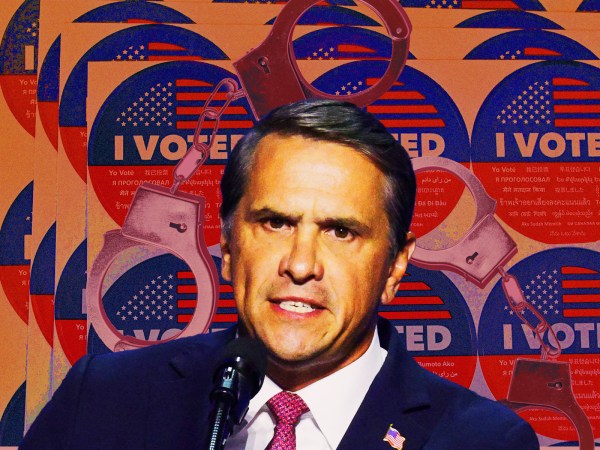



In my earlier posts on the Habba-Grenell mutual self-immolation spectacle, I’d told you that while Ric Grenell is as nasty as they come, I was skeptical that he was quite dumb or reckless enough to be involved in what Alina Habba and her new husband were alleging.
But I may heve been wrong!
There’s a new report out in Axios that adds a bunch more detail to the story. But before getting to that report, there’s some important context and caveats. I wouldn’t see this new Axios report as quite a “report” in the sense of new reporting that advances the story. It’s better to see this as three players (the White House, Grenell and Habba/Mildon) each of whom are trading a very hot potato back and forth between the three of them and hoping not to be the one left holding it when the music stops. But instead of a literal potato, that lashing out is taking place through new batches of leaks. We need to be clear that each batch of new leaks is from an interested party, with its own goals and agenda. And it may include some false details or more likely ones that are misleading. But on balance each batch of leaks is probably mostly true, helps fill out the emerging picture and sinks both adversary parties (Grenell and Habba/Mildon) deeper into the quicksand.