




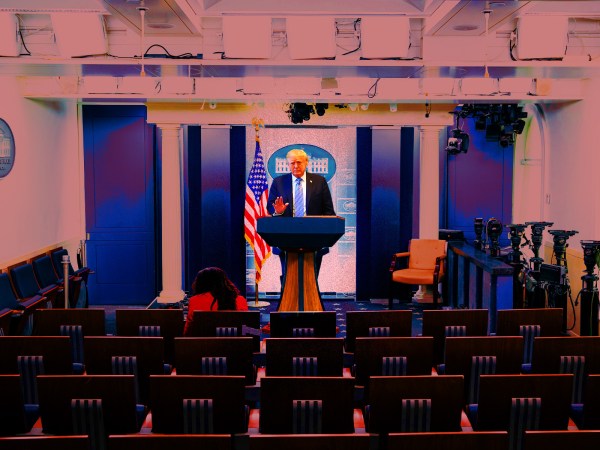
Daniel Drezner says we are now in the Wile E. Coyote phase of the 2026 midterm, the phase of six weeks or so in which everyone knows the GOP is toast but we pretend we don’t. Some of this is simply the political press’s collective suspension of disbelief. It’s neither fair nor fun to act as though the outcome is mostly known. Nor is this new. G. Elliott Morris notes that election odds makers consistently overstate the odds of the president’s party in the midterms, which is sort of another way of saying the same thing since the president’s party is usually on the losing end of the proposition. I would argue that a significant amount of this remains the structural, though not necessarily ideological, bias in favor of the Republican party — two decades on, Washington, D.C. remains wired for the GOP. But what all of this really reminds me of is the aftermath of the 2024 presidential election and what was then referred to as the “vibe shift” — both the hidden reality Donald Trump’s narrow but clear victory had purportedly revealed but also the shift in attitudes about cultural power and the future driven by that victory.
In elite circles the argument and belief went something like this. We thought that MAGA was a movement of reaction fueled by those left behind or discarded by the forward march of history and culture trying to wrench society back to an imagined 1950s. Not at all. In fact, it was the movement of the young and the most vital elements of the culture and the future. It was even expanding in the non-white constituencies which were supposed to be the anchors of the political left, the communities which were supposedly the targets and victims of MAGA, not its latest converts. Most of all, MAGA now had cultural sway to match its electoral power. And both were growing.




One of the key arguments for a great power — other than the great power itself wanting to be one — is that they act as a guarantor of stability and the status quo. That is far from the only public or global good. And a great power will ensure that status quo on its own terms and mostly to its own advantage. But if you have any acquaintance with history, you know you can do a lot worse than relative peace and the status quo. Trump’s Iran War has been a bracing illustration of all these realities. Once the great power starts letting things break, those breakages can start multiplying very fast. Eventually you’ll find a new equilibrium, of course. But eventually can take a long time. And again, even a passing acquaintance with history tells us that things can suck without end for extended periods of time.
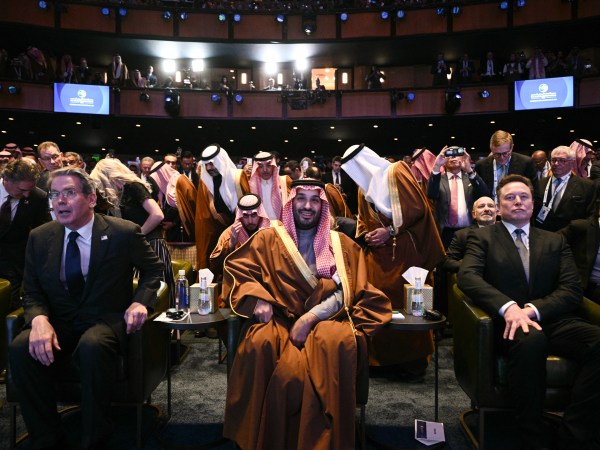
There’s an interesting New York Times piece from over the weekend that illustrates all these things. We know the outline. But it provides new details. As a knock-on effect of the U.S. war with Iran, the ongoing battle between Saudi Arabia and the Houthi rebel government in Yemen has again become hot. In recent weeks, the Houthis have partly cut off Saudi Arabia’s other path to the ocean. Put simply, the Saudis can export oil through the Strait of Hormuz or the Red Sea. The former has been mostly closed for months. Now the Houthis are in de facto or near control of the second. That’s a big crisis for the Saudis. This is part of the larger U.S.-Iran battle because the Houthis are clients of Iran. And Iran’s core strategy has been to create enough pain for the U.S.’s regional allies that they will force the U.S. to end the war. Remember, each time the U.S. attacks Iran, they respond by attacking the various Gulf emirates.