



I wanted to share a small observation about the interweaving worlds of AI, oligarchy, monopoly and — more distantly, but only a bit — autocracy. Over the years I’ve written regularly about the intersection of technology and journalism and the business models which underlie journalism. Because of TPM, I had a front-row seat to many key events, trends, dead ends and more in the evolution of the business models of digital journalism over more than two decades. I’m not sure I knew more than anyone else — certainly lots of people knew more than me about the details of particular areas of knowledge. But I was up close and had a good view of the big picture. What set me apart somewhat was that there were very few people working so closely and obsessively with these evolving business models (a matter of pure necessity) who were also full time writers. In any case, those of you who’ve been TPM Readers for many years will know a lot of that writing on the intersection of tech and journalism. (I have a post coming in the next few days which will add a new chapter to that, TPM’s place in those evolving or declining business models, and I hope you’ll take a moment to read it.)
About a decade ago I wrote a lot about Google’s evolving monopoly role in the advertising business. But what I always worked to keep front and center in that writing was that Google was significantly different from the other emerging platform monopolies in that its DNA and profit centers were built around the open internet. Facebook is a walled garden. It always was. Ideally it wanted you to spend every minute on Facebook. Apple was and is also a walled garden, albeit a more lovely one. Google’s DNA was different. Its wealth and power began with search. And search requires things you want to search for, which is to say other places to go besides Google websites. Now, in practice, not everything Google did was just like this. But, big picture, this made Google a very different operation than Facebook, to cite one very big example. Its profound monopoly power in the digital advertising world grew directly out of its power in search. And even after that monopoly power was firmly entrenched, its advertising business was heavily weighted toward non-Google websites subcontracting to Google the right to run its digital ads on those websites.
Read More



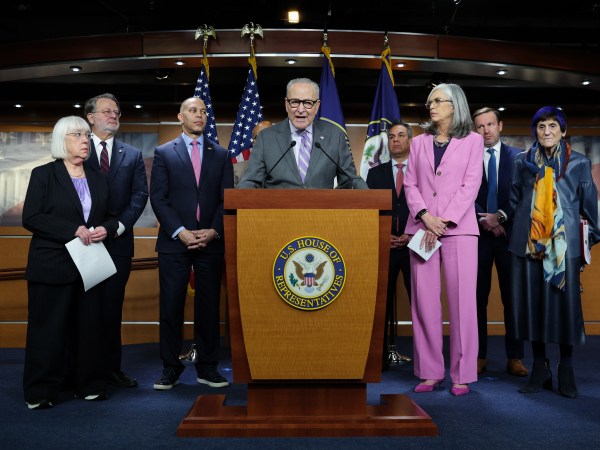


I’ve been observing the unfolding conversation about big DSA wins in New York City on Tuesday and specifically the clout Mayor Zohran Mamdani has gained because he went three for three in congressional endorsements. It’s a complex picture and I’m generally more sanguine about what’s happening than others. As I wrote, I think Chevalier doesn’t have any business in Congress. Lander and Valdez are simply the left wing of the Democratic party and on that front even Lander and Valdez are very different candidates. I may do a separate post on Chevalier’s extremism on Israel-Palestine and, yes, Jews, as well as other issues. Important topic but not the topic of this post.
I’ve made the point a few times that our political language and mental geography assumes that there are two political spectra in the Democratic party, one that is right/centrist to left and another that is accommodation to fight. It’s often assumed that these pretty neatly line up — progs and left-wingers are up for a fight but the more center-left or liberal folks are more cautious, institutionalist or even accommodationist. And yet there’s no real connection between these two things.
So far, so good. You’ve heard me make this general point many times. But it is really on the center-left, or liberals, to make clear that this isn’t the case. And to a great degree they are not — not convincingly — though there’s been progress on this front over the last eighteen months. And in a political climate in which people are both really angry and really scared and think major change is necessary, the old rhetoric, the old posture just isn’t going to cut it. It doesn’t speak to anyone. It seems jarringly out of touch with the moment.
Read More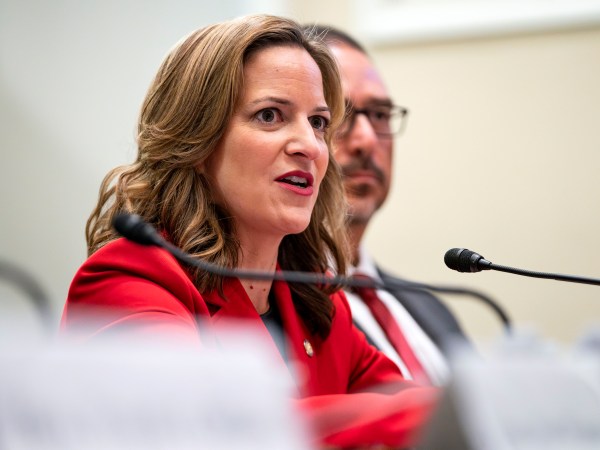

An important new story by Layla A. Jones out this morning shows yet another way right-wing conspiracy theories may be making their way into government, impacting regular people’s lives.
For more than a decade, the Census Bureau has been preparing to swap out the way it records people’s race and ethnicity, eliminating the separate “Hispanic or Latino” ethnicity option and adding more options to the question about race. The change was intended to offer people categories that better reflect their understanding of their identity; many respondents had been checking “other” rather than choosing from the categories available.
Here’s where the story gets weird.
Read More