

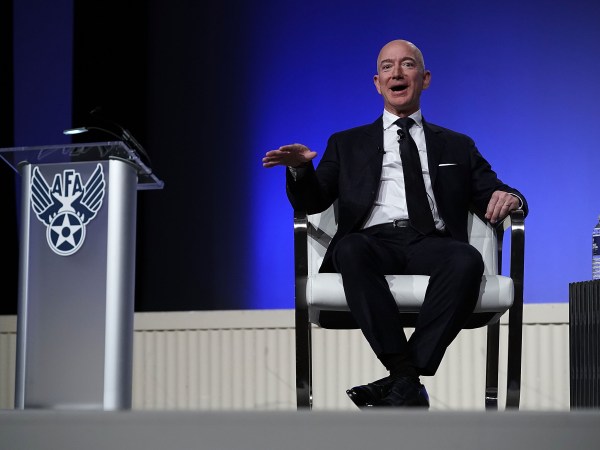

It’s part of the stock in trade of liberal American discourse: threatening or claiming to cancel a subscription to this or that once-revered journalistic institution in response to bad behavior, bad reporting, failing to rise to this or that civic moment. But the rash of cancelations of The Washington Post, in response to the Bezos-driven non-endorsement seems very different, much more sizable in its scope. I should say here I’m not telling anyone to do that. I don’t like telling or pushing people to do things in general. On this whole push I’m genuinely agnostic, neither for or against it. And most importantly, I write in this case simply as an observer, not a cheerleader. But I think the brand damage to the Post may be greater even than people realize and go beyond whatever near-term hit they take on subscriptions. I want to share some thoughts on why I think that is.
A big slice of American is living in a climate of deepening bewilderment. That’s basically Blue America, civic America and the more politicized part of the group I’m describing. This bewilderment is tied to the role of billionaires in public life, the role of Donald Trump in our public life, but it goes beyond both.
Read More

Let me share a few quick thoughts on newspaper endorsements. This comes after we learned that first the LA Times and now the Washington Post will break with tradition and not endorse a presidential candidate this year.
First, I’m not sure there’s any point these days in newspapers endorsing political candidates, especially presidential candidates. I don’t think much about it either way. But, especially in the case of the Post, this is a bad and cowardly development. We can’t know for certain what went into these decisions. But the most obvious explanation is that they have billionaire owners who, especially in the case of Jeff Bezos, have other business interests which are vulnerable to adverse regulatory and contracting decisions as well as government harassment of other kinds. Those are very real threats and ones that a lawless president has a lot of latitude to exact without much if any real prospect of redress. It’s not a habeas situation. These are just discretionary decisions in most cases.
Read More
Axios this morning leads with the email subject line: “Dems’ private panic.” And then inside the email “1 big thing: Dems fear they’re blowing it.” In this case I’m not really writing to criticize Axios, which I admittedly, and rightly, often do. Because what they’re describing here is real. This post is agnostic on what the result of the election is going to be. And for what it’s worth, I keep in close touch with numerous high level campaign operatives in the swing states and I do not sense panic or pessimism from them. They all know it could go either way but I don’t think they think they’re losing. My topic is this blame feature of Democrats’ mass psychology, which is strongly echoed in the press, and their tendency to panic and almost always think they’re going to lose unless the available evidence to the contrary is simply overwhelming. But it’s not the “bedwetting” that interests me most. It’s the second version of the headline, that blame feature: “Dems fear they’re blowing it.”
Read More

Wednesday I mentioned Michael McDonald, the professor at the Univeristy of Florida who is an election data guru. Something I noticed in the first days of early voting was that most of the swing states that surfaced gender breakdowns for early voting showed around a ten point spread between men (~45) and woman (~55). There are more women than men and women vote more than men. So the difference didn’t surprise me. But that spread still seemed pretty big. So I asked McDonald whether that was a signal of any sort. He said, no, that’s roughly the spread you see in early voting.
But over the last couple days, both in my exchanges with him and in a few of his tweet updates, something else has come out of this. That ~10 point spread is about what we should expect from other cycles. But we’re also seeing a lot more Republican early voting. All things being equal that high rate of Republican early voting should be compressing that gender divide. But it’s not.
Read More





The Times has a piece up this morning which is largely complimentary of Elon Musk’s political operation and Musk himself. It’s a far cry from the range of critical pieces which have been published elsewhere and which I’ve published. It rather confidently reports that Musk’s canvassers are hitting “well over 100,000 doors a day,” for instance, “according to a person with knowledge of the group’s activities.
Needless to say, that’s almost certainly someone from America PAC or someone who works directly for Musk. So the Times appears to be going purely off their say so. Which strikes me as more than a little odd.
Read More