

A few points that seem important to absorb — some of which may appear to be in tension.
I ALLUDED TO THIS in my earlier post on my list of military analysts. We’re seeing lots of imagery of downed plans, shattered tanks, captured tanks, often with detailed information about where and how they were destroyed. But that flood of information often leaves us — even if we don’t know it — unclear on the big picture. This thread notes that many of us are getting an incomplete view of the situation in Ukraine because Ukraine’s (and its supporters’) social media efforts have been so effective. The issue here isn’t deception or misinformation, though there’s certainly some of that. It’s that the supporters of Ukraine are doing a very effective job surfacing imagery every time the Ukrainian army scores a tactical victory — destroying a tank, shooting down a plane. And we’re seeing much less of the fact that Russia is continuing to make progress on the ground — just slowly. Maybe very slowly. But they are making progress.

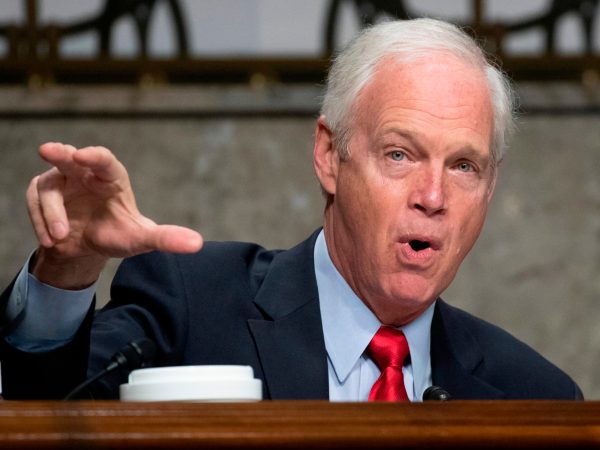
As we’ve documented closely over the last 12 days of Russia’s ongoing war on Ukraine, Republicans are offering up a confusing mix of reactions and deflections in response to Russian President Vladimir Putin’s invasion. Some have praised Putin, others have condemned him. But all are mostly mad at President Biden, for a slew of reasons mostly tied to a vague assertion that he’s been weak on foreign policy since taking office.
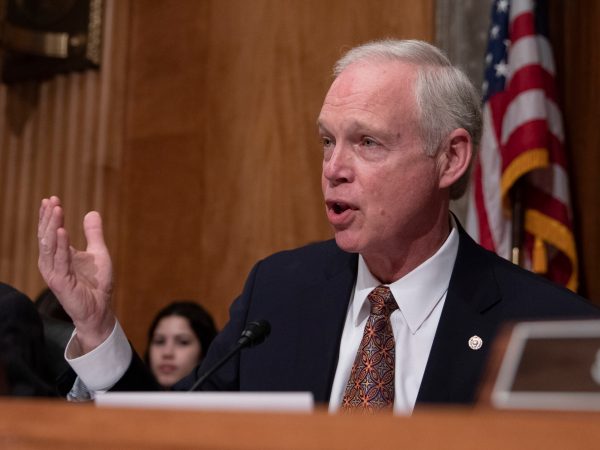
But Sen. Ron Johnson (R-WI) offered up a rather unique and entirely backwards hypothesis last week when he suggested that somehow those involved in impeaching President Trump the first time might be to blame for the current war in Europe. Of those attracting his ire: retired Lt. Col. Alexander Vindman, who was himself born in Kyiv and also became an important whistleblower in the impeachment drama.
Read More
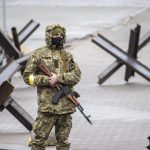
The AP has a new story about how unforced errors are potentially getting in the way of the GOP’s path back to a Senate majority in 2022. Most of us are aware of the developments the piece is referring to. You can review them here. I don’t want to get too deeply into the ins and outs of how bad this is for the GOP, whether it’s enough of a problem to keep the Democrats in power. But we know that in general this is a very real dynamic. Democrats managed to hold on to the Senate in 2010 in what was otherwise a brutal midterm rout. It happened again in 2012 — even though Democrats had to defend a ton of marginal pickups from the 2006 cycle. The dynamic is clear cut enough that it’s worth asking whether this is really a matter of “unforced” errors or whether this is what politics is like when politicians run in non-gerrymandered districts (i.e., states).




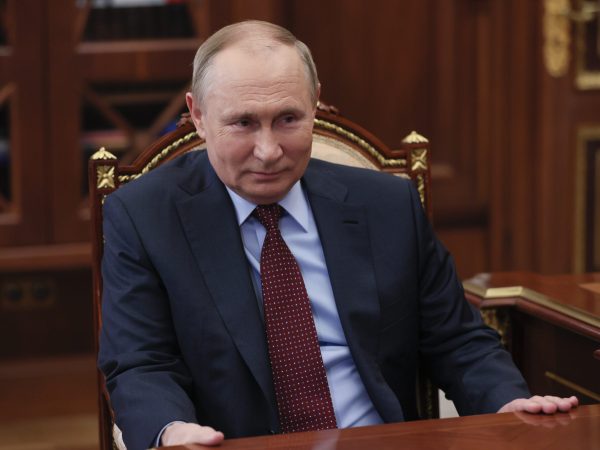
One feature of this almost two-week conflict between Russia and Ukraine is that civilians actually have access to lots of military information. Through open source intelligence, on the ground reporting and more we’re getting lots of details about battlefield losses of armor and aircraft, lines of control, shelling, ground movements, civilian and military casualties and more. But for most of us it’s pretty hard to know what these things mean. For instance, presumably it’s bad news for Russia if a couple of their planes get shot down. But are those expected combat losses or does it tell us something meaningful about the progress of the conflict? This is particularly important since Ukraine and its advocates are flooding social media with pictures of destroyed armor and downed airplanes. That makes total sense. They’re trying to maintain national morale and demonstrate their fighting capacity both to allies and to the Russian public. But assuming the photos are genuine, what do they mean? To help myself with this I’ve created the beginnings of a Twitter list specifically made up of military analysts. You can follow it here.
This new list is different from the one I’ve assembled for following the Russia/Ukraine Crisis in general. It only has a few members so far since this new list is focused on a very rarefied class of people: knowledgable military analysts with a special focus on NATO, Russia, Eastern Europe, the Russian “near abroad” etc. who are also prolific on Twitter. But I will be adding to it and would invite any suggestions.