


(A lot going on in that photo beyond what the caption says, on so many levels. It is from June 21, 1947, after Senate Democrats spent the previous night filibustering the eventual GOP override of President Truman’s veto of Taft-Hartley.)
Set aside for a moment the big issues like democracy reform that we know are stymied by the filibuster — it’s a given that its anti-majoritarianism holds up major generational reforms. Its impact goes far beyond that. The ways in which the filibuster infects not just legislating but the basic task of governance is so pervasive that it’s become part of the background noise of Washington. We don’t notice it anymore, but it’s hugely significant.


Democrats appear to be limping their way toward passing a slimmed down version of the President’s agenda. I don’t think we should be overly distressed that the final number is around $2 trillion as opposed to $3.5 trillion. You never get everything you want. And we can’t run from the reality that Democrats control Congress by the most tenuous of margins – in fact, no margin at all in the Senate. But Democrats should be asking themselves why it is that over the last three to four months the President’s public approval has fallen roughly ten points. In a highly partisan and polarized age that is simply a massive drop.
Why has this happened?
Read More


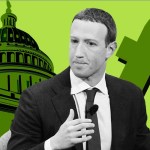
I haven’t been reading all of the articles now coming out of the so-called “Facebook Papers”. But this article from the Post captures some important issues, ones that aren’t tied necessarily to the specific revelations getting the most attention but a general picture. There are two big focuses to the piece. The first is that for a company of its scale Facebook still has an extremely top-down management structure. Basically Zuckerberg is deep in the details and makes all the big decisions. The second is that he has repeatedly shot down internal ‘harm reduction’ proposals because they threaten core engagement metrics.
I noted a few weeks back that these tradeoffs get to the heart of Facebook’s problem and the heart of what the site is. The harm is inherent to Facebook’s business model. When you find ways to reduce harm they’re almost always at the expense of engagement metrics the maximization of which are the goal of basically everything Facebook does. The comparison may be a loaded or contentious one. But it is a bit like the Tobacco companies. The product is the problem, not how it’s used or abused. It’s the product. That’s a challenging place for a company to be.
Read More


One of the many soft deadlines Democrats are facing as they trudge forward with their reconciliation package is the looming UN Climate Change summit in Glasgow. Last year’s Conference of Parties was postponed because of the pandemic, and, with the world now two years deeper into its worsening crisis, this year’s gathering is being heralded as the most important since the Paris Agreement was hammered out in 2015.
All that build-up comes as the U.S. Senate struggles to deliver the policies that would fulfill the President’s climate agenda.