

I’ve now read up a bit more on the particulars of the blow up between the US and France. It basically comports with my original understanding. Australia feels increasingly threatened by China. The Australians contracted with the French five years ago, in a significantly different and less threatening security environment. There were already significant delays and cost overruns with the French subs. But the key is that what the US could offer was demonstrably and critically better technology. A central attribute of attack submarines is that your adversary doesn’t know where they are. The French subs are louder. The Australians had good reason to believe they’d be obsolete on delivery.
To the Australians this must have seemed an open and shut case of critical national security interests against which the anger of the French was an unfortunate but inevitable and acceptable byproduct. A more capably armed Australia, meanwhile, fits neatly into what the Biden White House has made a central feature of its national security policy: countering Chinese ambitions to challenge or displace the US Navy as the dominant naval power in East Asia.
France has recalled its ambassadors to the United States and Australia in what amounts to a tantrum over the newly announced strategic partnership uniting the US with Australia and the United Kingdom. Critically, it means scuttling a deal under which France would provide conventional submarines to Australia for one under which the US will provide nuclear submarines to Australia. As a Great Power the US can do and provide what France simply cannot. And as tensions rise in East Asia, Australia feels it needs the real thing.
This is partly over losing a weapons deal but it seems more a fit of pique over France facing the reality that it is in fact no longer or a Great Power or a Pacific power. Most people have realized this for decades. The whole dust up is at once deeply stupid and yet feels far more consequential and significant than the meagerness of the actual controversy. It seems like one of those moments where the whole global firmament shifts, even though the trigger is risible, the hurt pride of a country which hasn’t come to grips with the 1950s.






Follow-on reporting about General Mark Milley’s crisis talks with his counterpart in the PLA just add more confirmation that these communications were entirely appropriate. We should be thankful they happened. We now know the calls were coordinated with the current and later the acting Secretaries of Defense. So it’s all very much by the book. As Tom Nichols explains here, the US military – and most professional militaries – invest great resources, often over decades, in military to military talks and liaison precisely for moments like this. If you need to make direct contact to defuse a potential crisis it helps a lot to have preexisting relationships in place. All of that investment is geared to moments like the ones described in the Woodward and Costa book.
There are reports that Trump, Mike Pompeo and the then-National Security Advisor didn’t know about Milley’s calls. If that’s true, then that is on the Secretaries of Defense, not Milley.
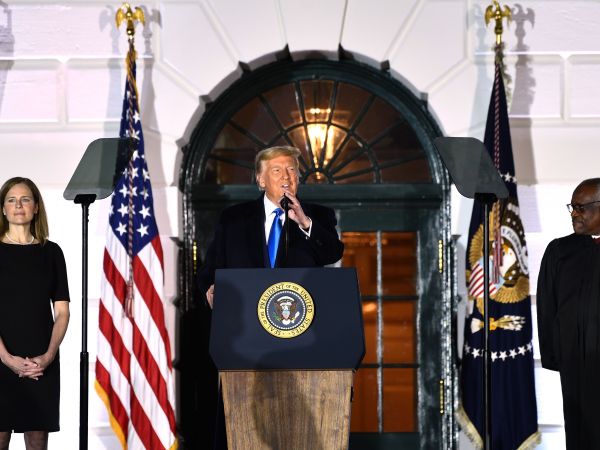


Especially since the withdrawal from Afghanistan the insider sheets have been relentlessly hostile to President Biden. Last night the Axios evening headline was “Biden’s China Fail”. Tonight it’s “Scoop: Biden Bombs”. Apparently Biden didn’t convince Joe Manchin to drop his opposition to a $3.5 trillion reconciliation package in their well-publicized-in-advance sit-down at the White House.
Axios’s gloss aside, this does not surprise me. At the most optimistic this is Manchin’s bargaining position going into a critical 6 weeks or so of negotiating within the Democratic caucuses in the House and Senate. Manchin’s just going to give way in advance because Biden asks him to? That makes no sense to me at all.