

WASHINGTON (AP) — The Supreme Court ruled Monday that police are immune from a lawsuit arising from the arrest and shooting of a mentally ill woman in San Francisco.
The justices said police were not liable for damages arising out of an incident where they forced their way into Teresa Sheehan’s room at a group home and shot her five times after she came at them with a knife.
The high court left undecided the question of whether police should have taken special precautions when arresting armed and violent people suffering from mental illness. Sheehan claimed police must make reasonable accommodations under the Americans with Disabilities Act for suspects with mental illnesses.
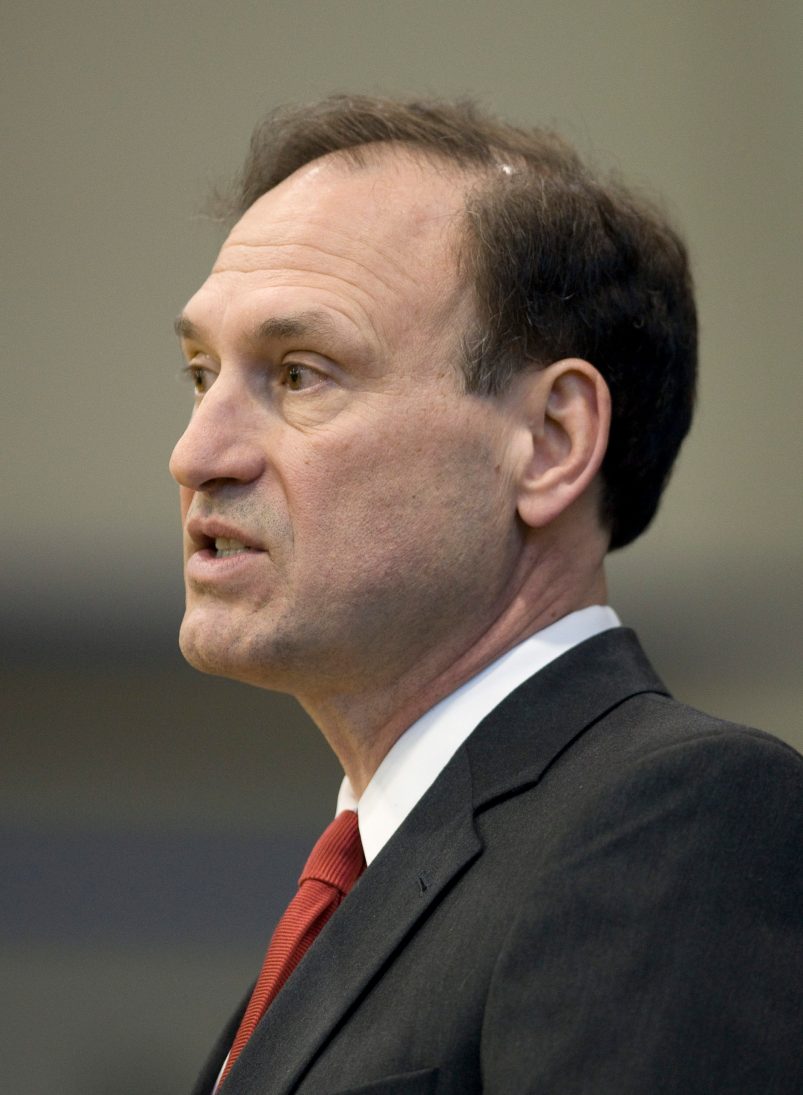
Writing for the court, Justice Samuel Alito said the justices wouldn’t take up that question because it hadn’t been fully considered by lower courts.
Qualified immunity protects public officials from being sued for damages unless the official violated a constitutional right that was clearly established at the time of the misconduct.
Six justices agreed that the police officers could not be sued in this case. Justices Antonin Scalia and Elena Kagan wrote separately to say they would have dismissed the case entirely. Justice Stephen Breyer took no part in the case, as his brother was the federal judge who heard the case.
The case had attracted attention from mental health advocates who said that failing to take account of a suspect’s disability often results in unnecessary shootings by police.
Law enforcement groups also weighed in, saying a ruling in Sheehan’s favor could undermine police tactics, place officers and bystanders at risk and open them to additional liability.
The ADA generally requires public officials to make “reasonable accommodations” to avoid discriminating against people with disabilities. But lower courts have split on how the law should apply to police conduct when public safety is at risk.
Alito said the justices would return the case to lower courts because that issue had not been adequately considered. He said the Supreme Court initially took up the case because the city argued that the disability act does not apply when police face armed and dangerous suspects. But then attorneys for the city changed their argument to say that Sheehan was not “qualified” for an accommodation under the law.
In Sheehan’s case, her social worker called police for help in restraining her so she could be taken to a hospital for treatment. Officers entered her room with a key, but Sheehan threatened them with a knife, so they closed the door and called for backup. But they said they weren’t sure whether Sheehan had a way to escape, and were concerned that she might have other weapons inside.
The officers then forced their way in and tried to subdue her with pepper spray. But she continued to come toward them with the knife and was shot five times.
A federal district court sided with the police, ruling that it would be unreasonable to ask officers trying to detain a violent, mentally disabled person to comply with the ADA before protecting themselves and others. But the 9th U.S. Circuit Court of Appeals said a jury should decide whether it was reasonable for the officers to use less confrontational tactics.
Copyright 2015 The Associated Press. All rights reserved. This material may not be published, broadcast, rewritten or redistributed.




It occurs to me to wonder what she was doing in a group home if she was not more stable than that.
Claimant: > failing to take account of a suspect’s disability often results in unnecessary shootings by police
SCOTUS: True, but, suck it, crazies.
Perhaps the police were called because the caller was OK with the shooting scenario. A variation on ‘suicide by cop.’
Standard operating procedure: Aggressively escalate the situation and then destroy any non-police units.
Additional liability?
Really?
Cause since late last year I’ve been wondering if the police are open to any liability when they kill someone.
Seems to me that the answer is still no. Probably even “Hell No”.