

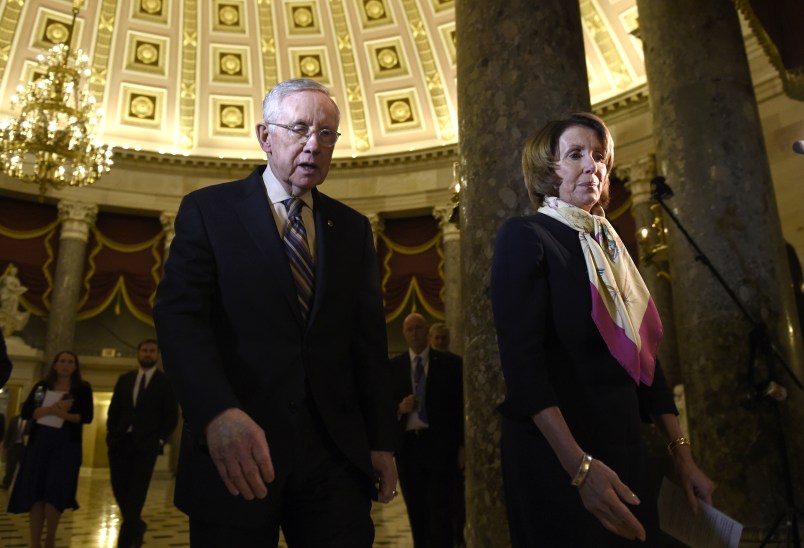
WASHINGTON (AP) — President Barack Obama said he’s eager to sign the two-year budget deal passed by the Senate in the pre-dawn hours Friday in hopes of breaking a “cycle of shutdowns and manufactured crises” that have hurt the U.S. economy.
Senators voted 64-35 for the measure that will spare the nation the specter of a catastrophic default and a partial government shutdown. Democrats teamed with Republican defense hawks to overcome opposition from conservatives who included two GOP senators running for president — Rand Paul of Kentucky and Ted Cruz of Texas.
Obama had negotiated the accord, passed by the House earlier this week, with congressional leaders who were intent on avoiding the brinkmanship and shutdown threats that have haunted the institution for the past several years. Departing Rep. John Boehner of Ohio made it his top priority in his final days as speaker before making way for Rep. Paul Ryan, R-Wis., who took over the leadership Thursday.
In a statement issued by the White House early Friday, Obama said the deal shows Congress can “help, not hinder” the nation’s progress. He urged lawmakers to work on other needed spending measures in the future “without getting sidetracked by ideological provisions that have no place in America’s budget process.”
The deal allows members of both parties to look ahead toward next year’s presidential and congressional elections. Republican leaders were particularly concerned that failure to resolve this vexing issue could reflect poorly on their ability to govern. There was significant opposition in the Senate, nevertheless, as Paul and Cruz made it a point to be on the floor to register their concerns.
In an hour-long speech that delayed the final vote to around 3 a.m., Paul said Congress is “bad with money.” He railed against increases in defense dollars supported by Republicans and domestic programs supported by Democrats.
“These are the two parties getting together in an unholy alliance and spending us into oblivion,” he said.
Cruz said the Republican majorities in both the House and Senate had given Obama a “diamond-encrusted, glow-in-the-dark Amex card” for government spending.
“It’s a pretty nifty card,” he said. “You don’t have to pay for it, you get to spend it and it’s somebody else’s problem.”
The agreement would raise the government debt ceiling until March 2017, removing the threat of an unprecedented national default just days from now. At the same time, it would set the budget of the government through the 2016 and 2017 fiscal years and ease punishing spending caps by providing $80 billion more for military and domestic programs, paid for with a hodgepodge of spending cuts and revenue increases touching areas from tax compliance to spectrum auctions.
The deal would also avert a looming shortfall in the Social Security disability trust fund that threatened to slash benefits, and head off an unprecedented increase in Medicare premiums for outpatient care for about 15 million beneficiaries.
The promise of more money for the military ensured support from defense hawks like Sen. John McCain, R-Ariz., chairman of the Armed Services Committee, while additional funds for domestic programs pleased Democrats.
Obama and Democratic allies like House Minority Leader Nancy Pelosi of California were big winners in the talks, but GOP leaders cleared away political land mines confronting the party on the eve of 2016 campaigns to win back the White House and maintain its grip on the Senate.
The measure leaves a clean slate for Ryan as he begins his leadership of the House.
Obama had repeatedly said he would not negotiate budget concessions in exchange for increasing the debt limit, though he did agree to package the debt and budget provisions.
“I am as frustrated by the refusal of this administration to even engage on this (debt limit) issue,” said Finance Committee Chairman Orrin Hatch, R-Utah. “However, the president’s refusal to be reasonable and do his job when it comes to our debt is no excuse for Congress failing to do its job and prevent a default.”
The budget relief would lift caps on the appropriated spending passed by Congress each year by $50 billion in 2016 and $30 billion in 2017, evenly divided between defense and domestic. Another $16 billion or so would come each year in the form of inflated war spending, evenly split between the Defense and State departments.
The Appropriations committees face a Dec. 11 deadline to craft legislation reflecting the spending priorities set forth in the compromise budget bill.
The cuts include curbs on Medicare payments for outpatient services provided by certain hospitals and an extension of a 2-percentage-point cut in Medicare payments to doctors through the end of a 10-year budget. There’s also a drawdown from the Strategic Petroleum Reserve, and savings reaped from a Justice Department fund for crime victims that involves assets seized from criminals.
Copyright 2015 The Associated Press. All rights reserved. This material may not be published, broadcast, rewritten or redistributed.



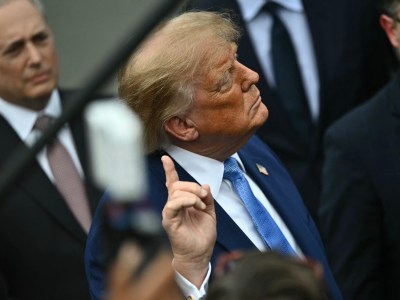
They both look like they are ready for Halloween, tired, cranky and on the verge of collapse. Welcome to American Democracy.
Paul and Cruz are just plain scary with the destruction and terror they want to bring to this country and the poor.
Happy Halloween.
Rand Paul…a spoiled little brat. I would imagine that everyone who knows him personally took the news with a straight face when Paul told them of his intention to run for President.
Held that facial expression until Paul left them.
And then collapsed in uncontrollable laughter.
So, how come the article doesn’t mention that Rubio, the media darling of the moment, voted “no” on the deal?
That means that each of the 3 Repub presidential candidates currently in the Senate voted no. That should be disqualifying right there.
Depending on who says it, that no vote will be mentioned later. However the best part of the show will be Marco’s reasoning as to why he voted no.
Consider what this agreement means.
President Obama and the Democratic Congressional minority have just gotten nearly everything they wanted from the Republican majority, and have protected their funding and policy priorities from what was expected to be a Tea Party/Freedom Caucus gut job.
No more hostages or shutdowns until at least 2017.
Last week President Obama publicly vetoed the Republicans’ NDAA bill and sent it back to address military preparedness and to remove accounting tricks to hide wasteful and unneeded military spending.
Several weeks ago, President Obama and the Democratic Congressional minority were able to uphold the Iran nuclear deal despite majority opposition, because earlier this year they insisted that they would only agree to a Congressional “review” that led to a vote on disapproval – and not on an approval, which would have been unlikely or impossible to achieve.
Also, early this year, a bipartisan bill which ended the Medicare “Doc Fix” passed with comfortable majorities – after being kicked down the road for more than 15 years.
It’s still early, but we may finally be turning a corner on government by crisis and hostage taking.
Too often we get disappointed seeing the short-term political gains the Republicans have reaped in recent years by demonizing the scary black man President Obama: winning both branches of Congress and a majority of state governments, and successfully blocking much of the Democrats’ agenda.
But here’s the good news: the Republicans are losing – and deep down they know it – and President Obama is winning.
Obama, in his even-tempered, professional way, is prodding moderates and independents to rethink their political ideologies, encouraging Democrats to sharpen their focus and rethink their priorities and strategies, and inviting independents and moderate Republicans – and even conservatives --to join him in crafting sensible compromises and solutions to the problems that face us all.
In doing so he is exposing and isolating the extremists as those unwilling to do the hard work of self-government.
It has been a long game, yes, and maybe not as immediately satisfying to some Democrats and liberals who would have preferred him to play the part of the stereotypical angry young black rabble rouser.
But with his economic policies that laid the groundwork for recovery, in his domestic policies that protected – and expanded – the social safety net, and in his foreign policies that ended the threat of an Iranian nuclear weapon and the neocon policy of preemptive wars and which pivoted our focus from the Middle East quagmire to the increasingly important Pacific Rim, he is reviving the dream of the American Century and confronting the illusory neocon dream of American Empire.
And when the history of this era is written, President Obama, Speaker Pelosi, and Majority Leader Reid will be lionized as the most productive and progressive force in a generation.
What they achieved in just a brief period of time with a small Democratic majority, and with razor-thin votes in Congress, hasn’t been matched since the early years of LBJ. And what they’ve done to protect their priorities since the Republicans won majorities in Congress has been remarkable.
Much remains to be done. This work will take years and future administrations, but the groundwork is being laid. And Obama is preparing and inspiring a new generation of leadership with his management style, which the Republicans deride as “leading from behind” but which is actually a progressive form of leadership that involves a sharing of power that comes from mutual respect and not domination over others.
It is not apparent now, but it will become apparent in retrospect a generation from now, that we are living in the Age of Obama.