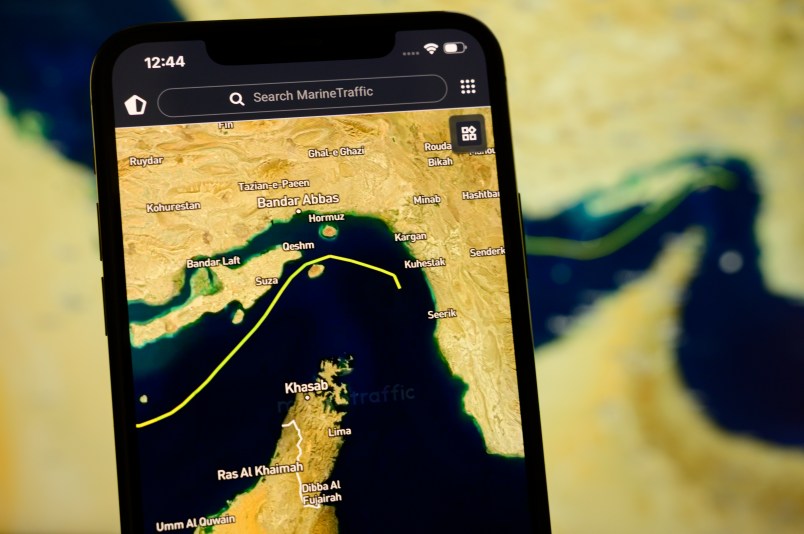
One of Trump’s Truthed conditions for a ceasefire was the “SAFE OPENING of the Strait of Hormuz.” The White House appeared ready to declare that condition met. But even this morning, before reports emerged that Iran was once again closing the strait, there was some fine print.
As David noted in Morning Memo, Iran, through the ceasefire, now has quite a bit more control over the strait than it had before the war started, saying that it will control it jointly with Oman. The Financial Times reported this morning that Iran will charge boats crypto to get through, and, seemingly, leisurely inspect them as they make the passage. Here’s Hamid Hosseini, a spokesperson for Iran’s Oil, Gas and Petrochemical Products Exporters’ Union, in an interview with the FT:
“Iran needs to monitor what goes in and out of the strait to ensure these two weeks aren’t used for transferring weapons,” said Hosseini, whose industry association works closely with the state.
“Everything can pass through, but the procedure will take time for each vessel, and Iran is not in a rush,” he added.
This all flew in the face of the alternate reality being advanced by the White House, with Trump claiming the U.S. is going to get a cut of these ships’ fees.
Later, White House spokesperson Karoline Leavitt refused to answer a question about who controlled the strait.
This afternoon, it appears the fragile ceasefire is growing more fragile, with Israel’s continued attacks on Hezbollah in Lebanon emerging as a major point of contention. Iran and Pakistan, which served as an intermediary for the ceasefire, say Lebanon was covered by the agreement. Israel contends Lebanon was not, as does Leavitt. Mohammad-Bagher Ghalibaf, the speaker of Iran’s parliament, said that “a bilateral ceasefire or negotiations” has become “unreasonable,” but didn’t go so far as to say the agreement had fallen apart.