BEIRUT (AP) — The leader of an Islamic extremist rebel group in Syria pledged allegiance on Wednesday to al-Qaida and its leader for the first time.Abu Mohammad al-Golani, head of Jabhat al-Nusra or the Nusra Front, confirmed his rebel group was tied to al-Qaida in Iraq in an audio message posted on militant websites.
Al-Qaida in Iraq said Tuesday it had joined forces with the Nusra Front — the most effective of a disparate patchwork of rebel groups fighting to topple Syrian President Bashar Assad. He said the new alliance would be called the Islamic State in Iraq and the Levant.
The Levant is the traditional name referring to the region from southern Turkey to Egypt on the eastern Mediterranean.
However, al-Golani said he was not consulted ahead of the merger announcement. He did not deny they had merged, but left the point unclear.
He said the leadership of Nusra Front “was not aware of this announcement and heard about only it through media outlets. If the speech is true, we were not asked or consulted on it.”
The alliance, if confirmed, would be an even stronger opponent in the fight to topple Assad and become a dominant player in what eventually replaces his regime.
The merger was announced by Abu Bakr al-Baghdadi, the leader of the Islamic State of Iraq or al-Qaida in Iraq. His 21-minute audio message was posted on militant websites late Monday.
A website linked to Nusra Front known as al-Muhajir al-Islami — the Islamic emigrant — confirmed the merger.
But al-Golani said the announcement was premature and that his group will continue to use Jabhat al-Nusra as its name.
“The banner of the Front will remain unchanged despite our pride in the banner of the State and those who carried it and sacrificed and shed their blood for it,” he said in a reference to al-Qaida in Iraq.
Al-Golani’s message was first reported by the SITE monitoring service for militant groups.
In the audio message, he pledged allegiance to the leader of the al-Qaida terror network, Ayman al-Zawahri.
Earlier this week, al-Zawahiri urged Islamic fighters in Syria to unite in their efforts to oust Assad.
Nusra Front, which has welcomed militants from across the Muslim world into its ranks, has made little secret of its links across the Iraqi border. But until now, it has not officially declared itself to be part of al-Qaida.
In the recording, al-Golani acknowledges his followers receive assistance and training from al-Qaida in Iraq.
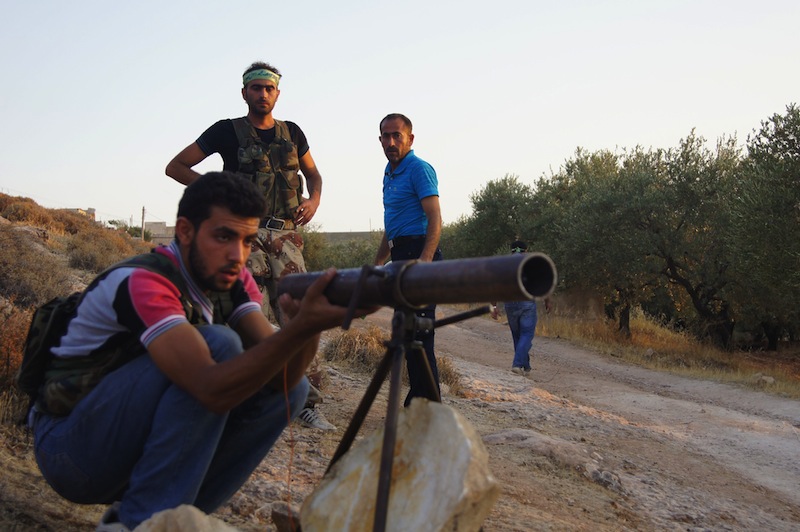
The Syrian group, which wants to oust Assad and replace his regime with an Islamic state, first emerged in a video posted online in January 2012. Since then, it has demonstrated its prowess — and ruthlessness — on the battlefield.
It has claimed responsibility for many of the deadliest suicide bombings against Syrian government institutions and military facilities. The group’s success helped fuel a surge in its popularity among rebel fighters, although it has also emerged as a source of friction with more moderate and secular brigades in Syria.
The group also has tried to provide basic services in the parts of northern Syria under rebel control, including security and food to civilians struggling to survive.
Copyright 2013 The Associated Press.