

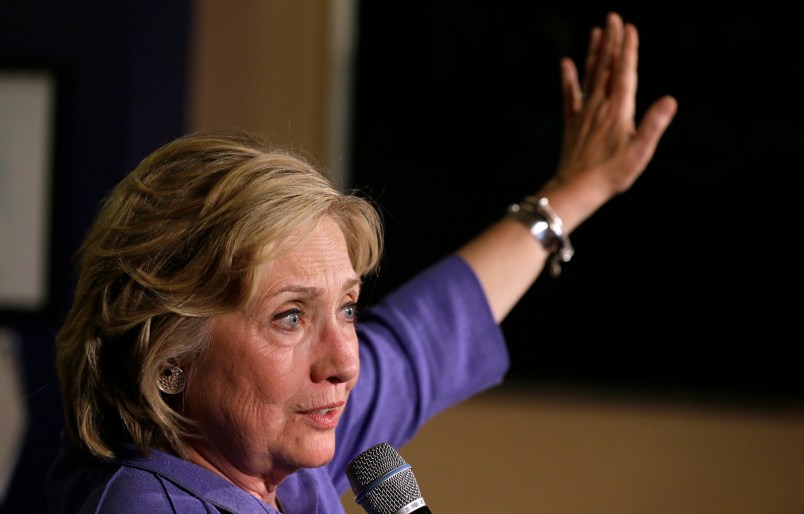
NEW YORK (AP) — Hillary Rodham Clinton is calling for the repeal of part of President Barack Obama’s health care law, the so-called “Cadillac tax” on health insurance that’s unpopular with large corporations and unions alike.
Critics say it will raise costs for consumers, while supporters see it as a brake on wasteful health care spending.
Clinton’s effort is part of a series of changes she is proposing to “build on” the Affordable Care Act, Obama’s signature domestic achievement. On the campaign trail, she often praises the law but says she wants to expand the cost-savings and coverage benefits, particularly for middle-class Americans.
“I have proposed new reforms to build on the progress we’ve made and lower out-of-pocket costs for families,” she said in a statement. “Too many Americans are struggling to meet the cost of rising deductibles and drug prices.”
The tax is strongly opposed by unions who caution it would raise health care costs on their members. But it’s also a major way of funding the costs associated with the health care law.
Many unions have held off from endorsing Clinton, often because their rank-and-file members prefer her primary opponent Vermont Sen. Bernie Sanders and their leadership wants to wait and see if Vice President Joe Biden decides to enter the 2016 race. Last week, Sanders and seven other Democratic Senators introduced a plan to repeal the tax.
The Cadillac tax was meant to discourage extravagant health insurance coverage, which experts say encourages over-treatment and adds to health care costs. But critics say it’s actually a tax on essentials, not luxuries.
A recent analysis from the nonpartisan Kaiser Family Foundation estimated that 26 percent of all employers would face the tax in at least one of their plans during its first year. Nearly half of larger companies would face the tax that year, because they tend to offer better benefits.
Consultants say employers would try to avoid the tax by requiring workers to pay a bigger share of their medical costs out-of-pocket — essentially raising costs on their employees.
The tax is 40 percent of the value of employer-sponsored plans that exceeds certain thresholds: $10,200 for individual coverage and $27,500 for family coverage. It is levied on insurers and health plan administrators, who are expected to pass it back to employers. The 40 percent rate is well above the income tax rates that most workers face.
The Obama administration says critics overstate the potential impact of the tax.
A new estimate by the congressional Joint Committee on Taxation puts the 10-year cost of repeal at $91 billion. Clinton says some of her other health care proposals would more than cover that expense, keeping the law fully-funded.
Copyright 2015 The Associated Press. All rights reserved. This material may not be published, broadcast, rewritten or redistributed.







Feelin’ the Bern?
Sarah Kliff of vox.xom has a different take and in her recent article argues the tax is working as intended.
Thanks, that’s a good piece, explains the situation well. Like you said, Ms. Kliff argues that the tax is working as intended. But whether it is a good idea in the first place is another question. As she notes toward the end of her article, there are some strong arguments that the so-called “Cadillac Tax” is a problematic policy in the first place, at least the way it is currently structured.
I will also just note how misleading the nickname “Cadillac Tax” is. Yes, it hits some high earners, but, as Ms. Kliff notes, it also hits lots of teachers and union members and middle-class families.
I think she points out that since total compensation is a mix of wages and benefits, moving away from the Cadillac level plans could provide higher wages.
And yes, some middle class workers have these plans. A few years ago, a local city government moved to a new plan aligned with the State of Florida plan because its workers were paying less than $30 a month for very generous benefits for the whole family. It got to be too expensive for them to continue offering it, and just grandfathered in the current members and began offering the new, less-generous plan to newer hires.
In theory, sure. But I will believe it when I see it. I expect many employers will just use it as an excuse to blame Obamacare for cuts in health care benefits and/or increased employee contributions to premiums, and meanwhile will not offer raises to compensate. If we were in a tighter job market, they couldn’t get away with it. But we’re not, so to a large extent they probably can.
Someday we will join the rest of the industrialized world and provide universal health insurance – and unless we are unbelievably inept in doing so, we can both cover everyone, and save money. In the meantime, we have the task of trying to make a highly dysfunctional “system” a little less dysfunctional – or at least not more dysfunctional. I’m not 100% sure which side of that line the so-called Cadillac Tax falls on. Maybe some of each.