

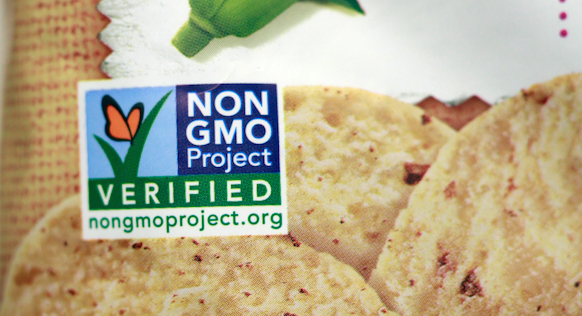
WASHINGTON (AP) — In the ever-complicated debate over labeling of genetically modified foods, Agriculture Secretary Tom Vilsack says he has an idea: use your smartphone.
Vilsack told members of Congress on Wednesday that consumers could just use their phones to scan special bar codes or other symbols on food packages in the grocery store. All sorts of information could pop up, such as whether the food’s ingredients include genetically modified organisms, or GMOs.
“Industry could solve that issue in a heartbeat,” Vilsack said.
The Food and Drug Administration handles most food-package labeling, so Vilsack’s idea isn’t an official proposal. But the agriculture secretary suggested it could head off the debate between the food industry and those who have pushed for package labels that identify GMOs.
At least one labeling advocate disagreed. Scott Faber, head of the national Just Label It campaign, says most consumers don’t have the know-how to use their phones to scan a bar code or so-called QR code, a commonly used scannable image.
“Consumers shouldn’t have to have a high-tech smartphone and a 10-gigabyte data plan to know what’s in their food,” Faber said.
An FDA spokeswoman said the idea is “not currently under discussion” at that agency.
Vilsack has mentioned the idea before, but he said it could have new life as Congress becomes more involved in the issue. A Republican House bill would block any further state efforts to require GMO package labels. Last year Vermont became the first state to pass a law to requiring the labeling.
Vilsack said some food companies have been receptive to his idea, though he didn’t name any.
There’s some indication that food companies are mulling similar ideas. A spokesman for the Grocery Manufacturers Association, which represents the food industry, said the group is “actively discussing ways to further provide consumers with this important information.” Jeff Beckman, a spokesman for The Hershey Co., said the company is working on new ways it can make ingredient and nutrition information “more readily accessible through new technologies.”
Genetically modified seeds are engineered to have certain traits, like resistance to herbicides or certain plant diseases. The majority of the country’s corn and soybean crop is now genetically modified, with much of that going to animal feed. Modified corn and soybeans are also made into popular processed food ingredients like corn oil, corn starch, high-fructose corn syrup and soybean oil.
Consumer advocates pushing for the labeling say shoppers have a right to know what is in their food, arguing that not enough is known about the effects of the technology. They have supported several state efforts to require labeling, with the eventual goal of having a federal standard. The food industry has vigorously opposed the effort, saying labels would be misleading because GMOs are safe.
Vilsack has been supportive of genetically modified crops, saying at the hearing that there is “no question in my mind” that they are safe. But he has called for the two sides to try to come together.
“A bar code seems the best way of doing it without picking sides,” he said.
___
Follow Mary Clare Jalonick on Twitter: http://twitter.com/mcjalonick
Copyright 2015 The Associated Press. All rights reserved. This material may not be published, broadcast, rewritten or redistributed.






Dumb idea, so it is now the consumer’s job to find out was crap we are being sold? Just label it already or don’t use it, it’s really that simple . . . . . .
If you take a peek at what the American people put in their grocery carts at the supermarkets - you know they don’t care what they put in their bodies and call it food. Exception: About 20% of the country know what is real food and what is food like substances spewed out by processing food corporations. I don’t know if GMO is safe or not since no independent research has been done - but I don’t want to eat GMO foods so I want all GMO foods labeled. Republicans are being bribed to use Americans as guinea pigs .
Agreed that the basic information should be on the package, including the now standard nutrition facts and allergen warnings. GMO/non-GMO should be added, it is not a particular burden. Heck, we have companies scrambling to put organic on labels not because they have to but because it helps sell the product.
That being said, the idea of an manufacturer-independent standard for a barcode that could be added to labels, backed by a web-based database so you can get more extensive information if you want it and have the technology, is a really good one. Just don’t make the basic stuff dependent on that standard.
What SHOULD end the debate about GMOs is the actual science. We (people) are very easily scared by things we do not understand. Even the famous Bill Nye the Science Guy thought genetically modifying food was a weird and possible dangerous thing to do. And many anti-GMO sites will link to Bill Nye’s old video where he says just that. But Bill, like many who have actually dug into the science, will now tell you he was wrong in his thinking about GMOs.
https://www.youtube.com/watch?v=nDTTmvx2x1o