

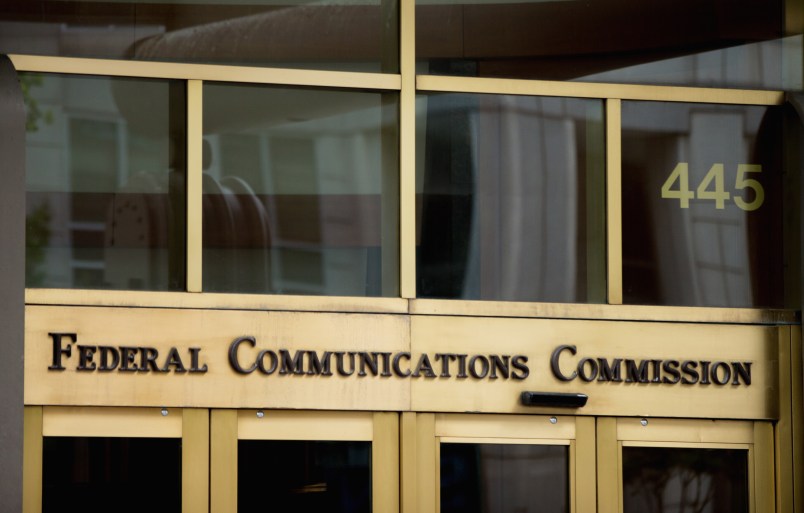
NEW YORK (AP) — “Net neutrality” regulations, designed to prevent internet service providers like Verizon, AT&T, Comcast and Charter from favoring some sites and apps over others, are on the chopping block. On Thursday, the Federal Communications Commission plans to vote on a proposal that would not only undo the Obama-era rules that have been in place since 2015, but will forbid states to put anything similar in place.
Here’s a look at what the developments mean for consumers and companies.
___
WHAT IS NET NEUTRALITY?
Net neutrality is the principle that internet providers treat all web traffic equally, and it’s pretty much how the internet has worked since its creation. But regulators, consumer advocates and internet companies were concerned about what broadband companies could do with their power as the pathway to the internet — blocking or slowing down apps that rival their own services, for example.
___
WHAT DID THE GOVERNMENT DO ABOUT IT?
The FCC in 2015 approved rules, on a party-line vote, that made sure cable and phone companies don’t manipulate traffic. With them in place, a provider such as Comcast can’t charge Netflix for a faster path to its customers, or block it or slow it down.
The net neutrality rules gave the FCC power to go after companies for business practices that weren’t explicitly banned as well. For example, the Obama FCC said that “zero rating” practices by AT&T violated net neutrality. The telecom giant exempted its own video app from cellphone data caps, which would save some consumers money, and said video rivals could pay for the same treatment. Pai’s FCC spiked the effort to go after AT&T, even before it began rolling out a plan to undo the net neutrality rules entirely.
A federal appeals court upheld the rules in 2016 after broadband providers sued.
___
WHAT TELCOS WANT
Big telecom companies hate the stricter regulation that comes with the net neutrality rules and have fought them fiercely in court. They say the regulations can undermine investment in broadband and introduced uncertainty about what were acceptable business practices. There were concerns about potential price regulation, even though the FCC had said it won’t set prices for consumer internet service.
__
WHAT SILICON VALLEY WANTS
Internet companies such as Google have strongly backed net neutrality, but many tech firms have been more muted in their activism this year. Netflix, which had been vocal in support of the rules in 2015, said in January that weaker net neutrality wouldn’t hurt it because it’s now too popular with users for broadband providers to interfere.
__
WHAT HAPPENS NEXT
Although the FCC’s two Democrats said they will oppose the proposal, the repeal is likely to prevail as Republicans dominate 3-2. The vote for net neutrality in 2015 was also along party lines, but Democrats dominated then.
In the long run, net-neutrality advocates say undoing these rules makes it harder for the government to crack down on internet providers who act against consumer interests and will harm innovation. Those who criticize the rules say undoing them is good for investment in broadband networks.
But advocates aren’t sitting still. Some groups plan lawsuits to challenge the FCC’s move, and Democrats — energized by public protests in support of net neutrality — think it might be a winning political issue for them in 2018 congressional elections.







A vital story about something other than Roy Moore? Shocking.
And two people read it. Equally shocking.
Hopefully telecoms realize that its going to come back as soon as Dems take back the whitehouse.
Jesus. Why don’t they just come out and say “we hate these regulations because they inhibit monopolistic rent-seeking?” Because that’s what it always means when big corporations start piously intoning the words “investment” and “uncertainty” and everybody knows it. It’s one of the A=1, B=2 might as well broadcast in the clear code phrases, like “resigning to spend more time with family” whose sole purpose seems to be to to gratuitously insult people’s intelligence.
The real danger is content attenuation. For example, Walmart could pay Comcast to block all Target content from reaching Comcast customers. Exclusivity deals like that would run rampant. Competition would be stifled to death. In this way, the GOP’s plutocrat masters are salivating over the prospect of going hog-fucking-wild turning the internet into the Great Propaganda Highway. THAT, more than anything, is precisely why the GOP wants this to happen. It is absolutely part of their reach for permanent (white) power through oligarchy.
Internet service should have been turned into a public utility 25+/- years ago, but the prospect of winning a secret war for control over it and thereby establishing control and virtual ownership over the availability, accuracy, substance and slant of all information was just too seductive for the plutocrats and both parties.
Get ready for search results that omit anything “liberal” or “progressive” once the Kochs, Coors, Waltons, financial industry giants, Big Oil, Big Pharma, et al, get their hands on the throttle. Searching for “separation of church and state” will soon offer you exclusively sites that “debunk” that “myth”. The word “Keynesian” will just give you no results of course.