Past Is Prologue: Bush to Buck Congress’ Yokes
It’s that most wonderful time of the year: budget roll-out day. This year’s massive budget is the first in which spending for the wars in Iraq and Afghanistan — $100 billion through September; and then $145 billion through 2008 — is embedded into the total defense appropriation, as opposed to masking the price through so-called “supplemental” funding later in the year.
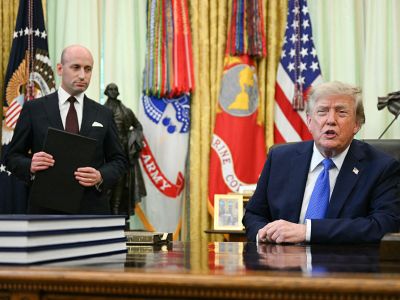
But don’t expect an end to appropriations-based chicanery. Even though the new Democratic Congress is sure to embed any number of restrictions on the war into the language of the next defense bill, President Bush has an important arrow in his quiver for doing what he wants outside of the budget process: signing statements, his constitutionally-murky declarations of how he intends to implement a law. And if last year’s defense bill is any indication, he’s set to use them.
This time last year, the GOP was firmly in control of Congress. Even so, lawmakers slipped in provisions to the fiscal 2007 defense bill to prevent the president from using his power in certain reckless ways. For example, buried in at section 8007 is a restriction on covert action:
Funds appropriated by this Act may not be used to initiate a special access program without prior notification 30 calendar days in advance to the congressional defense committees.
In a nutshell, Congress was trying to ensure that special operations didn’t run amok, as happened in places like Camp Nama outside of Baghdad, where detainee abuse was widespread. Bush, zealously protective of his authority, signed the defense bill — but declared in a signing statement that he wouldn’t abide by the provision, or others like it:
Although the advance notice contemplated by sections 8007, 8084, and 9005 can be provided in most situations as a matter of comity, situations may arise, especially in wartime, in which the President must act promptly under his constitutional grants of executive power and authority as Commander in Chief of the Armed Forces while protecting certain extraordinarily sensitive national security information. The executive branch shall construe these sections in a manner consistent with the constitutional authority of the President.
This move wasn’t new: Bush has claimed exclusive jurisdiction on special operations since the start of the war on terrorism. And it’s not known what effect this most recent signing statement actually had. But there have been a number of questionable special operations set up in Iraq over the last year, such as Task Force 16, which seeks to disrupt Iranian activity in Iraq — something several lawmakers fear may spur further conflict. But with a more hostile Democratic Congress seeking to rein the president in on Iraq — and many Republicans joining in out of political expediency — expect an invigorated focus on signing statements.
Ed. Note: Thanks to TPMm Reader S.S.
UPDATE: I stand corrected. The Pentagon is calling the $93.4 billion it’s seeking for the war for the remainder of fiscal 2007 “supplemental” funding.