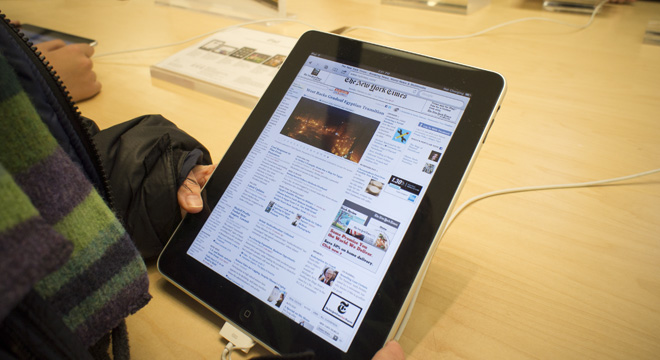
Thanks to the increased use of mobile devices, news is a more important and more pervasive part of Americans’ lives than ever before, according to the Pew Research Center’s 2012 State of the News Media report.Twenty-seven percent of Americans now get news on mobile or tablet devices, according to the report. And the new devices aren’t replacing other electronics like laptops or desktop computers, but are adding to people’s news consumption, said Amy Mitchell, deputy director of the Pew Center for Excellence in Journalism.
“The news is around you over the course of the day in a way that did not exist when the devices weren’t mobile,” Mitchell told TPM.
News consumption on electronic devices breaks down as follows: 34 percent of desktop/laptop news consumers also get news on a smartphone; 17 percent of desktop/laptop news consumers also get news on a tablet; 27 percent of smartphone news consumers also get news on a tablet; and 5 percent get news on a computer, smartphone and tablet.
The mobile devices also appear to be deepening consumers’ news consumption. Mitchell said that the devices lead to a “lean back experience”: meaning people sit at home on the couch and leisurely “peruse” a news outlet, often reading articles they might not have originally set out to find. The increase in digital — and mobile — news consumption is evidenced in sites like Longform and Longreads, aggregators that emphasize longer articles, sometimes even defining the word count and estimating how long it will take to read.
Television news also grew over the year, across cable, network and local sectors. Network news audiences grew 5 percent, the first uptick in a decade, according to the report. Cable news audiences grew by 1 percent. MSNBC and CNN audiences grew in 2011, but Fox News’ audience declined. Mitchell credited a “visually oriented year” — with uprisings across the Middle East and North Africa and natural disasters — for the uptick in television news audiences.
With increased digital news consumption comes new questions of privacy. According to the report, consumers aren’t comfortable with targeted ads and having their search activity tracked. But users rely on those search engines and services that track their behavior. It puts news companies in a tough position, trying to take advantage of advertising opportunities while retaining the audience’s trust. Privacy, Mitchell said, will be “be a big part of the conversation and debate around not only news but around information and the digital era in general.”