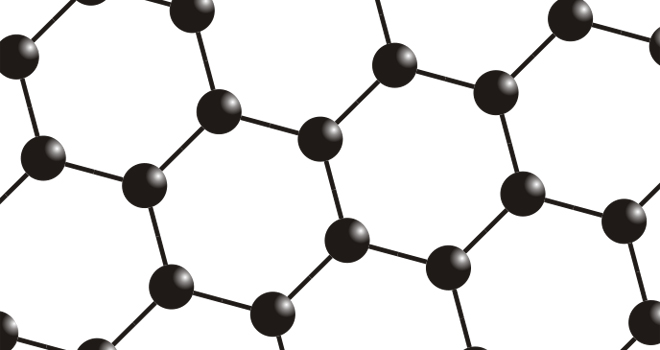
It’s not just a paper tiger: Swiss scientists have whipped up a new type of paper-like material made up of layers of folded proteins and graphene, itself a one atom-thick material made up of carbon atoms and famed for its wondrous properties, including extreme flexibility, superlative strength and electrical conductivity.
The new material, which doesn’t yet have an official name, is a breakthrough because it combines graphene — which is water-repellant — with proteins that are water-absorbant, giving it properties of both. It “can reversibly change shape in response to variations in humidity, and can be used in the design of biosensors,” according to its designers, a trio of researchers at the Swiss Federal Institute of Technology (ETH Zurich).
The paperlike substance can alter its shape when it absorbs water, and then assume its old form exactly after drying out, presenting scientists with the opportunity to design state-specific uses.The researchers who created the substance envision it being used as biological sensors able to capture ultra-precise measurements of enzyme activity, or the protein-spurred chemical reactions that transform molecules, regulating an organism’s metabolism. This could lead to improved medical diagnoses and treatments.
Don’t try to write on on the new paper, though. As Raffaele Mezzenga, one of the scientists who collaborated on the project, told TPM via email, the paper is “definitely not…a conventional paper, as after all, it is all black!”
“However, it could be used as an electrical paper for example, or also for printing, if the signal to be read is of some sort of electrical output,” Mezzenga explained.
Mezzenga said that the material’s most important uses hadn’t even been thought of yet, but “we are convinced that the most promising potential applications are in the biological area.”
His team’s pioneering work was published in the May 6th edition of the journal Nature Nanotechnology.