NEW YORK — If you’re reading this article right now, you obviously managed to get access to an Internet connection.
But you’re in the minority. Most of the world’s people, an estimated 5 billion out of 6 billion, still aren’t online, fully 20 years after the Internet became commercialized.
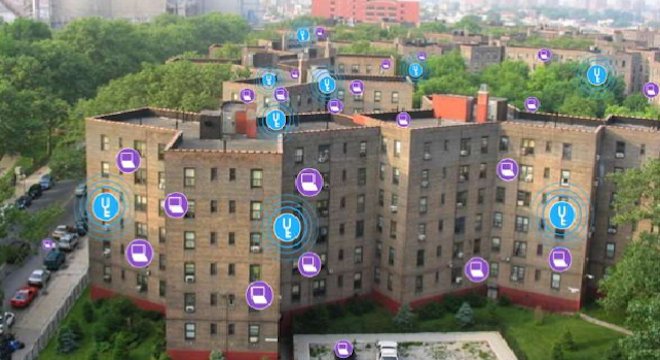
KeyWifi, an ambitious New York-based startup company, aims to help solve this problem by letting anyone who currently pays for wireless Internet access to rent out their connection to those who don’t or can’t afford to, for a nominal fee. It’s a peer-to-peer Internet renting platform.
“You want WiFi and it’s all around you but its locked up,” said KeyWifi CEO Adam Black, 48, at a startup presentation in Manhattan in early march. “Think of all the spare WiFi not being used all around you and the people who might want to use it. The digital divide is within 100 yards of where you live. That’s a problem.”Specifically, KeyWifi is set to launch its signature product in April or sooner.
The Web-based software-only solution requires no downloading and no purchase of additional equipment. Simply by logging into the KeyWiFi website, it will allow those with Internet connections to specify when exactly they aren’t using their WiFi, how many people can log onto it and for how long.
Then, those customers who don’t have steady access to the Internet who are able to obtain it long enough sign up, will able to use the temporarily vacated Internet connections for about $10 a month using PayPal.
KeyWiFi will take about a third of that money for operating costs, but the other two thirds will be divided proportionally among the owners of the various Internet connections that the paying customers connect to. So if a paying customer connects to three different modems per month, each of those modem’s owners would receive $2.33 a piece.
KeyWiFi’s software is also designed with what Black calls the “best encryption and security sharing for WiFI” with the host’s Internet connection and ostensibly prevents illegal activity.
“People right now are sharing their WiFi all the time, but its done in a very unsafe manner, simply by sharing passwords, for example,” Black told TPM in a telephone interview on Tuesday. “But just by sharing, people are creating value for anyone else in the system.”
Not only does KeyWiFi think its software solution is better at partitioning unused WiFi to where its needed, maximizing efficiency, but Black said that the company creates more value for Internet Service Providers, who will be able to service more of the population than they would under their current pricing plans and infrastructure.
“We’re engaged in talks with several ISPs,” Black told TPM, declining to name them ahead of the company’s launch.
However, both Black and KeyWiFi’s co-founder and product director Tom Hughes acknowledge that it may take some time before all ISPs come on board.
“We recognize that as often happens in a disruptive business, this is a gray area,” Hughes told TPM. “It’s not a smooth fit for obvious reasons with legacy business models. But one of the ironies here is that the Internet service provision model is actually based on a pre-Internet structure…The Internet has yet had the time to correct the business of supplying the Internet itself.”
Hughes told TPM that “re-selling” wireless internet already paid for wasn’t illegal in the same way other “peer-to-peer” models like the infamous Napster were because it wasn’t allowing people to redistribute anything they hadn’t already paid for. Because all of KeyWiFi’s renters had already paid for their monthly Internet bills, their rentals to others is “non-rivalrous” consumption: Nobody else would be buying that Internet connection anyway.
Black and Hughes are among KeyWiFi’s small staff of nine, only three of whom are full-time. But Black, who co-founded with Hughes and his wife in 2009, says that already the company has received tremendous interest from potential users. KeyWifi has already partnered with the East River Development Alliance to provide its services to public income housing in the borough of Queens.
“Over 800 people have signed up for it so far,” in more than 127 countries on the company’s pre-launch signup page, and more are signing up every day, Black told TPM. Black is confident that his product will be ready to service all of the signups when it launches.
Black said he was driven to create KeyWiFi less out of a belief in providing everyone with cheap Internet access and more due to his concerns over the deteriorating state of the Earth’s natural environments and climate change. He first came up with the idea while building an entirely eco-friendly house for himself and his wife in rural upstate Chatham, New York.
Black said he built the house using local and low-cost materials but that Internet access was hard to come buy in the rural area. However, a mechanic shop down the street had the Internet and Black entered into an agreement to share it for a six pack of beer.
“We have to deal with the 5 billion people on this planet that do not earn New York salaries,” Black told TPM of his inspiration for the service.
Correction: This article originally misquoted Black as saying that “over 1,00 people” had signed up for his Keywifi service, when in fact he said “over 800.” The article also originally erroneously identified the number of full-time staff as nine, when in fact there are nine total staff. We have since corrected the errors in copy and regret them.