Well, that explains it.
Amazon proudly announced on Wednesday that “thousands” of apps would be available specifically for the Kindle Fire when it lands in customers hands beginning November 15. Among those listed by name, Amazon touted a Facebook for Kindle Fire app.
Amazon also said that it had tested all of the apps on the Kindle Fire to ensure “the best experience possible.”
We thought that was a striking and perhaps all-too-quick collaboration, given it took Facebook about a year and a half to develop a native app for the iPad, which was finally launched in October (the iPad was first launched in April 2010).Additionally, Facebook was silent on Wednesday about the inclusion of the Facebook app on Amazon’s list: There was no comment from anyone associated with Facebook alongside the delighted statements from executives Netflix, Rovio, Zynga and Pandora that Amazon paraded in its press release.
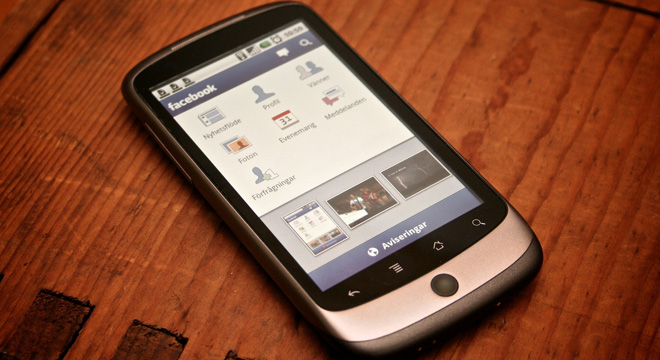
But now we’ve discovered the truth: The Facebook for Kindle Fire isn’t a full native mobile app. In fact, it is just Facebook’s mobile website wrapped in a Kindle Fire/Android skin, according to sources close to the company.
Even more striking, Facebook had no hand in developing the skin for the “app,” according to our sources. The skin was reportedly prepared on Amazon’s end only, without participation from Facebook.
Aside from the fact that Facebook apparently wasn’t involved in the Kindle Fire “app,” there are several distinct differences between a mobile website and a fully native mobile app, beyond just access points (a mobile website is accessed through a mobile device’s Web browser while a mobile app must be downloaded from an applications store, such as the Android Market).
For starters, mobile apps generally tend to have better performance, as they take advantage of the mobile device’s hardware to power interactions. This also allows developers to cram more features and features of higher complexity into mobile apps. Apps can also serve up functionality offline (albeit limited functionality in the case of Facebook).
On the downside, mobile apps take up device storage space, and on the Kindle Fire, that’s a premium, as the device only has 8GB of internal memory compared to the newly-unveiled Nook Tablet‘s 16 GB and the iPad’s 16-64 GB.
It’s not yet clear, when, if ever, Facebook will develop a native mobile app specifically for the Kindle Fire. But if Facebook’s approach to the Android platform and the iPad was any indication, Fire users would be in for a long wait.
Facebook didn’t launch an official Android application until September 2009, almost a year after the Android market launched.
And although Facebook was one of the first apps available in the iPhone app store in July 2008, Facebook founder and CEO Mark Zuckeberg memorably said in November 2010 that “iPad’s not mobile…it’s a computer.”
After that, Facebook reportedly actually did begin development of a Facebook for iPad app, but it got stuck in development hell for months, even causing the developer behind it to defect to Google because he was so frustrated with the fact that Facebook dragged its heels on the launch.
In the mean time, Facebook was also working on its mobile website, which it first launched in 2006, quickly becoming the most visited mobile social networking site.
Yet for a while, there were actually two different mobile websites, one designed for tablets and touchscreen phones and one designed for feature phones. But in March, Facebook announced it had made a major upgrade unifying the mobile websites into one that would automatically detect which device a consumer was using and adjust accordingly.
More recently, in October, Facebook launched “Project Spartan,” an HTML5 platform for Facebook app developers to begin modifying their applications to work with Facebook’s mobile apps and mobile site, so that users can, for instance, play mobile games within Facebook. The company also just hired a number of mobile HTML5 developers from a San Francisco startup called Strobe.
Facebook counts 350 million mobile users, with about 11 percent accessing the website from apps on the iPhone and iPod touch, 10 percent from Android devices, and 1 percent from the iPad, whereas 4 percent of the total mobile users accessed Facebook pure through its mobile site, according to Read Write Web.
We’ve reached out to Facebook and Amazon for official comment on the Kindle Fire Facebook “app” and will update when we receive a response.