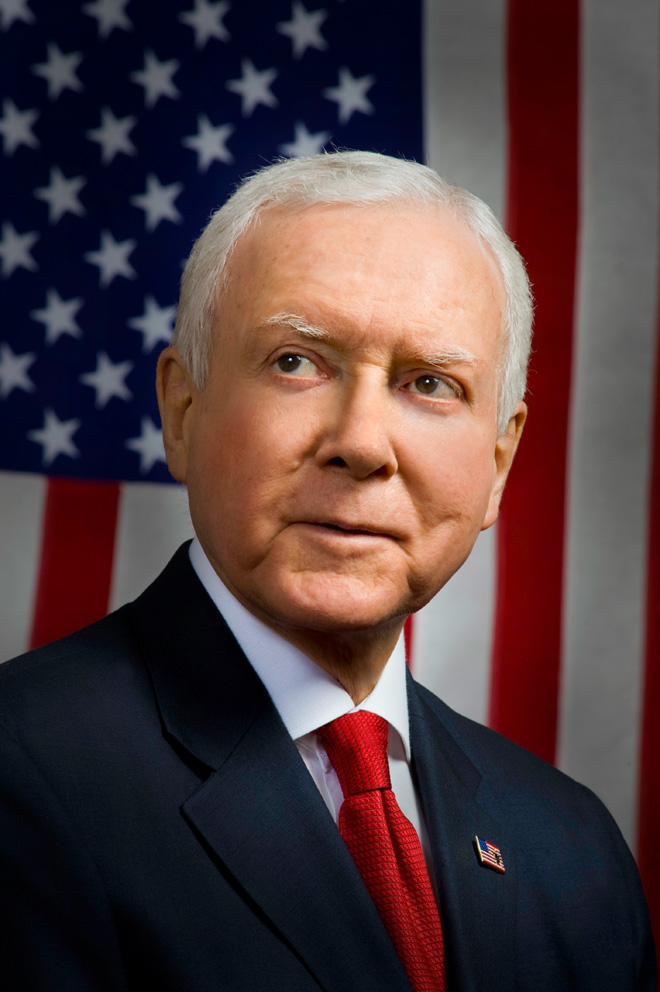
Sen. Orrin Hatch faces a crucial moment in his re-election race Saturday, with a key vote of delegates at the Utah Republican Party’s state nominating convention, when a year’s worth of targeting by right-wing groups, including FreedomWorks, and various tea party activists will be put to the test. But unlike two years ago, when his fellow Republican Sen. Bob Bennett was ousted at the convention, Hatch is favored to weather the storm — and he’s pushing right back at his opponents.
“These people are not conservatives. They’re not Republicans,” Hatch told National Public Radio of the activists hoping to boot Hatch in favor of a more conservative candidate last week. “They’re radical libertarians and I’m doggone offended by it.”
“I despise these people, and I’m not the guy you come in and dump on without getting punched in the mouth,” he said.FreedomWorks President Matt Kibbe fired back on the eve of the convention in the Daily Caller:
Presumably, Sen. Hatch is not threatening actual physical violence against his own constituents, who have done nothing more than raise questions about his record. But it is an intimidating threat, nonetheless, and terribly unbecoming of a 36-year senior senator who is running for re-election on the promise that only he, as the next chairman of the prestigious and powerful Senate Finance Committee, can dig us out of the deep budget hole caused by entitlements, and repeal government-run health care. Given his history, Hatch’s constituents are wise to be skeptical.
The six-term senator has a license to speak in these terms, though — there is little doubt that he will come in a strong first place among the convention delegates. The question, though, is whether he will reach the magic 60 percent threshold needed to win the nomination outright in this deep-red state, or whether he will have to fight out a primary in June.
Under the rules of the Utah GOP and its 4,000 delegates, a candidate with 60 percent of the convention vote will be nominated outright, with no primary. If the 60 percent mark is not reached, after a number of voting rounds that narrow down the field, then the final two contenders will compete in a statewide primary.
Last week, the Hatch campaign released a poll of delegates conducted by Utah firm Dan Jones and Associates, putting him at 61 percent support. His nearest opponent, former state Sen. Dan Liljenquist, weighed in at only 22 percent.
The Hatch campaign has taken nothing for granted, and made a very strong push in last month’s caucuses — so strong, in fact that pro-Hatch delegates were all elected from Liljenquist’s home precinct.
Hatch had the advantage of having learned from Bennett’s misfortune.
Back in 2010, Bennett came in third place at the convention — denied even the opportunity to seek re-election in a primary — and was eventually replaced by Republican Mike Lee. As a result of the convention and caucus system, the nomination was thus determined via the will of Republican activists who attended the caucuses, a voting pool that skews sharply to the right.
Bennett had been targeted by FreedomWorks and others, over issues of his long-term incumbency, past flirtations at working with Democrats on health care and his vote for the TARP bailout. Those same issues have all been wielded against Hatch, as well.
Hatch already scored his greatest victory back in August, when Rep. Jason Chaffetz — who had been maneuvering to challenge Hatch — instead decided to seek reelection to the House.
Before that, Hatch and Chaffetz had been fighting a mini primary, finding sources of support and touting their own records. Hatch has also been moving further to the right, supporting a Balanced Budget Amendment proposal that would limit government spending and put up roadblocks to tax increases.