Members of the media worked themselves into a frenzy over two separate “bombshell” stories affecting two marquee 2012 contests. The voters? Not so much.
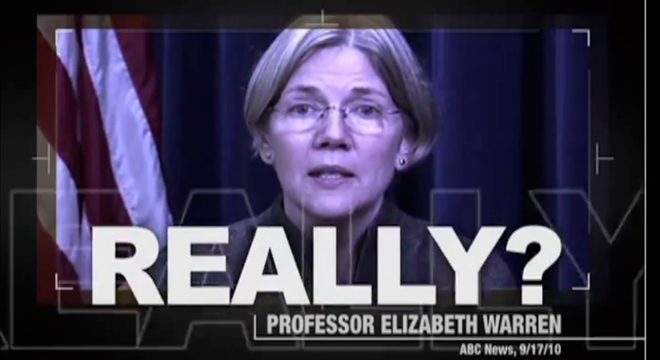
The first story, by the Washington Post, detailed Mitt Romney’s sometimes cruel behavior at a tony preparatory school, including one incident in which he and his friends held down a male classmate suspected of being gay and cut his hair. The second story revealed that Massachusetts Senate candidate Elizabeth Warren listed herself as Native American in a directory of law professors at Harvard University based on family claims that she is 1/32 Cherokee.
But polls taken after both stories dropped indicate that voters are unfazed by all the media hype — both Romney and Warren fare well in the respective surveys despite the negative swirl of press.“Most Americans by far dismiss the relevance of accusations that Mitt Romney bullied a high-school classmate, calling it off-point in the election debate – and indicating they’d say the same about Barack Obama’s behavior as a high-school student, as well,” ABC pollster Gary Langer wrote. “Three-quarters in this ABC News/Washington Post poll say the account of Romney’s high school behavior is not a serious matter, about as many say it doesn’t provide relevant information on his character, and nearly all – 90 percent – say it’s not a major factor in their vote preference.”
Similarly, Warren, the Democratic nominee to challenge Republican Sen. Scott Brown, have pushed the Cherokee story for weeks — Brown fundraised off the story, and the Massachusetts Republican Party, called her a “fraudster”.
But Massachusetts voters essentially dismissed the issue in a new Suffolk University poll:
Seventy-two percent of likely voters were aware of the recent controversy concerning Elizabeth Warren’s heritage. Of those, 49 percent said Warren was telling the truth about being part Native American; 28 percent said she was not telling the truth; and 23 percent weren’t sure. Meanwhile, 41 percent said they believed that Elizabeth Warren benefited by listing herself as a minority, while 45 percent said she did not benefit. Sixty-nine percent of likely voters said that Warren’s Native American heritage listing is not a significant story, while 27 percent said that it is.
In both cases, the controversies in question simply aren’t very relevant to voters’ lives, one expert told TPM.
“This is not a popularity contest — this is about who can get the job done,” Michael Dimock, associate director of research for Pew, said of the bullying report. “In 1992 there were 1,000 reasons to vote against Clinton, but the fundamentals of the economy were so bad that voters felt they had to kick the incumbent out of office.”
It’s not that incidents like these are without consequence, Dimock said. Taken with other elements, they can certainly affect a candidate’s image in the minds of voters. “[The flap over Warren’s heritage] may have chipped away slightly in way a voter wasn’t even aware of,” Dimock told TPM. “It’s a piece that shapes her overall trustworthiness in a way that they don’t even remember.” But it’s unlikely to make a direct impact in November, Dimock said.
The flare-up over Romney’s tax returns earlier in the year — President Obama released his returns; Romney balked at calls for him to do the same — is another story. The issue dragged on for weeks, and Romney finally relented by releasing his 2010 returns, and then filed an extension for 2011. The media pored over the tax returns, highlighting the former governor’s low tax rate (13.9 percent) on his $42 million in investment income and offshore bank accounts.
Headlines like “Mitt Romney’s tax return problem” fed into the existing narrative that Romney is unfamiliar with the plight of middle-class Americans, which is backed up by data: the latest ABC/Washington Post poll also shows that when asked which candidate “better understands the economic problems people in this country are having,” 48 percent said President Obama, and 40 percent said Romney.
But the bar is much higher for a story about Romney’s long-ago high school years.
“People are willing to forgive youthful transgressions, which many of our political leaders have seen,” Dimock said. “If you do something in high school, it has to be really big to make an impression.”