A new survey from polling firm Latino Decisions shows that many Latino voters don’t know the Republican field of candidates very well. And maybe that’s a good thing, considering some of the news they’ve made over the last week.
The poll of six hundred Latino registered voters shows high support for President Obama: he enjoys 63 percent approval versus 29 percent disapproval, and a near majority say that they have already made up their mind to vote for him in the fall of 2012. So any gains that Republicans would have to make with Latino voters is within a smaller group of those who are ready to vote for Obama but could change their minds (12 percent), are leaning towards Obama (3 percent) and fully undecided voters (10 percent). About 23 percent are either ready to vote Republican right now or are leaning towards it.Of course, to woo any of those voters, the Republican candidates may have to bring it down a notch. A 42 percent plurality of Latino voters identified immigration reform and the DREAM Act as the most important issue the President and Congress should address, with the jobs crisis at 30 percent. Obviously Latinos do not have a monolithic view of immigration, but it’s doubtful that many advocate the idea that businessman Herman Cain pushed this weekend.
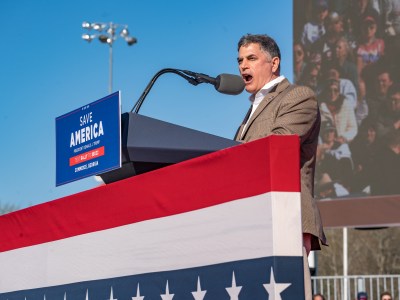
“We’ll have a real fence: 20 feet high, with barbed wire. Electrified. With a sign on the other side saying, ‘It can kill you,'” Cain said at an event in Tennessee. He has since called the statement a joke. Watch for yourself here.
Then Rep. Michele Bachmann (R-MN) piled on, although in a slightly backwards way. At a campaign stop in Phoneix, she said that the border fence was no laughing matter, that it’s a serious issue, seemlingly blasting past the horrific part of Cain’s “joke” through to the fact that he doubled back. CNN reported on Bachmann’s comments:
On Monday, Bachmann said determining how to build a border fence was of the utmost importance for American security.
“It is important that we actually do complete the fence in every portion,” Bachmann said.
She continued, “We need to look at terrain of the fence, and make sure we have the most appropriate fence that there is, and the most appropriate human intelligence on the ground.”
So it’s not the strength of the fence that Bachmann had a problem with. It was the fact that he backed down.
But the poll of Latino voters shows one piece of relative good news on this front. If Latinos are to be appaled by this, it may not happen just yet: for the most part, they don’t know who these candidates are. “Republicans have a great challenge ahead when it comes to the Latino vote,” said Matt Barreto, a professor at the University of Washington in Seattle and an advisor for Latino Decisions in a release. “This poll shows they must conduct an intensive campaign if they want to attract part of the Latino vote, since for now, the majority of these voters don’t even know them.”
The poll showed there were basically two categories of Republican candidates for Latino voters: ones that many had not heard of at all, and ones that a large portion had heard of but did not have a favorable impression of. For instance, Texas Gov. Rick Perry is known to nearly 80 percent of Latino voters. But only 22 percent of the sample said they had a favorable opinion of him, 19 percent had no opinion, and 39 percent didn’t like him. A candidate like Herman Cain is largely unknown: 52 said they didn’t know him. But that only left a small 15 – 14 split on his favorability rating. All the GOP candidates have one problem or the other.
In a write up, Latino Decisions said there is a fairly simple explanation for all of this: politics. From their report:
“It’s natural for Latinos not to know who the Republican candidates are, because their message does not resound with them. Also, Republicans have not been very proactive in bringing their message to Latinos,” said Sherry Bebitch Jeffe, an analyst and a professor at the University of Southern California.
In Jeffe’s opinion, the Latino vote is not important for Republicans in the primaries, with the possible exception of the state of Florida. “Frankly, some of the positions the primary candidates must take to attract Latinos would not be very popular with the Republican base. That base is what matters at this time,” said Jeffe.
The Latino Decisions poll used 600 live telephone interviews with registered voters conducted in October 2011. It has a sampling error of four percent.