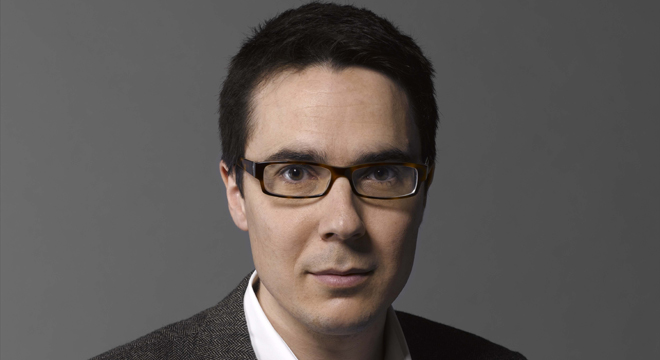
New Yorker Washington correspondent Ryan Lizza writes in the magazine this week about what President Obama’s second term could look like. In this week’s TPM Interview, Lizza explains his reporting, how he got White House officials to talk on the record and how Twitter is imperiling political journalism.Where did your reporting for this piece start?
I basically started with a lot of historical research, just reviewing second terms of modern presidents, and also seeing what scholars were out there who may have specifically studied second terms. Very quickly, what you realize, in the history of second terms is that there’s this period between Eisenhower and Reagan where you have all this instability in the presidency. I spent some time rounding up some documents from Nixon and Reagan, and then talking to various Clinton and Bush people, and going through the memoirs, and trying to look for what’s a simple way to summarize their seconds terms and the mistakes they made.
I think the big comparison was between Reagan and George W. Bush. The key insight, I think, from all that history was that interpreting your mandate is incredibly important. Then that led me down the path of looking into what the political science says about what a mandate is, and how does a president know how to act after a reelection, how does the president know how to interpret one’s reelection result.
How could we see Obama cooling to his base in a second term?
Cool might not even be the right word. I don’t think it would be significantly different than the way he’s operated the last few years. He would have smaller margins in the House and Senate, given current political circumstances. Math is everything, in that climate there’s not a lot of opportunity for him to move significantly to the left.
Last year, he came an inch from getting a deal with Boehner that I don’t think Democrats would have been so excited about — the $800 billion in revenue and pretty serious Medicare and Social Security reforms. When liberals learned the details of that, they weren’t all that psyched. When I talked to people at the White House, their view was that deal was really, really close, and after the election, given the fiscal cliff, something very, very close to that will still be on the table. And that’s what they’re going to pursue.
That’s a pretty big legacy issue for him. On the one hand, it would satisfy dealing with the longterm fiscal issues, which is something he’s been talking about forever. It would also satisfy the promise, to me somewhat naive promise, of bringing bipartisanship to Washington.
What evidence is there that, if Obama is re-elected, congressional Republicans’ “fever” will break?
(Laughs.) Not that much. It’s pretty optimistic, isn’t it? I mean, on the one hand, if Obama does win, his fate is really tied to the lessons that the congressional Republicans take away from the election. In ’96, the lesson that a lot of Republicans had was, all right, we coudln’t get a deal in ’95 or ’96, he won the election, the election basically settled our big ideological debate. Let’s go to the White House and sit down and negotiate, and they hammered out that ’97 budget compromise.
So that’s the analogy that several people in the White House used. No, it’s not like conservatives are suddenly going to change their minds about anything. Since 2009, their strategy has been don’t cooperate, just defeat Obama in his reelection. Okay if that doesn’t work, what’s plan B? Plan B might be, because of this massive fiscal cliff, let’s get the best deal we can, Obama’s not going to get credit for it because he’s a lame duck now anyway. One person told me the optimal political circumstances are Obama is at the peak of his political powers and the Republicans knowing that, he would get the least political credit for a victory. You might have that if he wins. That’s the optimistic case. I think if you’re in the White House, you have to be somewhat optimistic. It’s not like they’re assuming that’s going to happen, that’s their sort of, you know, you’ve got to hope.
On the other side, conservatives may decide Romney was too moderate, the lesson of the election is he didn’t oppose Obama enough or he was too liberal. If you’re conservative, you can make the argument that Romney lost because he wasn’t conservative enough. And then you might think, all right, let’s stick to the same strategy we’ve been using the last few years.
Do you follow closely the daily gaffes and campaign minutiae?
Yeah I do, I follow a lot of it on Twitter. You know, you have to talk about it in this job, so I watch a little bit more … following it a little more closely lately. I tend to sort of mainstream my political crack each day through Twitter, on the daily the silliness of the news cycle, like when Obama does “doing fine,” and Romney comes back with firefighters and teachers. Twitter’s perfect for following all that stuff. It’s unavoidable. If you’re covering the campaign, that’s what the campaign is, you can’t pretend that that’s not happening, right? You can’t ignore all that.
How long did it take to write this piece?
Probably from assignment to publication, about two months.
How do you adapt the piece when things in the campaign change?
This was something that David Remnick himself wanted me to do. And what changed in the course of two months was Obama’s fortunes declined quite a bit, mostly because of the May jobs report. It sort of changed the conventional wisdom from Obama is favored to win to maybe this is a 50-50 race. If you’re doing a piece assuming the president’s election, you’ve got to take into account the fact that it might not happen. It wasn’t a significant change, it’s not like the idea of Obama’s reelection became absurd. It became a tighter race.
That’s the kind of piece you can do in The New Yorker, because it’s not tied to the news cycle. It’s something that hopefully other people who are going to think the same issue through, maybe later in the year, can look back as a sort of baseline for how to look at some of these issues and approach the campaign from 50,000 feet without worrying too much about the news cycle overwhelming your story.
Tell me about working with the White House and getting people to speak so candidly and on the record.
I’ve been meaning to write a piece about this. We were talking earlier about the daily gaffes and Twitter and the news cycle, and I’m totally as much to blame for helping that atmosphere as anyone. We all engage in tweeting and commenting and hammering these guys when they say something off message. It’s created a crisis for political journalism. People genuinely do not think it is in their interest — both White House and campaign officials, both campaigns, it’s not a partisan thing at all, it’s Democrats and Republicans — they genuinely do not believe it’s in their interest to talk in an unguarded way. Because even if they trust you to get the context 100 percent right, it doesn’t matter, because they know that a liberal or conservative blog, or a campaign ad, will just grab something out of context and run with it and create some damaging meme.
I’ve been doing this for 15 years, and it’s worse now than it’s ever been. If you think about it from their perspective for a second, you can’t totally blame them. Lately I’ve realized it’s harder than it’s ever been, and these campaigns want to exercise complete and total message discipline. In the current media environment, that’s the whole game. There’s pretty serious tension between running a campaign and running a transparent and open White House. We often complain about this, and rightfully so, but we have to recognize some of the blame here.
This interview was edited and condensed for space. Read Lizza’s full piece here.