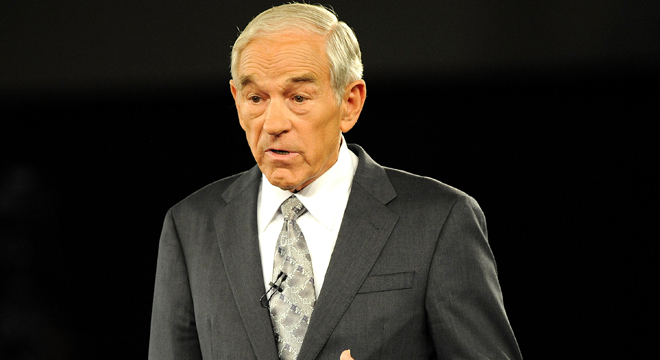
The essence of the Republican primary might live in the week or so between the Iowa — New Hampshire one-two punch. The gulf between the social conservative base in Iowa and the libertarian leanings of New Hampshire send candidates careening from competing over firebrand evangelical caucus-goers to flashing their best anti-government cred, simultaneously attempting to appeal a broader GOP electorate because of the the primary format in NH.
Sure, things may be a bit different this year, as TPM’s Evan McMorris-Santoro reported from the Hawkeye state, with Republicans of all types are worried about the economy. But it’s a cautious balance for any GOP candidate — after all, the perceived frontrunner in the overall race, former Mass. Gov. Mitt Romney, is only sort of playing in Iowa and building a plan based on a big New Hampshire win, which tells us something about the relationship between the first two states in the process. Bridging the factions of the party commonly thought to have faithful that “fall in line” is still hard to do. Especially in a year where GOP voters are jumping from candidate to candidate looking for a perfect fit that’s unlikely to come.Yet there’s one candidate who hasn’t had one of the patented GOP surges and consequent flame outs, who’s had a consistent base of support in both Iowa and New Hampshire, and hits both sides of the conservative ideological spectrum in those states. But it’s not like Rep. Ron Paul (R-TX) is going to win. Is it?
After all, when you’re talking Paul, aren’t you talking about basically everything a conservative Republican voter wants? The anti-government libertarian pitch is his core, but that doesn’t seem to preclude him from the trappings of pure libertarian convictions on social issues — he’s still strongly pro-life and supports the federal Defense of Marriage Act. Businessman Herman Cain created a mini-snaffu when he sounded strangely pro-choice on abortion, saying the government shouldn’t have a role in a woman’s decision, but then quickly backtracked. Paul doesn’t have that problem, but has all the upside of the anti-tax, anti-big government arguments he’s been making for years, which seem to directly coincide with the Tea Party activists that are gearing up to make their first mark in a Presidential election.
Take a look at the current TPM Poll Average of Iowa GOP caucus-goers:
Former House Speaker Newt Gingrich is on the upswing everywhere right now, and Iowa is no exception. But the yellow line that represents Paul is different than all the others — as former conservative darlings Texas Gov. Rick Perry and Rep. Michele Bachmann (R-MN) flamed out, Cain and Gingrich are trading places. And there’s Ron Paul, slowly moving up in the middle, and the latest average shows the top four candidates more closely bunched than any other time.
Of course, the usual caveat about polling Iowa caucus-goers is that the contest is won with organization and motivation — which is why when candidates like Cain and Gingrich without a solid campaign infrastructure start polling well, it has to be taken with a grain of salt. But motivation and commitment is not something that Paul supporters lack, so while Iowa is still hard to predict, doubts about Paul’s support seem less relevant.
Here’s the field in New Hampshire:
Romney has been and continues to run away with the state according to our averages. But Gingrich has shown of late that Romney’s not completely untouchable — a poll out from GOP firm Magellan Strategies shows the two men locked in a statistical tie. What does this mean for Paul? Well, it turns out he does pretty well too. Paul gets third with 16 percent in the Magellan survey, and a Bloomberg poll from just ten days ago shows Paul in second place in New Hampshire, as well as Iowa.
Yes, Rep. Ron Paul still seems unlikely to be the GOP standard-bearer. But given where he is on the issues in the modern Republican Party, the veracity of his support, and the nature of the race so far, the question is — why not?