Activists hoping to stanch the flow of outside cash into political campaigns are bypassing Congress and making a new appeal: to donors’ bottom lines.
Resigned to the fact that legislative checks on spending are a pipe dream so long as the House is under GOP control, open-government advocates are pressing on with a campaign to pressure corporations — freed up to spend unlimited money on election ads by the Supreme Court’s 2010 Citizens United ruling — into bringing company discussions on political spending to light, or do away with it entirely.
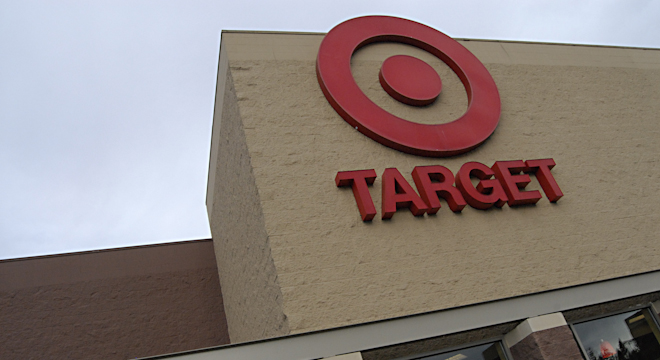
On Wednesday, labor and activist groups are gathering outside retail giant Target’s shareholder meeting in Chicago to demand the company adopt a resolution to renounce any spending on campaigns ads. In 2010, the company was revealed to have donated $150,000 to a Minnesota group backing a gubernatorial candidate who opposed gay marriage, prompting protests from gay rights groups and an embarrassing apology from Target.
Larisa Ruoff, director of shareholder advocacy at Green Century Capital Management, a Target investor that bills itself as an “environmentally responsible” fund, says the group is pushing the resolution to Target on business grounds.
“We believe this experience clearly indicates that political contributions are fraught with risk,” Ruoff told reporters on Tuesday. “Since these contributions are still allowed, it could still find itself in hot water in the future.”Target’s troubles are a prime example of why corporate and individual donors often go to great lengths to hide their political activities behind non-profits and trade associations that don’t have to disclose their funding. Customers can vote with their dollars, and companies are often skittish about even the slightest hint of controversy. Recently, petition campaigns and protests helped push a number of corporations, including Coca Cola, Pepsi and Wal-Mart, to withdraw from the conservative American Legislative Exchange Council. The group, which advocated for right-leaning legislation in statehouses around the country, helped pass Florida’s Stand Your Ground law, which came under national scrutiny after the shooting death of Trayvon Martin.
Dozens of other companies have faced their own shareholder transparency resolutions this year. None has succeeded, but advocates see a promising avenue for keeping the pressure on businesses to adopt more open policies. At least some companies have done so voluntarily: Microsoft now posts all is political expenditures online.
A more far-reaching approach would be to pass state and federal laws or enact regulations through the SEC requiring corporations to keep their shareholders appraised of electioneering activities. Connecticut Democrats have been pushing a first-of-its-kind bill that would require an annual shareholder vote on a corporation’s budget for political spending.
“The Connecticut bill is groundbreaking,” Lisa Gilbert, acting director of Public Citizen’s Congress Watch division, told TPM. “We’re focused on corporate governance. It pulls in a lot of bedfellows, like people who care about this not from same good government place but from an investor perspective, asking what it means for their company’s bottom line and wanting information available to shareholders.”
On the federal level, Sen. Bob Menendez (D-NJ) and Rep. Mike Capuano (D-MA) introduced the Shareholder Protection Act, which would require a company’s board of directors to vote on political expenditures over $50,000 and make the vote public within 48 hours. But any action in Congress is still a long-shot, making outside pressure via investors a potentially more fruitful effort for the election season.