


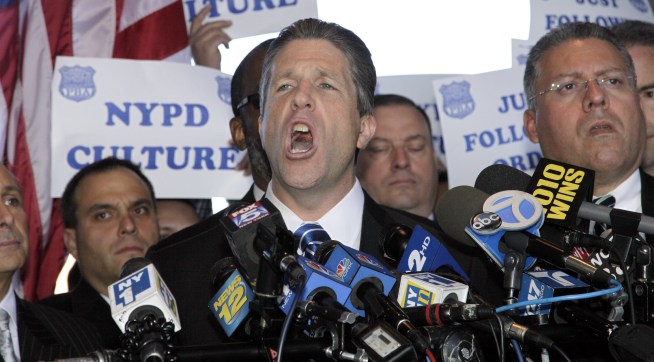
Yesterday, Dylan Scott wrote this report on why police unions are lashing out against critics with an intensity we’ve not seen in years and perhaps never seen. Unions support their members when they’re under attack or targets of criticism, which police very much are today. But the intensity, I believe, points to a fear that the sharply reduced crime rate in the country today may not sustain the relative freedom from criticism police officers enjoyed for much of latter part of the 20th century.
But it’s been jarring to see some of the most vitriolic, almost insurrectionary talk come from the head of the police union here in New York City. A few days ago, Pat Lynch, head of the city’s largest police union called on officers to request that Mayor de Blasio not attend their funerals if they are killed in the line of duty.
It looks like Charles Johnson may finally have found someone to sue him.
Take a look Paul Krugman’s column on the rapid deterioration of the Russian economy. The drop in oil prices has of course played a central role in Russia’s woes. The sanctions regime stemming from the Ukraine crisis has played a major contributing role. What’s interesting though is Paul’s point that most countries would have a set of tools to grapple at least with the drop off in oil revenues. But Russian kleptocracy, ranging from oligarchs who stash their cash overseas to military adventurism in Ukraine and much more, have created a perfect storm for the Russian economy and put many or most of those tools off limits. Very interesting read.
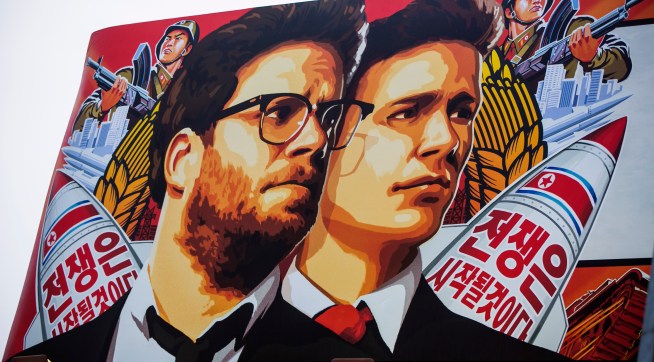
Here’s the FBI statement placing blame on North Korea for the cyber attacks on Sony. Full statement after the jump …
Michigan woman files trademark on phrase “I Can’t Breathe” for hoodies and t-shirts.
Sorry, Sony dude. If you want a mulligan you’re gonna have to ask for it.
City Councilman Robert Cornegy (Bed-Stuy, Crown Heights): “This sets us back 1000 percent. I don’t even know how you come back from this. If you wanted to articulate what the worst case scenario could be at a time when the city is trying to get back on track with police and community relations, this is it.”
Most of us know that in its first months and years the Cuban Revolutionary government nationalized and confiscated billions in assets of US corporations. Most of us think of that as something for the history books, not the ledger books. But the companies remember. And with the normalization of relations between the two counties, now they want their money back. Dylan Scott has the story.

Here in New York, over the last few weeks, we’ve seen a turbulent and tragic series of events which might seem far-fetched in its plot line if had it unfolded in a novel. Protests erupted in the aftermath of a Staten Island grand jury’s decision not to indict a police officer in the death of Eric Garner, an event which was itself catalyzed and primed by the roiling protests in response to the death of Michael Brown near St Louis. Major street protests followed. And then, as if to bring all the tension to a head, a deranged and violent man perpetrates what can only be called a street execution of two police officers waiting in their car in Bed-Stuy. The fact that the alleged assailant, Ismaaiyl Brinsley, attempted to kill his ex-girlfriend hours earlier in Maryland suggests there was some deeper, more personal impulse to violence and self-destruction behind his rampage. But there is no getting around the fact that at a minimum he grabbed on to the wave of protest against police brutality to provide some logic or rationale for his violent end.
So now we have police and their critics, each with their own righteous aggrievement, thrust together for a collision with no good outcome for anyone involved.