


The escalation in Afghanistan will increase the number of private contractors who are part of the war effort by 16,000 to 56,000, for a total of 120,000-160,000 in country, according to the Congressional Research Service.
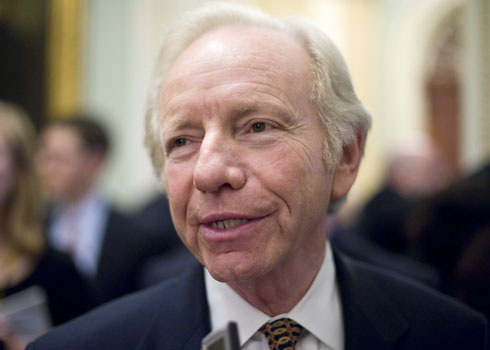
The downside to drumming Joe Lieberman out of the Democratic caucus, as many progressives are eager to do, is that Lieberman is running point (or helping to) on several other major Obama Administration initiatives.
That won’t likely appease many folks, and the argument goes that if you don’t stand up to Joe now, you never will and it sends a terrible message about party discipline. But the fact remains: there is no move afoot in the Senate to punish Lieberman. And if there were, the White House would be unlikely to go along. At least not now.
With one poll showing the “Tea Party” beating the Republican Party, the RNC is launching what it’s calling a “National Listen To Me” program to woo back disenchanted tea partiers.
The Health Care Reform story is changing from moment to moment. So be sure to keep checking in on our live-updating Health Care Reform wire with updates from our news team and reporters on Capitol Hill right here. Or see the most recent updates below the feature story on the front page of TPM.
Majority Leader Steny Hoyer: The House will accept health care reform bill without a public option.
From TPM Reader JM …
I carry no brief for Joe Lieberman, but I’m getting mighty pissed at the netroots crowd (Kos, Atrios*) that wants to dump HCR just because Lieberman is vetoing parts of the Senate bill. I’d love to see a public option or Medicare buy-in, but even without those elements the Senate bill would represent a substantial step forward – one that could be pushed back for a decade or more if progressives “kill the bill,” as some are suggesting.
There’s a rising chorus of progressive Democrats saying: with the bill so denuded and watered down it’s better to scrap the whole thing and try for real reform at a later date. In other words, no bill is better than the bill on offer now. But there’s a different pattern that I’ve seen over the past months.
I know a lot of people who’ve followed health care reform issues for years from the progressive side. And from what I can tell very few of these people feel this way. That’s not to say they aren’t very disappointed that various key policies likely won’t be included. Half a steak is always a big let down when you thought you might get the whole steak. But there seems to be a clear correlation between people who have followed health care policy closely for years (and know it inside and out) and those who think that even the scaled down reform bill is very worth passing. I wouldn’t say that I have a stronger grasp of the policy implications than most of the folks in the “Burn It Down” camp. But most of the arguments I hear from them some down to sloganeering with a weak grasp of the mechanics of the bill.
The one thing that’s not as clear to me is whether the health care policy experts have a clear read on the politics. In other words, how do mandates play politically absent stronger cost control? That’s a good question that I don’t necessarily expect the policy wonks to have a good read on. On the other hand, I’m confident that scraping the process now would likely be catastrophic for the Democrats.
But on the substance, that pattern has been the most revealing and important to me in terms of making sense of the pros and cons of the bill.
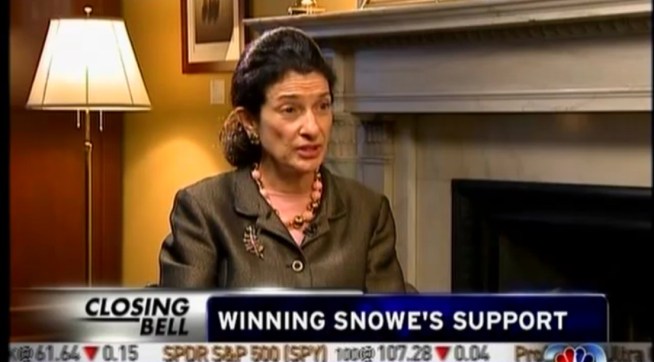
With public option seemingly gone and a Medicare buy-in presumably thrown out, too, what is left in the health care bill for Olympia Snowe to object to? That may be the question Harry Reid had for her when the two of them huddled together today.
Go read Dahlia Lithwick on how the Obama Administration may be handing Dick Cheney and the pro-torture crowd the perfect test case.