

 Members-Only Article
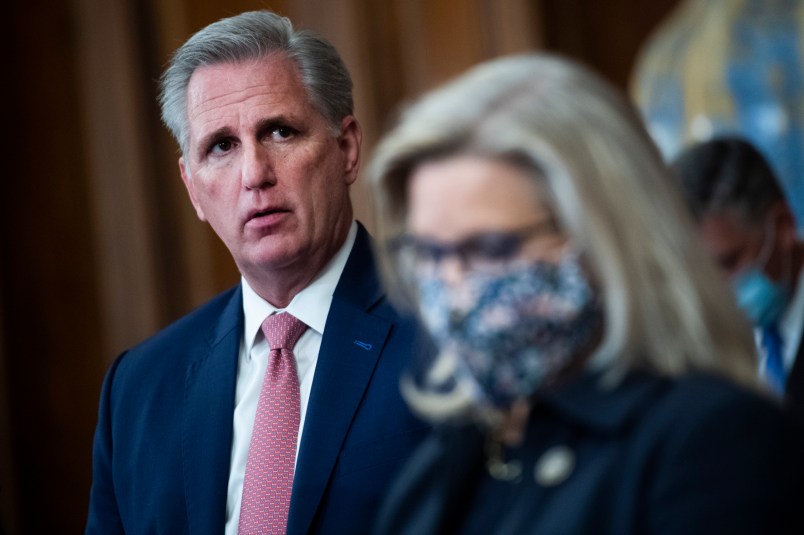
The big story is that Liz Cheney was ousted from her leadership position for not supporting the Big Lie of the stolen election and for not endorsing the insurrection. But we knew that was coming. The big story today had to do with how the vote was held. These are usually recorded votes and secret ballots. That was the case last month when Cheney retained her position by a decisive margin. Today it was a voice vote. After the vote, as Tierney Sneed notes here, a request for a recorded vote was denied.
This tells you the real story of what happened here.
To be clear, I’m confident that Cheney would have been defeated in a secret ballot. I’m not saying there’s a secret pro-Cheney or anti-Trump majority. But I’m pretty sure the vote wouldn’t have been as decisive as Kevin McCarthy and Donald Trump wanted. That’s why they didn’t take a recorded vote.
When asked why there wasn’t a recorded vote, Rep. Jim Jordan, a prime mover of Cheney’s ouster, said the voice vote was “overwhelming” and that “you can’t have a conference chair who recites Democrat talking points.”
A recorded public vote would have been a problem too. Even many of those who want Cheney out probably didn’t want to have to commit themselves to it publicly. Many who either oppose Cheney’s ouster or are uncomfortable with it would not want to be put on the spot to go on the record and risk Trump’s wrath.
The great law of legislative politics is safety in numbers. On most divisive issues, most backbenchers just want to stay out of the spotlight. The spotlight is dangerous.
Here’s how Rep. Ken Buck, who supported Cheney and opposed her ouster put it. “I would say it was probably three quarters-one quarters. I mean, it’s obviously a voice vote, so some people screamed louder than others.”
And why no recorded vote? Again he captures it: “I think people want to move on, frankly. They wanted to adjourn quickly. And so they weren’t looking forward to a recorded vote. And it was obvious that the vote was, I don’t know how many times you’ve been in a room where, you know, 100 people say yes, one person says no, and the person who says no asks for a vote, it’s kind of bad. You know, the air comes out of the balloon…. it was unnecessary, even the people who voted no felt it was unnecessary, it wasn’t going to change the outcome.”
In a way today’s decision just tells us what we already know. Congressional Republicans are cowards, privately deeply concerned, public emphatically loyal. The Trump GOP, which is to say the GOP, is led with fraud and intimidation. We’ve been hearing for years that privately Republicans are very concerned about this or that Trump tweet, or wish he did this or that differently. In public, they declare unbending allegiance. It’s a party organized around deceit and cowardice.
For Democrats this is a clear signal that the situation in the GOP caucus and the GOP generally is more brittle that Republicans let on. Reporters would do well to focus on that too.