The whirlwind of events across the Arab world this year has been so fierce, so unrelenting, and so dramatic in its progression, that it’s easy to forget where and with whom it all began.
It was little more than 10 months ago that Mohamed Bouazizi, a 26-year-old Tunisian street vendor with little money, and fewer prospects, was robbed of one of his last possessions — his dignity.He could have had no idea that in lighting himself on fire in protest in front of the local governor’s office that he would set spark to the sea of his nation’s and indeed the region’s discontent, after decades under the iron fist of dictators and despots.
The match Bouazizi lit started a fire that is still burning. It is sure to for some time to come.
While the last few days have of course been dominated by the news of that fire reaching the feet of Libya’s Muammar Qaddafi, Sunday marked an event no less monumental.
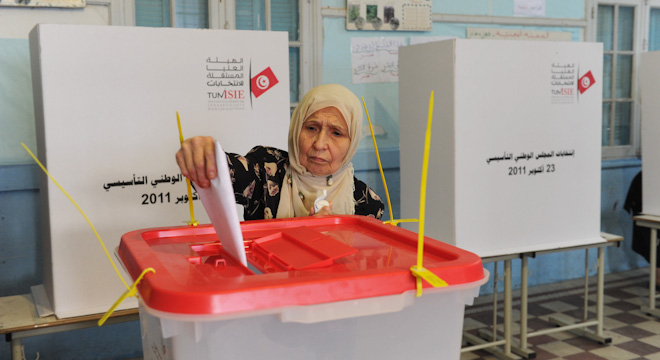
Millions of Tunisians – by some estimates as high as 70% of those eligible – cast ballots in elections to select representatives who will begin drafting the country’s constitution.
Here in this country in the coming days, as votes are counted and results become clear, it’s likely you’ll hear a lot of foolishness — by people who know little, and for whom ‘freedom’ is more slogan than virtue — about a ‘rising tide of Islamism’ being born out of the ashes of the Arab Spring. Pay it no mind.
The fact is we are only at the beginning of what is transpiring in the Middle East and North Africa, and no one can know where things will go from here.
But after decades of being able to do little politically other than pay fealty to the regime of Zinedine el-Abidine Ben Ali, Tunisians on Sunday took a monumental step towards self-determination.
They will decide where their nation’s balance between its competing visions and interests lies. That, in the end, is democracy. And it remains, at its best, a breathtaking thing to witness.