
Here is an update on a story you may not yet have heard of. It manages to be at once fascinating, deeply disturbing and a perfect living metaphor of our age. AI models are vulnerable to something called “model collapse.” In the early days of LLM-based AI there was a seemingly limitless store of online content to train it on. But that’s mostly been used up. Meanwhile, a rapidly growing percentage of online content is produced by AI. If you try to train AI on the product of AI it’s a bit like locking a person in a sealed room and watching them slowly suffocate as they breath in the product of their cellular respiration (CO2) rather than the fuel (oxygen) that makes the body function. Not a perfect analogy but you get the idea. This has made the creators of AI increasingly desperate in their search for new artifacts of human intellection — a phrase I heard once from the great Chaucer scholar John V. Fleming who died this past May — to feed into large language model AI systems.
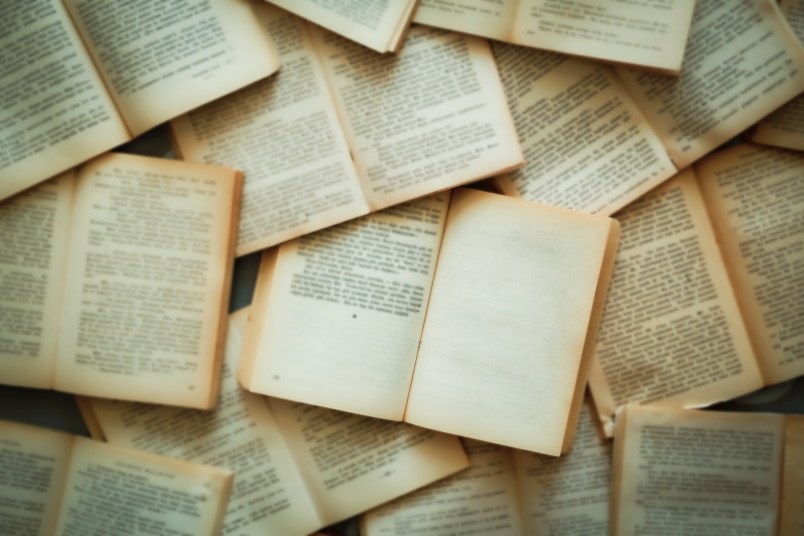
The solution? Physical books published before 2022. You can guarantee as a matter of absolute certainty that whatever their quality, their merits, whatever they’re about, they are the product of human minds.
It’s relatively easy to scan a book without damaging it. But if you’re doing it at scale the costs of scanning and digitizing a book’s contents without damaging it are vastly higher. So what AI companies appear to be doing is buying up books, cutting off the spines, feeding them into industrial scale scanners and then throwing away.
All the reporting I’ve seen on this, as well as the latest report which I’ll describe in a moment is from a new outfit called 404 Media. It’s a tech news site, but not the kind you might be familiar with. It’s deeply conversant with all the ins and outs of tech but also deeply skeptical verging on hostile toward the people who run big tech and the ideas and motivations that inform it. So you get a lot of reporting on surveillance technology and stuff like what I’m describing here. I really recommend it.
Back in July, reporter Emanuel Maiberg published a fascinating piece about how all this started to come to light. There’s a sleepy and kind of slow-moving world of book peddlers out there who sell books online. They often work through book clearing houses. So someone purchases a book but the order comes through a clearing house so the book peddler doesn’t know the actual purchaser. Starting about a year ago a lot of these peddlers started seeing a dramatic increase in the volume of sales. Not only were sales coming in faster that any of them had seen but orders would come in for collections of books that had no logical connection to each other. So perhaps in the past you’d see an order from someone interested in ancient South Asia or the history of the industrial revolution. But now it was long lists of books with no logical connection to each other. The common denominator was they all had ISBN numbers. What’s more the buyers seemed indifferent to price.
As you’d expect this was quite the boon for the book peddlers — huge orders with no thought to price. But they started putting two and two together and suspecting that they were being purchased by AI companies. And as you’d imagine, if you’re in the used and, especially, rare book space you probably have an affection for physical books that goes beyond profit margins. In any case, that was what the July article was about.
When that article first came out I thought at least the aggregated headlines based on the 404 article were at least a bit misleading because it made it sound like these were all rare books. And that’s clearly not the case. It’s just that rare books or semi-rare ones get pulled into this massive AI vacuum. (To be clear, this wasn’t really 404. It was more so the way the headline and versions of the stories shifted as it was picked up by other publications.) It wasn’t clear how many of the books were genuinely rare. And a lot remained unclear in this first article since the companies involved don’t want to talk. And some of the clearing houses were already making clear to the AI companies that they had a potential optics problem on their hands.
One key detail Maiberg got from the book peddlers is that the books are never ones that don’t have an ISBN number. Those came into existence in the 1960s. So that probably creates a rough target range from about 1966 to 2022, seemingly nothing before that. What the book peddlers speculate is that the AI companies are trying to systematically scan all books ever published everywhere in the ISBN era. The older stuff would be valuable too. But it’s not susceptible to this kind of systematic harvesting.
In fairness I think it’s important to note what we all know: that lots of books are being thrown away all the time. That’s just in the nature of things. And many of these books probably aren’t terribly rare. But the issue is more than symbolic. A lot of these book peddlers are generally selling these books to libraries or other institutional buyers but now a lot of those books are being bought and tossed on to a metaphorical if not literal bonfire.
Which brings us back to today’s story. Apparently in the course of reporting the original story, one book peddler told Maiberg that he’d gotten a very large order for about 1,000 books through the clearinghouse Biblio. He agreed to put an Apple Airtag provided by 404 Media into the of the books. That allowed 404 to track this and the other thousand books’ journey to destruction.
They managed to track it as it flew from California to Wisconsin, then to Kenosha Regional Airport, then by truck to Colorado and eventually to Las Vegas. And that’s where the book chomping center was. I want to make sure you go check out the article this is based on so I’m not going to tell you the big tech company who runs this particular chompery. It’s one of the big boys. Just click here and the headline itself tells you the company name. But you’ll want to read the whole piece because there’s lots of additional detail.
Late Update: There’s an important part of this story that I neglected to add. Doesn’t change the big picture. But it’s an interesting part of the equation. Destructive scanning is much cheaper than non-destructive scanning. But in a lawsuit against Anthropic a judge ruled specifically that it was the destruction that made the scanning permissible under copyright law. The logic was that Anthropic bought the book and didn’t make a copy. It just transformed the format. There’s still just one book rather than the original and a copy. Because the original has been destroyed. I’ve seen some AI fanboys argue that the matter is really out of the scanning companies’ hands. They have to destroy the original or else they’ll be sued.
This is not a good argument. No one is forcing them to do this. And the company’s right to use these books to train their LLM-based AI models is at least questionable, certainly morally and possibly legally. In any case, just why they’re destroying the books is kind of beside the point, either it’s the cost of scanning or its the cost of having to compensate the rights holders over the books. Same difference. Same outcome.
Another question is what happens with the scans. To the extent you’re making these books harder to find or possibly even destroying a final copy you should at least make the scan available to the public. Perhaps they could be enjoined to deposit the copies with the Library of Congress. This raises a technical issue. I’m not sure the AI scanning process actually preserves a what we would call a digital copy of the book. It would be a simple matter to do both at once. Or a relatively simple matter. But I don’t think LLM’s keep full copies of the material they learn on. So I don’t think we can assume that copies, in the archival sense, are being made through this process. Possible, but I don’t think that’s clear.