
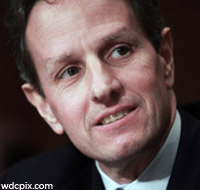
Tim Geithner has agreed to President Obama’s request to stay on as Treasury Secretary through the Fall of 2012. It may not be a popular thing to say. And in its own way it may amount to faint or not quite voluble praise. But it is difficult not to conclude that Geithner has had the most challenging tenure as Treasury Secretary as anyone since World War II, quite possibly as anyone since the mid-1930s, seventy-five years ago. (Next up after him is likely Hank Paulson, his immediate predecessor.)This isn’t to say that he’s made every call right. There’s the perennial question of the size of the 2009 fiscal stimulus bill, the basic question of the fate of the big banks and so forth. But I’m struck how few of these things he and the administration more globally have gotten seriously wrong. Before coming up with a million things to criticize — and yeah, they’re definitely there — it’s worth remembering the sheer scale of the crisis, one we’re still in. It didn’t get a lot of notice with so much else happening over the last two weeks. But the Commerce Department just revised key economic statistics from the 2007-2009 recession. The new numbers say that US economic output contracted at an annualized rate of 8.9% during the 4th quarter of 2008, in other words, in the immediate aftermath of the credit crisis of September 2008.
Those are simply amazing numbers and far far worse than was known at the time. The government statistics policy makers were working with in early 2009 had the number at 3.8%, less than half as bad as it really was. That was later revised upward to 6.8% and then again to the current number. It’s no solace to the legions of unemployed but looking at those numbers it’s much less surprising that the economy has taken so long to rebound or that unemployment has taken so long to drop.
We won’t have sufficient data (either economic statistics, historical records or insider accounts) for years to render a truly informed judgment on Geithner’s record or the administration’s more generally. Even now, to render even a tentative one, requires stepping back from the political storm and human toll of the Great Recession. But knowing even what we know now, it is like we spent more than a year, perhaps even until today, walking a tight rope with no net and very far to fall. Not always artfully, not always fast, but simply not to have fallen is a very great thing. And the rope is very slippery.