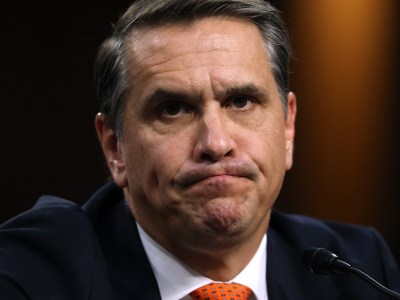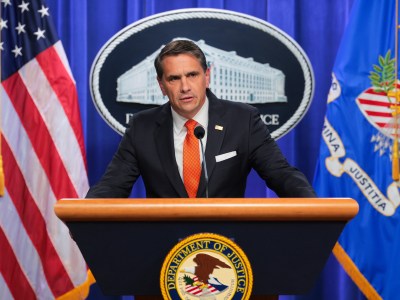
More on Mike.
Below (via Atrios) I flagged this Huffington Post Mike McCurry post about the Net Neutrality debate. But I wanted to focus in on this one paragraph where Mike is discussing not so much the NN debate as the culture of the blogosphere and the relationship between blogs and the mainstream media …
Oh yeah, how many of you lifted a finger to protect the First Amendment when the Washington Post and other “MSM” cited it to ferret out the truth about WMD and the wars inside the U.S. intelligence community over the pre-Iraq war (and now pre-Iran war)? (And don’t lecture me about how they failed to do their job — I have had Pultizer Prize winning reporters tell me that they feel intimindated and they lack public support. Of course they — and their editors– feel that way. Most of the blogosphere spends hours making them feel that way).
Does anyone understand what this means? I’m not saying this for effect. I really have no idea what he’s talking about. At first I thought McCurry was arguing that Democrats were hypocritical in pressing for an aggressive investigation of the Plame case because it compromised journalists’ ability to protect their sources. That’s certainly a debatable point — and one I’m ambivalent about myself. But I don’t think that’s what he’s talking about.
McCurry seems to be arguing, first, that no one stood up for working reporters trying to get to the bottom of the WMD question in the lead up to the Iraq War. This claim seems so baseless that I’m uncertain how to analyze it. I’m not sure what online media or bloggers or anyone else outside of the big papers and networks could have done in 2002 and 2003 to “protect the First Amendment” and make more aggressive coverage possible, but there was no shortage of online commentary encouraging them on. You could probably make a decent case that the explosion of the center-left blogosphere in 2002 and 2003 was based on pressing journalists to do so.
In any case, I have no idea what that’s supposed to mean. But I do want to delve a bit deeper into the second claim — not McCurry’s alone — that mainstream journalists are beleaguered, intimidated and friendless and that the main culprits are a few high traffic bloggers.
It’s really astonishing the amount of self-pity and silliness one hears along these lines today. Not long ago, for instance, I sat down for an interview with a particularly disagreeable interviewer who seemed to want to catch me out and pin me down on every conceivably problematic point about blogs. At one point he suggested that the blogs were pulling away or threatening to pull away the ad revenue streams necessary to support the reportings staffs required for a quality news outlet.
Agreed — I didn’t know quite what to make of that one either. I’m happy with my life. And my company is able to pay three salaries and benefits in addition to mine. But to say that we’re more than a financial fleck in the eye of even the smallest mainstream news organization is a really a grand understatement.
When I have these conversations on a more serious level, I freely concede that it’s no fun being constantly criticized. And let’s be honest. There’s a lot on the web that it is crude, cruel, coarse, even hateful. And that’s without even taking Hugh Hewitt into account.
It’s certainly not for the faint of heart.
But when I hear this argument from journalists (or more often folks speaking on behalf of journalists) it’s freely conceded that little has changed in terms of criticism from the right. There was talk radio before the Internet, the various right-wing media watchdog outfits, Fox News, etc. What’s changed is that journalists now often feel besieged from the left as well. They’re getting from both sides. There’s nowhere to turn. (Believe me, I’ve had this conversation many times.)
Now, I think there’s a decent argument to be made that a lot of press criticism on the left is criticism of journalists for not doing their jobs whereas a lot of criticism on the right is against the concept of journalism itself. But that’s a complicated argument. So let’s set that point aside for another post and another day.
I know it’s not fun. And I’ve spent enough of my career in conventional journalism to have some sense of what that’s like. But even if it’s no fun, I think it should be obvious that a journalistic eco-system in which reporters and editors are only systematically peppered and criticized from one side (the right, in this case) is one that cannot ever be properly balanced. So having sustained scrutiny from both sides — even if it sometimes makes journalists’ work less pleasant — must inevitably produce better journalism than being mau-maued by one side only.
But back to this point of feeling intimidated and lacking in public support.
Who is intimidated exactly and why? I’m really not sure if this is, at heart, more than standing up for the human but not commendable principle of not wanting to be criticized. I generally don’t take much to the various streams of blog triumphalism and new media’s empty vanity. But one thing to recognize is that for many years and certainly in an era of media consolidation, most media outlets are simply not used to getting any sustained feedback or criticism from their consumers. The crushing meaninglessness of old style letters to the editor? Please. It’s a spigot that can be turned off by non-acknowledgement. Reporters should do their jobs. If the work has quality and integrity, the carping and complaining should just be ignored. And editors should back their reporters in doing so. We’re living in a rapidly changing news eco-system, with plenty of bruising and unlovliness mixed in with the dynamism. But a lot of what I hear along these lines just sounds like whining.