

This article is part of TPM Cafe, TPM’s home for opinion and news analysis.
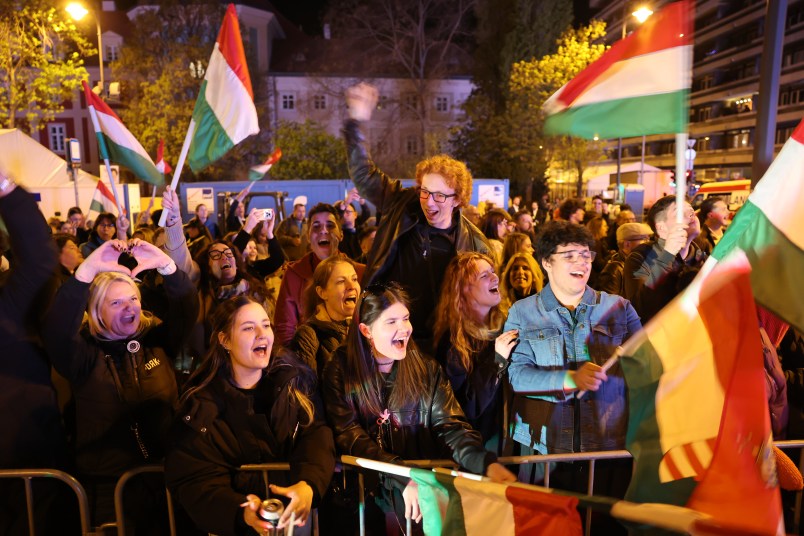
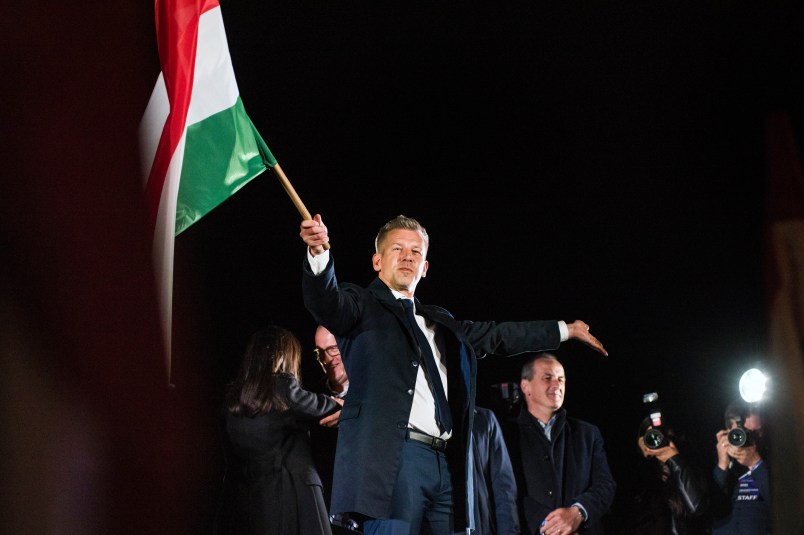
Sunday, April 12, brought long-awaited political change to Hungary. After 16 years in power, Prime Minister Orbán and his Fidesz party have been roundly defeated at the polls. Tisza, a new party led by Péter Magyar — a former Fidesz government insider who started openly opposing the Orbán regime after a clemency scandal rocked the government in 2024, leading to the president’s and the justice minister’s resignations — has won the election in a landslide.
The success came after more than a decade of Hungary’s slide towards authoritarianism, as Orbán’s government restricted media freedom, undermined the independence of the judiciary, eroded the rule of law, restricted civil liberties, and tilted the electoral playing field in its favour, among others. Right-wing leaders throughout Europe and in U.S. President Donald Trump’s MAGA movement took inspiration from his model.
Tisza won a clear majority in votes, which projections estimated would translate into a constitutional majority in parliament. Even with Magyar leading in the polls ahead of Sunday, few of those opposed to Orbán’s government felt this outcome was assured. Thanks to this super-majority, the party will now be able to implement fundamental reforms and undo parts of the authoritarian system Orbán has built over the past 16 years in power.
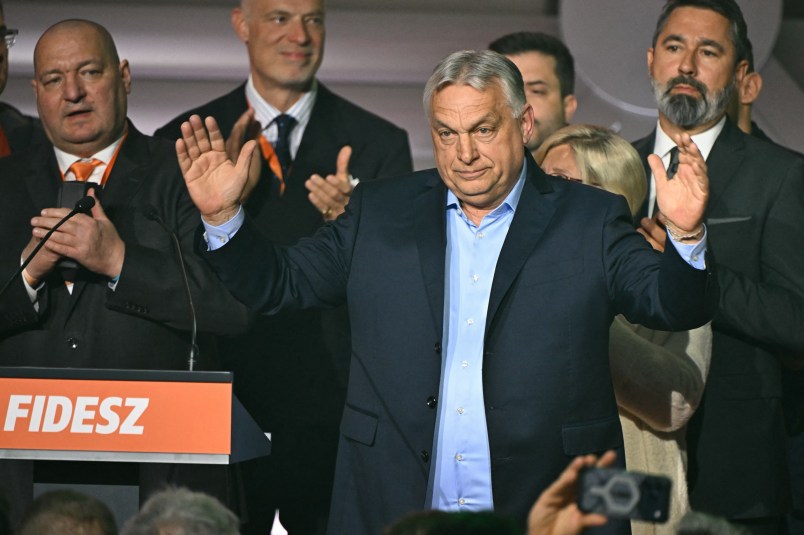
Contrary to most punditry, which suspected that the incumbent Fidesz party would resist, perhaps even challenge, a swift transfer of power, Prime Minister Viktor Orbán had conceded the race to Péter Magyar even before 50% of the votes were counted. Most likely, Fidesz realised that the opposing party’s winning margins were too wide across constituencies, thus undermining their ability to credibly challenge them.
Even though the Hungarian context differs fundamentally from the U.S. — and while the election in Hungary is, in the end, predominantly about Hungary — it does offer a few lessons on how far-right competitive authoritarianism can be defeated at the ballot box.
1) Campaigns are important, but it also matters where you campaign
Magyar’s victory did not come out of nowhere. In fact, it was the result of an arduous, almost two-year-long campaign across the country, involving hundreds of volunteers and individuals who sought change and supported the party.
Moreover, his landslide victory was also the result of intense campaigning in the smallest constituencies. Hungarian elections are overwhelmingly decided in smaller towns and rural areas, which have traditionally been Fidesz’s strongholds. Magyar drew on lessons from previous years and campaigned not only in big cities but also, overwhelmingly, in rural constituencies. Touring the country and visiting the smallest towns to spread his message helped him gain notoriety outside of government propaganda media that tried to misconstrue his message and portray him as a pro-Ukrainian, pro-war stooge supported by the EU establishment. Additionally, Magyar used his social media presence and the remaining independent online media to communicate with potential voters, once again enabling him to build momentum against the regime.
If there’s one lesson to draw for American democrats and Democrats, it’s to focus not just on big cities but also to establish a notable presence in rural areas and invest in personal contacts with voters.
2) A unified message behind one candidate
Although Magyar is a rather right-wing figure, coming from a politically conservative family tradition, his party’s voter base is majority left- and liberal-leaning. And yet, he managed to unite people behind him, create a big-tent organization, and mobilise voters. This was crucial in an electoral system in which Fidesz, the incumbent, can only be defeated with a strong, unified opposition party. Previous attempts at creating a coalition of parties to oppose Fidesz through Hungary’s parliamentary system notably failed. This time, however, Magyar managed to build a movement riding a wave of public discontent with the government’s performance and uniting voters of different ideological backgrounds behind a simple, unified message: No more business as usual; things must change. “Now or never” became the core slogan of the Tisza party, with “or never” cutting through, underscoring the urgency of removing the Orbán government, which had a tight grip on the country for the past 16 years and was likely to double down on its authoritarianism, while living standards for ordinary Hungarians would further deteriorate.
While Hungary shows that competitive authoritarianism can be beaten, that it will be is not a given. If anything, the Hungarian election shows that authoritarians don’t “just lose.”
“Now or never” is also a line from one of Hungary’s most well-known poems by a prominent national hero and revolutionary, Sándor Petöfi, which virtually every Hungarian knows. The message thus resonated broadly while also appealing to national pride, unifying Hungarians in their fight not just against but also for something: their homeland.
The lesson for other countries is to likewise build on what unites, rather than what divides. A fractured opposition — or, in the U.S. context, a fractured opposition party campaigning on different issues — is unlikely to effectively oppose an authoritarian.
3) Sowing hope
Notably, while Magyar’s key message was about opposing the Orbán regime and the soaring kleptocracy and corruption it allowed and encouraged, resulting in poor living standards, he also offered a strong message of hope. Repeatedly appealing to Hungarians, reminding them that their future is in their hands, that they do not have to live like this, and that they have an opportunity for change, motivated voters, keeping them engaged in an environment that seeks to make them politically disillusioned and disenchanted. As such, he campaigned not just against something but also, distinctly, for something, based on hope and trust in the country, namely: a better future and a better Hungary.
This lesson is crucial, also for other contexts facing competitive authoritarianism. Authoritarians want people to feel a sense of helplessness and despair, to demobilise them and suppress dissent. Offering messages of hope, allowing voters to dream of a better future, and reminding them that it’s in their hands helps them maintain morale, particularly in competitive authoritarian regimes with mostly free but unfair elections.
No one size fits all
Obviously, every election is context-dependent, and opposition strategies depend on local circumstances, salient issues, electoral systems and rules. As such, there is no one-size-fits-all solution to defeating authoritarianism, and Hungary’s lessons, as a distinct case, are limited.
While Hungary shows that competitive authoritarianism can be beaten, that it will be is not a given. If anything, the Hungarian election shows that authoritarians don’t “just lose.” Rather, Hungary presented the perfect storm to defeat an authoritarian: a weak economy, scandal after scandal from the governing party, and an emerging opposition figure who rose to the occasion with the skill to lead a movement, highlight the government’s numerous failings, and increase the salience of issues that are of interest to the majority of voters.
Beating a party entrenched in power requires not just a good strategy, but also the right conditions and someone able to take advantage of them. This includes building a strong, unified opposition that focuses on local mobilization and campaigns on salient issues that affect and resonate with everyday people across the board.







Orban accepted reality and resigned. I like that in doing so he showed up his pals, Putin and Trump.
The GOP candidates will start begging Trump to endorse their opponents!
So is Donnie going to come out soon and declare “I don’t like dictators who bow to the will of the people?”
He’s going to ask an aide if he has any investments in Hungary, then claim that he really didn’t know Orban, and outright deny that he sent Vance there to carry his blessing.
Another key difference - ONE candidate, campaigning for TWO years. With our system, they jostle and fight for attention to become the ONE candidate, until just a few months before the election.
Someone needs to get out in the heartland now and start building support there, so that in two years they’re ready to bring in some of that vote.