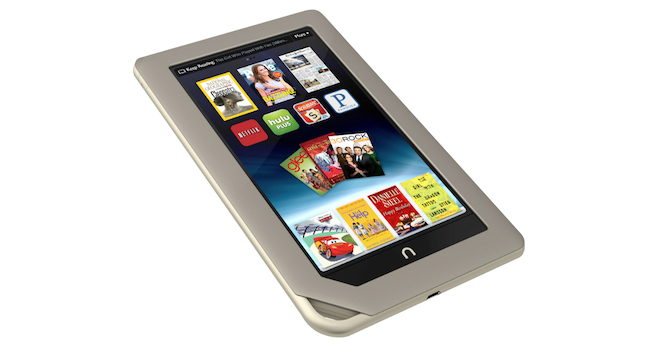
Looks like Microsoft and Barnes & Noble have been doing some reading of ancient proverbs, perhaps specifically: “the enemy of my enemy is my friend.”
That neatly explains a new deal reached by the two companies to collaborate on a new e-book company, which will be a subsidiary of Barnes & Noble’s successful Nook business.
Announced Monday, the new partnership is called “Newco,” for the time being (Barnes & Noble says they haven’t settled on the name). It sees Microsoft investing $300 million for a 17.6 percent equity stake. The remaining 82.4 percent will be owned by Barnes & Noble, and the company itself will be worth $1.7 billion in total.
That’s a stark change of heart from just over a year ago, in March 2011, when Microsoft sued Barnes & Noble over its use of Google’s Android software to power Barnes & Noble’s Nook line of e-reader devices. Microsoft accused Barnes & Noble’s implementation of the Android software of violating several Microsoft patents. But now the two companies have “settled their patent litigation, and moving forward, Barnes & Noble and Newco will have a royalty-bearing license under Microsoft’s patents for its NOOK eReader and Tablet products,” according to a joint-press statement.
It remains to be seen just what new e-publishing projects the collaboration will cook up. For now, the company says that its first product will be a Nook app for Windows 8, Microsoft’s forthcoming radical new operating system for PCs, tablets and other touch-sensitive devices.
The new joint-venture is also targeting the educational market, through Barnes & Noble’s Nook Study digital textbook store, putting it squarely against Apple’s own overt digital textbook ambitions.
The timing couldn’t be better: Apple and five major American e-book publishers were on April 11 sued by the Justice Department for alleged price-fixing of e-books. Three of the publishers chose to settle with the government straight away, agreeing to sever their current business relationships with Apple.
And yet, publishers are wary of the dominance of Amazon, the other major U.S. e-book retailer, and its aggressive e-book discounting price model which would make a third option in the form of a Microsoft-backed Barnes & Noble all the more enticing.
The new Barnes & Noble/Microsoft venture also puts Microsoft back into the e-book game after the company announced it was closing shop on its own e-book retail venture, Microsoft Reader, in August 2011. Whether Microsoft will have more success now that it is partnering with an established e-book player is anyone’s guess, but it certainly shows that neither Barnes & Noble nor Microsoft are willing to give up on the e-book market without a fight.