

This excerpt is part of TPM Cafe, TPM’s home for opinion and news analysis.
A question at the center of our political moment is what happens when state power operates without meaningful accountability? We are living through a period of profound distrust in institutions, from courts to law enforcement to political leadership, and in today’s political climate, where arguments about “law and order” often crowd out conversations about fairness, it is worth asking who bears the cost of that momentum.
Below, I tell the story of Jannell, a Bronx public school employee charged with felony insurance fraud based largely on a mistaken date and a false prosecutorial theory. Her case was eventually dismissed. But it took years — and in the meantime she lost her job, her stability, and nearly her life.
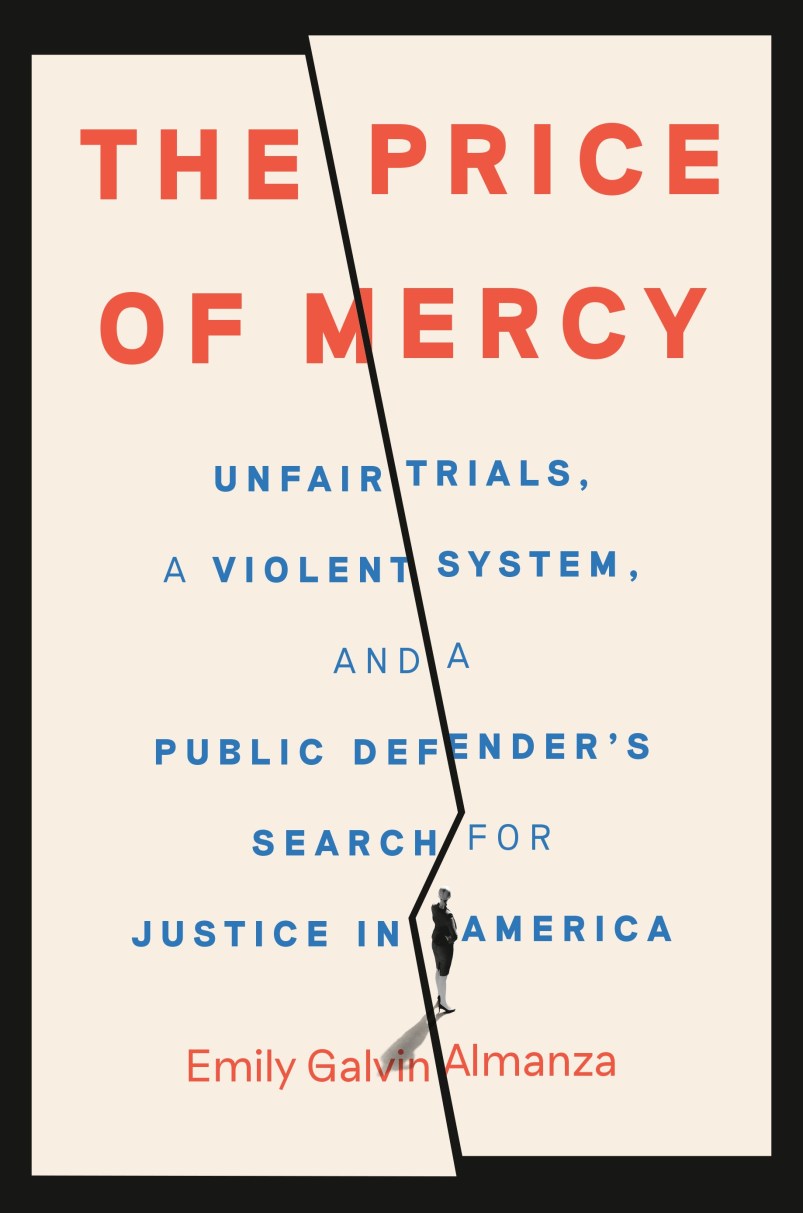
In a time when debates about crime, public safety, and prosecutorial authority dominate headlines, Jannell’s story — excerpted from my new book The Price of Mercy: Unfair Trials, A Violent System, and a Public Defenders Search for Justice — shows how easily ordinary people can be swept into the machinery of accusation. Unfortunately, this is not a unique story of sensational miscarriage of justice, it reflects routine damage inflicted by a dysfunctional “justice” system. Jannell’s story is a reminder that the system’s reach is already vast and has profound collateral consequences, even if the defendant’s case is dismissed or if they are found not guilty.
If you’ve been lucky enough to never have to interact with the criminal legal system in America, you might envision a case process as something straightforward: a person gets arrested, they report to the courthouse and appear in front of a judge, they take a plea or assert their right to trial, and ultimately the case is finished with exoneration or punishment. In actuality, it’s nothing like this. It is hell, and sometimes it goes on forever.
A few years ago in the Bronx, my client Jannell found herself navigating this web of leverage and neglect. A family support specialist with the New York Department of Education, Jannell loved her job and did it while raising three kids of her own. One morning, Jannell woke up and realized that her car was gone. She had been having trouble with the payments, so she assumed it had been repossessed. But after calling tow lots and the bank, it became clear that no one had any idea where her car was.
She waited endlessly on hold, was bounced from department to department, and spent days trying to figure out the proper next steps. The bank told her to call a local tow lot, and the tow lot actually quoted her a price to get her car back, but she couldn’t pay it, so she decided to just try to get her belongings back out of the car. But when she tried to set up a time to go get her belongings, she found the lot didn’t have her car after all. So she was back to square one, calling the insurance company and the bank, and even the police, all to no avail. And then a pivotal thing happened: when she told one of the customer service people from her repo company that police hadn’t taken the report, the rep told her to just give the date the car was stolen as the date of her call. So she did, and it worked.
But unbeknownst to her, someone did actually know where the car was—the Baltimore Police Department, which had found the car, burned out and abandoned, a few days prior.
Because the date she gave as the date of theft was a few days after when the car had been found—making it clear that it had actually been stolen earlier—the NYPD decided that Jannell wasn’t just a confused victim of car theft but rather the architect of an elaborate insurance scheme. When Jannell explained the days she had spent trying to find the car, her explanation was rejected.
Jannell experienced what happens when police take hold of a piece of your life and create their own narrative. Instead of looking at Jannell’s records and weighing her story equally with their own assumptions, they took their version of events to the prosecutor, who promptly wrote up a complaint for felony insurance fraud. The theory? That Jannell had orchestrated the theft of her own car, then had it driven to Baltimore and set on fire, in an attempt to get an insurance payout. Was there any evidence of this, perhaps communication between Jannell and a car thief or a scheme between Jannell and her husband to get rid of their car and earn a profit? No, they had nothing. They had Jannell’s incorrect date of the car’s disappearance—and nothing more. Still, the prosecutor listened to the police as they spun this story, and Jannell found herself arrested, torn away from her job and her kids, waiting to find out what would happen to her next.
At the start of her case, Jannell had a job she loved at the Department of Education and kids to take care of. Getting hit with felony charges meant she was instantly suspended from work. But even if she hadn’t been, she would have had to plead for understanding with her employer,and then find child care and transportation every time she needed to come back to court. Because she did not live near the courthouse, either transportation took hours—and she had to be present in court at 8:30 a.m.—or else it was very expensive. The courtroom is always busy, so every court date inevitably means missing the entire day of work waiting for one’s case to be called; there’s no way to make it to the office in the afternoon. For most people, their boss is either immediately or eventually furious about these absences, if they haven’t been fired outright for getting arrested. They will have to do this each and every time they come back to court. So how many times do they have to come back to court?
For a typical misdemeanor (the majority of cases in the legal system), the first date is to come to court for, essentially, nothing at all. Nothing happens because the prosecutor has not yet had time to decide on a plea offer, nor to make the defense attorney any copies of the evidence against the person. Then, a date when we come back to see if there’s an offer, which there is, but still no “discovery” (the packet of papers setting forth the evidence, to which the accused person is entitled and which is necessary to prepare for trial). A demand for discovery is filed, and we have another date to come back and see if the discovery has been handed over—it has, but only partially, we are missing crucial documents, like witness statements or lab tests. So we get another date for that. Meanwhile, the offer was horrible, so on the next date we talk about what offer the accused person might be willing to accept. The prosecutor in the room has no authority to change the existing offer on the case, so we pick another court date to receive that offer. We come back to court again, and the prosecutor (who has been incommunicado in between court dates) announces that their boss will let them change the offer to something less punitive, but only if the accused person completes a series of classes. We set a new court date to get enrolled in the classes. The classes, as it turns out, are expensive, so at the next court date we ask if we can do an alternative class. The prosecutor says they have to go ask their boss again, who is out of the office that day. When we come back, the prosecutor’s boss has said no: either find the money for the original class or go to jail.
In the meantime, I’ve filed suppression motions because the search of my client was illegal, but the prosecutor hasn’t replied to the motion yet, and requests an extension, explaining that they’ve been distracted by this class business. So we set a date for their response to my motions. They do file a response, and I file a reply, and we come back for a decision from the judge on the motions. The judge has decided that we get a hearing on those motions, so we set a date for the hearing. We show up to the hearing date, but the police officer doesn’t show up . . . turns out he took PTO that day. We come back for another crack at the hearing, and are actually able to do the hearing—the officer testifies about the search in the case, and we present evidence demonstrating that the officer couldn’t have seen what he says he saw from where he was standing. The judge wants to think about it, so we set a new court date.
Before the next court date, we get a written opinion from the judge saying that the police officer must have been able to see what he said he saw, so we are setting a date for trial. My client will have to come back every day for trial, probably for about a week or so—can they make it? I request the missing lab reports again. We get the lab reports before the next court date, but at that time my client also gets their tax refund, and thinks that now maybe they can pay for the classes. So on the trial date, we ask to do the classes after all. The prosecutor’s boss—now pulled down to the courtroom finally—agrees, so we set a date to check in on class progress. At that next date, my client has a letter detailing their progress, but still needs another few weeks to finish the whole class.
Almost done, maybe just one more date. They finish the class and come back with a certificate, but the prosecutor is now on parental leave, and the case has been transferred to another prosecutor. I throw a fit about how long this has taken and insist that someone come down to the courtroom with the authority to resolve this case. No one is available. Finally, a few weeks later, my client takes off work again, and comes back to court for the privilege of pleading guilty to an infraction and paying a fine. Sixteen court dates over almost two years. For a misdemeanor.
And this is considered a good outcome.
On any given day in America, millions of people are undergoing a process like this. Every minute of every day, American courts resolve about forty felonies and one hundred misdemeanors as eighteen million cases churn through our state court system, usually lasting six to nine months each. Every single one of them has the potential not only to utterly destroy the life of the accused person, but also to upend the stability of their families, colleagues, and whole communities. After all, there are over 40,000 documented “collateral consequences” of involvement with the criminal court system. Jannell was about to experience several of them: a career derailed, a crisis in her mental and physical health, challenges in caring for her children. But for the 70% of people inside America’s jails who are currently awaiting trial—not yet convicted of a crime—the consequences can be even harsher. Experiencing or witnessing violence daily. Separation not just from loved ones and a career, but from medical care, and even separation from legal counsel. Sleeping on a metal bunk where every night, you hear the sound of someone screaming.
When Jannell got in front of the judge, she was lucky, in that she had a lawyer by her side and a judge on the bench who was willing to look skeptically at the charges. Jannell recalls, “When I came out, they wanted a $10,000 bail. The judge looked at the paper. She says, ‘No, this just looked like she messed up on the paperwork.’” Jannell was released, but it would take prosecutors years to see what that arraignment judge recognized after a five-minute review of Jannell’s case. Because unlike the arraignment judge, the system doesn’t incentivize prosecutors to look skeptically at their own charges, nor is it geared to seek out evidence of innocence. For Jannell, not being in jail was a small comfort.
The evidence against her was weak. There was no evidence suggesting she had any connection to the people who stole her car. Jannell, for her part, remained consistent about her initial mistake in thinking the car was repossessed, and the time that had cost her.
The prosecution’s case against Jannell was rooted in this problem of her report coming in days after the stolen car had been found in Baltimore; this was their key evidence that Jannell was actually orchestrating an intricate plot. The truth was simpler: she wasn’t a criminal mastermind; she was a person who lost her patience for bureaucracy. But given the lack of evidence in the case, there was one thing that would be crucial: the recording of Jannell’s phone call with the mysterious bank representative who told her to call 911 and report the car stolen. Without that piece of evidence, it was her word against the cops.
In Jannell’s case, getting that crucial piece of evidence—and then getting a prosecutor to pay attention to it—took years. She was assigned different public defenders, each of whom pursued the recordings, but the process was slow. Jannell’s court dates were every few months. She was out of work, calling regularly to let the Department of Education know she was still fighting. Again and again she would come to court.
Month after month dragged on. Jannell’s three kids were seven, eleven, and twenty years old. While the littlest ones were at school, she would drag herself back to the courthouse, but the grinding of her case was beginning to impact her home life.
In the courthouse, Jannell’s lawyers were fighting for time—the time they needed to get the exonerating evidence so she could walk away from the courthouse with a clean record. But the time they needed was extracting an enormous price. “I was so depressed that I had family members having to come and get me out of bed, open my curtains. I didn’t even want to look at the world.” The night before every court date, she couldn’t sleep. She started to self-medicate just to get to sleep.
“I picked up drinking, and when I say I picked up drinking, I picked it up so bad. I used to only occasionally drink wine, and then all this happened, and I’m drinking hard liquor, no chaser. I got to the point where I was waking up drinking.” These days, Jannell describes what she was doing as a kind of slow-motion suicide attempt, combining medications and liquor until she ended up in the hospital.
For Jannell, even a great outcome in court couldn’t save her from the consequences beyond the courthouse doors. After years of her case being transferred from one prosecutor to the next, and defender after defender, she finally landed on my desk, with the simultaneous good luck of going to a prosecutor who was willing to listen. We used the recording of her call with the customer service person who told her to report the car stolen, and the prosecutor assigned went to great lengths to get us the full dismissal we were fighting for. When the charges were finally dismissed, we celebrated. But when she returned to her job, she was told she had been terminated. “I would’ve been thirty-two years with the Board of Ed,” she told me. “I most likely would have been able to retire at fifty-five. I’m on unemployment right now. I’ve been putting in applications, sending my résumé. I want to go back to the Board of Ed. One of the interviews I did, they wanted me to come on board. They nominated me, I went downtown, I did the paperwork, the finger-printing. And then of course it came back that I got arrested, and they withdrew. I’ve been on a few interviews . . . a lot of them, actually. Every time this arrest comes up, they don’t pick me.”







Love an underfunded legal system that slowly grinds down people of modest means for simple mistakes or bad advice and refuses to address the horrors perpetrated by the wealthy and well-connected.
I hate to be a broken record about this, but “the process is the punishment.” All that’s needed is to bring a baseless case against somebody a (wealthy) person wants to punish or harass, and let the system go to work on them.
And if you think this is a bad thing and maybe ought to be fixed, txlawyer will pop up and accuse you of being a lawless unprintable, with many a curse and insult. Which is something Democrats and lefties are very susceptible to. And so the gravy train rolls on.